
What to Pack When Traveling to Ireland: Make Gray Days Glow


When packing for Ireland, bring moisture-wicking base layers like merino wool, a warm fleece mid-layer, plus a waterproof, breathable jacket to tackle rain and wind.
Pack sturdy waterproof boots with good grip for muddy trails and comfortable shoes for city strolls. Don’t forget a warm hat, gloves, and socks to fend off the chill. Organize your gear with waterproof pouches and packing cubes.
With these essentials, you’re ready for Ireland’s changeable weather and outdoor adventures. Explore how to fine-tune your list.
Key Takeaways
- Pack moisture-wicking base layers and breathable mid-layers to manage Ireland’s cool, damp spring, autumn, and mild summer temperatures.
- Bring a waterproof, breathable jacket with seam-sealed seams and a hood to handle frequent rain and Atlantic winds.
- Choose waterproof hiking boots with good traction and ankle support for muddy trails, wet rocks, and uneven coastal paths.
- Use weatherproof daypacks or backpacks with rain covers and packing cubes to organize clothes and protect essentials from moisture.
- Include accessories like warm hats, gloves, merino wool socks, and a compact windproof umbrella for comfort in changing weather.
Essential Clothing Layers for Ireland’s Weather
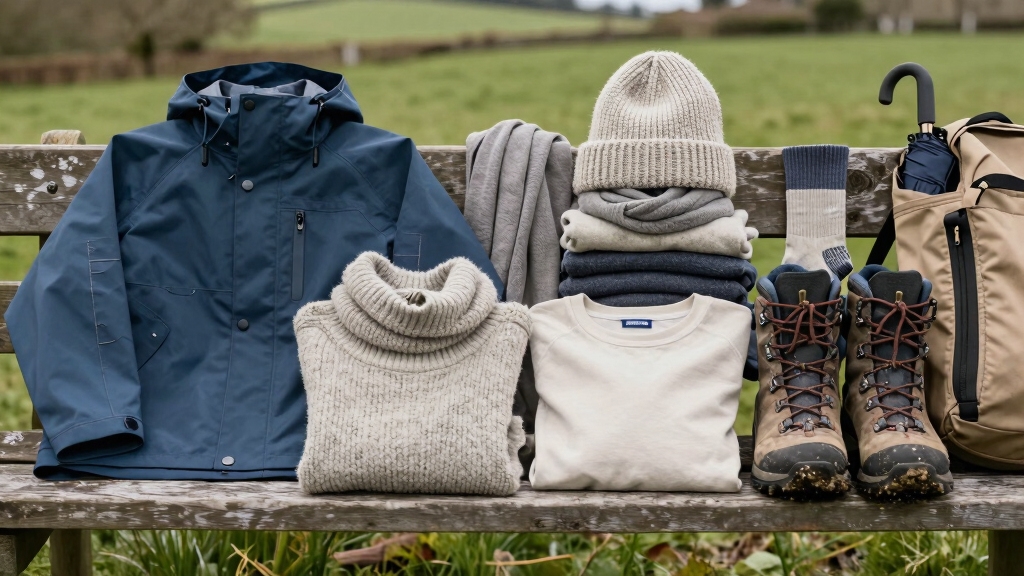
Although Ireland’s weather can be unpredictable, packing the right clothing layers will keep you comfortable no matter the conditions.
Start with a moisture-wicking base layer made from merino wool or synthetic fabrics like polyester blends to manage sweat and regulate temperature. Merino wool is especially effective due to its natural insulation and moisture management properties, making it a preferred choice for travelers seeking comfort in varying climates.
Add a breathable mid layer; fleece or lightweight insulated jackets trap heat when temperatures dip, especially during shoulder seasons. Average temperatures during spring and autumn range from around 7°C to 13°C, making layering essential for comfort.
Your outer layer must be a waterproof, breathable shell with seam-sealed seams to guard against frequent rain and Atlantic winds, particularly in winter. Combining this with waterproof and windproof jackets ensures you are well-prepared for Ireland’s quick weather changes.
Don’t forget windproof, quick-drying accessories like hats, gloves, and neck gaiters to protect against coastal chills. This layering strategy allows rapid adjustments for sudden showers, sunbreaks, or cold gusts, perfect for Ireland’s ever-changing microclimates.
Footwear Choices for Wet and Uneven Terrain
Choosing the right footwear for Ireland’s wet and uneven terrain can make all the difference in your comfort and safety.
Picking suitable footwear is key to staying comfortable and safe on Ireland’s wet, uneven trails.
Opt for boots or trail shoes with deep, multi-directional lugs and sticky rubber soles like Vibram Megagrip to grip muddy grass, wet rocks, and scree. Many high-performance boots feature VIBRAM outsoles that provide excellent traction on slippery surfaces.
Consider footwear with durability and stability features to withstand rugged terrain and frequent use. Waterproof membranes such as GORE-TEX keep water out while letting sweat escape, essential for damp trails and stream crossings.
If you expect steep upland hikes, mid- to high-cut boots offer vital ankle support and stability. Low-cut shoes boost mobility on gentler coastal paths. Look for a slightly larger toe box to prevent bruising and guarantee a firm heel hold to avoid blisters.
Important Accessories to Stay Comfortable
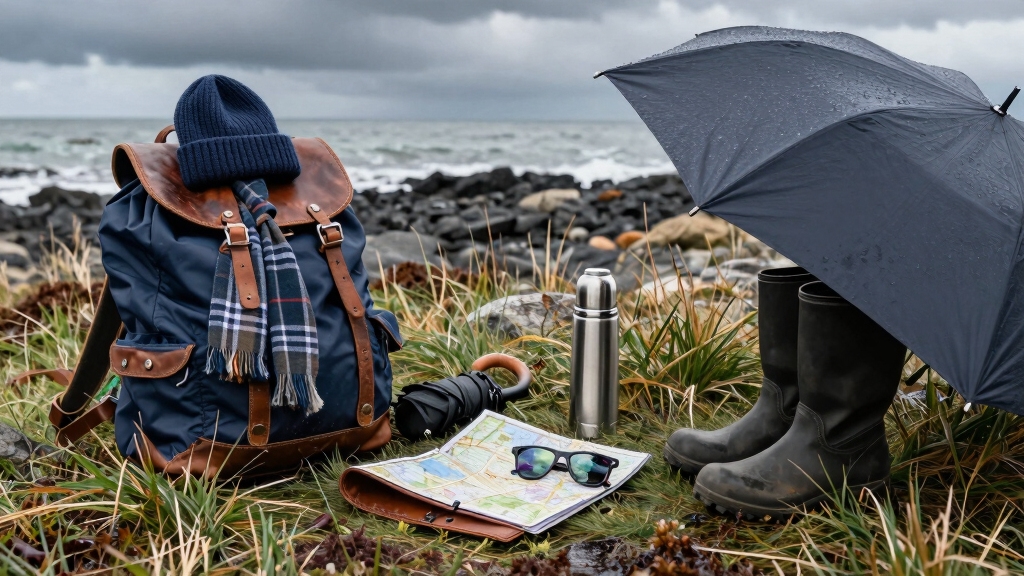
Once your feet are properly prepared for Ireland’s unpredictable terrain, the right accessories play a big role in keeping you comfortable through shifting weather.
Weather can shift rapidly, from drizzle to gusty winds, so packing smart is essential. Opt for a warm beanie and gloves to shield you from biting coastal winds. A lightweight, insulated waterproof jacket keeps you dry and warm without weighing you down, perfect for sudden downpours.
Remember to prioritize a weatherproofing and practicality mindset over appearance when selecting gear. Using multiple smaller dry bags can help organize your accessories and protect them from moisture.
Don’t forget a travel scarf to protect your neck; it’s a small item that makes a big difference. Compact windproof umbrella for light rain, but prioritize hats against strong winds.
Merino wool socks and underwear keep you dry and odor-free during hikes. Extra plastic bags help separate wet or muddy clothes in your pack. These essentials ensure you stay cozy and ready for Ireland’s charming but unpredictable climate.
Recommended Travel Bags and Organization Tips
When you’re getting ready for a trip to Ireland, picking the right bag is super important. The weather can be pretty unpredictable, and the terrain varies a lot, so you’ll want something that can handle it all. A weatherproof, lightweight carry-on or backpack is a solid choice, especially since it needs to fit airline size restrictions.
Now, let’s talk organization! Packing cubes are a game changer. They really help keep everything tidy and easy to find. Using a packing system like the Pack-It System can keep your belongings organized as you move between regions.
Plus, having a compact daypack can make your daily adventures so much smoother. With your essentials easily accessible, you can focus on enjoying your trip instead of rummaging through your bag!
Ideal Bag Types
Packing smart means picking bags that can stand up to Ireland’s unpredictable weather and varied terrain. Choose luggage that’s both weatherproof and practical, so you stay dry and comfortable whether you’re steering through wet city streets or rugged coastal trails.
Weatherproof carry-on suitcase: Hard-shell with water-resistant seams and spinner wheels eases mobility on cobblestones and ferry decks. Internal straps and wet/dry cubes keep damp clothes separate. A photable/water-resistant backpack is also recommended to carry layers and waterproofs efficiently during daily outings.
Weather-resistant backpack (20–35L): Equipped with rain cover, ergonomic straps, and quick-access panels. Perfect for day hikes or city exploration without a full checked bag.
Weatherproof duffel or roll-top bag: Durable coated fabric resists heavy rain. Trolley sleeve and organizational pockets simplify transfers and keep essentials dry and accessible. These choices guarantee your gear stays protected and your travels stay hassle-free.
Efficient Packing Strategies
Choosing the right bags lays a solid foundation, but how you organize and pack your belongings can make all the difference on an Irish adventure. Use color-coded packing cubes to separate outfits and speed up retrieval.
Pack a dedicated waterproof pouch for dirty or wet items to protect clean clothes. Compressible, quick-dry fabrics maximize space, while limiting outfits to mix-and-match pieces lightens your load. Pack valuables, essential meds, and a change of clothes in your carry-on.
Wear your bulkiest items during travel to save space. It is also important to check off items on your packing list as you pack to ensure nothing is forgotten. For daily excursions, choose a weather-resistant daypack with hidden compartments and a small waterproof pouch for essentials.
Selecting a backpack with the appropriate volume in liters ensures you carry what you need without unnecessary bulk. These efficient packing strategies keep your gear organized, accessible, and ready for Ireland’s unpredictable weather.
Electronics and Document Essentials
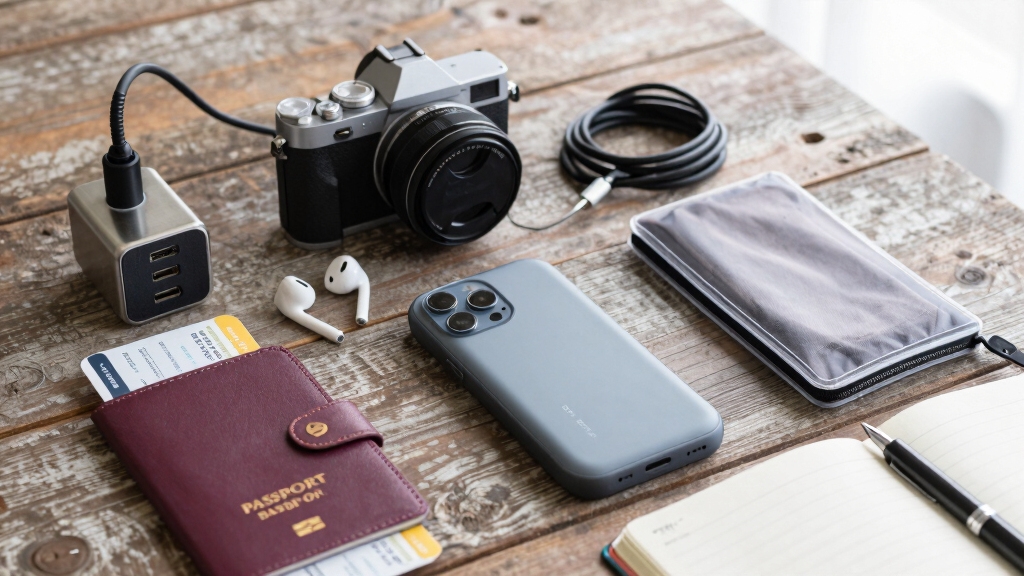
Since you’ll rely heavily on your devices during your trip, bringing the right electronics and chargers is essential for a smooth experience in Ireland.
Pack your smartphone and camera with extra memory cards to capture every scenic moment. Remember to carry your devices in your carry-on bag to comply with airport security regulations.
Don’t forget a universal Type G plug adapter and a portable charger for those long days exploring.
Having packing cubes can help keep your electronics and accessories organized within your luggage.
Keeping your travel documents organized and accessible is just as important.
Always carry your passport, plane tickets, and copies stored separately for security and convenience.
Here’s a quick essentials checklist for electronics and documents:
- Multi-charging cables and a phone holder for easy navigation
- Passport, driver’s license, and travel insurance info
- Credit/debit cards plus 100 euros in cash for small purchases
Stay prepared, connected, and ready for adventure!
Toiletries and Medical Supplies to Bring
Although many toiletries are easy to find in Ireland, bringing your own travel-sized essentials guarantees comfort and convenience throughout your trip.
Pack basics like a toothbrush, toothpaste, shampoo, conditioner, deodorant, and shaving cream in small containers. To keep your bag in good condition, consider gentle cleaning techniques to maintain your travel gear.
Don’t forget a hairbrush, face wash, floss, and chap stick to keep fresh.
Since many Irish hotels lack washcloths, bring one along, plus hand sanitizer, tissues, and baby wipes for quick cleanups.
Include sunscreen with SPF 30, moisturizer, and lip balm to protect against Ireland’s windy, dry air.
For your health, carry a basic first aid kit with band aids, pain relievers, anti-histamines, and stomach remedies. A small personal first aid kit is recommended for convenience during tours.
Also pack any prescription meds in labeled bottles, feminine hygiene products, and vision care supplies.
Practical Items for Outdoor Activities
When you venture outdoors in Ireland, packing the right gear can make all the difference between an enjoyable adventure and a soggy, uncomfortable trek.
You’ll want moisture-wicking base layers to keep sweat off your skin, an insulating mid-layer for chilly moments, and a waterproof, breathable jacket to fend off rain and wind. Choosing durable materials like ballistic nylon for your gear can help withstand tough outdoor conditions.
Don’t forget sturdy waterproof boots and gaiters to handle boggy terrain and trails.
Practical extras like a detailed map, headlamp, and a compact first-aid kit guarantee safety during remote hikes.
It’s also wise to carry quick-dry clothing for outdoor activities to stay comfortable throughout the day.
Key items to bring include:
- Waterproof hiking boots with ankle support
- Hooded Gore-Tex jacket and packable rain trousers
- Trekking poles for stability on uneven, slippery ground
These essentials will keep you comfortable, dry, and safe as you explore Ireland’s stunning outdoors.
Seasonal Packing Adjustments
To pack smartly for Ireland, you’ll need to adjust your wardrobe to match the shifting seasons and unpredictable weather.
In spring, bring lightweight long sleeves, a fine-knit sweater, and a medium-weight waterproof coat. These are perfect for cool mornings and drizzly afternoons.
Summer calls for short-sleeved tops, a lightweight dress, and comfortable sandals. Keep a couple of long sleeves handy for breezy evenings. Don’t forget to include sunglasses and sunscreen to protect yourself from occasional bright sun.
Autumn demands merino base layers, a warm insulated shell, and fleece hoodies to handle wind and rain.
In winter, pack warm sweatshirts, a sturdy waterproof jacket, thick socks, and winter boots to stay cozy.
Year-round, layering is key: jeans or leggings, a raincoat, sweaters, plus a scarf, hat, and gloves will keep you ready for any Irish weather surprise.
Money and Security Considerations
Since Ireland uses the Euro (EUR) as its official currency, understanding exchange rates and secure payment options will help you manage your money confidently while traveling.
The USD to EUR rate fluctuates, so check current rates before converting. You can exchange money at An Post with zero commission on major currencies and use prepaid currency cards for convenience. Using secure payment methods can also help protect your funds during transactions abroad.
Exchange rates are reported quarterly by the Organization for Economic Co-operation and Development, providing reliable data for your planning (OECD exchange rate data).
Always carry some cash for smaller purchases, but rely on secure debit cards for larger payments.
Keep these tips in mind:
Use regulated providers like An Post for encrypted, commission-free exchanges. Secure online currency reservations via Fexco, then pick up at credit unions.
Know cash transaction limits (€3,000 max; ID required over €150) to stay compliant.
This guarantees your funds stay safe and accessible throughout your trip.
Frequently Asked Questions
Can I Use Regular Plug Adapters for Charging Devices in Ireland?
Yes, you can use regular plug adapters to charge your devices in Ireland, but only if your devices are compatible with the 230V voltage.
Since Ireland uses type G sockets with three rectangular pins, you’ll need a type G adapter to fit your plug.
Remember, if your device is single-voltage (110-120V), a voltage converter is essential to avoid damage.
Dual-voltage gadgets just need the adapter, making charging hassle-free.
Is It Necessary to Carry a Physical Map if I Have a Smartphone?
You don’t always need a physical map if your smartphone has offline maps downloaded, but it’s wise to carry one as backup. Mobile coverage in rural Ireland is patchy, and GPS can falter in valleys or dense woods.
A paper map offers continuous, reliable navigation without battery worries, helps spot scenic detours, and works great for group trips. Combining both makes sure you’re prepared for any navigation hiccups.
What Voltage and Plug Type Does Ireland Use for Electronics?
Ireland uses a standard mains voltage of 230 volts at 50 hertz, with Type G plugs featuring three rectangular pins.
You’ll need a Type G travel adapter to fit your devices into sockets there. Most modern electronics support 100–240V, so adapters suffice.
However, if your appliance only handles 110–120V, you’ll need a voltage converter or transformer to avoid damage. Always check your device’s label before plugging in to stay safe.
Do I Need to Bring an International Driving Permit for Car Rentals?
You usually don’t need an International Driving Permit (IDP) to rent a car in Ireland if you have a valid US, Canadian, UK, or EU license. Over 90% of travelers fall into this group.
However, some rental companies still require it, especially if your license uses a non-Roman alphabet. Always check your rental’s specific terms, and bring your original license plus passport. Carrying an IDP won’t hurt if you want extra peace of mind.
Turn Every Irish Adventure Into a Story Worth Sharing
Packing for Ireland is like weaving a cozy tapestry. Layer by layer, you prepare for its unpredictable weather and rugged charm. With sturdy shoes to dance through rain-soaked trails, smart bags to keep your treasures safe, and handy accessories to brighten gray skies, you’re set for adventure.
Remember, a well-packed bag is your passport to comfort and confidence, turning every Irish moment into a story worth telling. Ready to explore? Let’s go!