
Is Merino Wool Water Resistant: Comfort You Can Trust

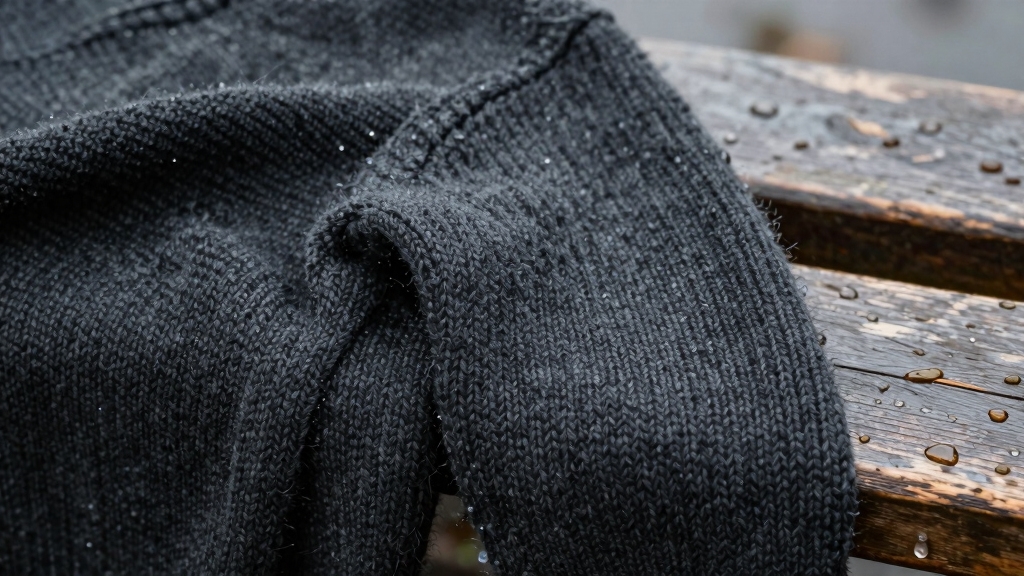
You get natural water resistance from Merino wool’s fiber structure. Its hydrophobic outer layer and cuticular scales repel light moisture and encourage water beading.
The inner hydrophilic core absorbs sweat vapor, triggering heat-releasing reactions that maintain warmth even when damp. While Merino resists light rain and wicks moisture, it’s not fully waterproof for heavy or prolonged wet conditions.
Its durability and breathability enhance comfort, but layering with waterproof gear is essential for sustained wet exposure. Explore how advanced fabric technologies further improve Merino’s performance.
Key Takeaways
- Merino wool has a natural hydrophobic outer layer that repels light water and prevents deep moisture penetration.
- The fiber’s cuticular scales cause water to bead and roll off, preserving insulation and breathability.
- Merino can absorb up to 35% of its weight in moisture without feeling wet, maintaining comfort in damp conditions.
- It is water resistant but not fully waterproof; heavy rain or submersion require additional waterproof layers.
- Technologies like OPTIM™ enhance fabric-level water resistance while preserving breathability and moisture management.
Understanding Water Resistance in Merino Wool
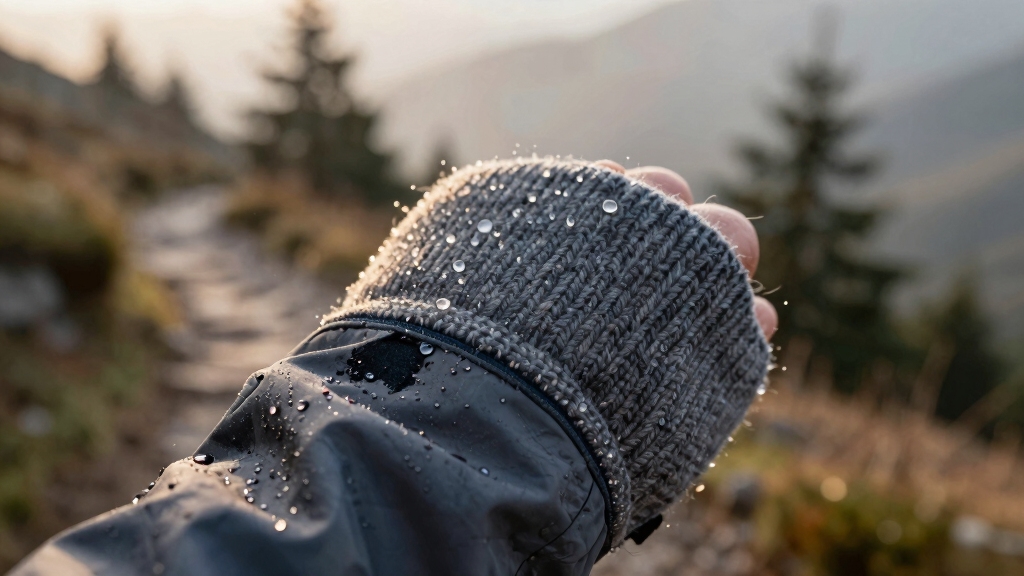
Although merino wool isn’t fully waterproof, it naturally resists water through its unique fiber structure. This structure combines an outer hydrophobic layer that repels moisture with an inner hydrophilic core that absorbs it.
You’ll find cuticular scales on the fiber’s surface acting as a physical barrier, preventing water from penetrating deeply. This dual-layer configuration allows the fiber to withstand light moisture while maintaining insulation.
You can enhance water resistance further with technologies like OPTIM™, which stretch fibers to create tighter weaves without chemicals. This structure reduces hydrostatic pressure penetration, preserving comfort and dryness.
As a result, merino wool balances moisture management and water repellency. It’s effective in damp conditions without sacrificing breathability or thermal regulation.
Additionally, natural fibers like merino wool offer breathability and comfort fabrics benefits that synthetic materials may not fully replicate.
How Does Merino Wool’s Fiber Structure Repel Water?
Did you know that merino wool has a really interesting fiber structure? It begins with a hydrophobic outer layer that does a great job of repelling water. Pretty cool, right? The cuticular scales on this surface act as a physical barrier, so they keep moisture from getting deep into the fiber.
But that’s not all! The inner part of the fiber is hydrophilic, which means it actually absorbs and manages any moisture that might sneak in. This clever design helps keep you comfortable and warm, no matter the conditions. It’s like having the best of both worlds!
This unique combination of properties is similar to how leather’s natural breathability enhances its durability and comfort.
Hydrophobic Fiber Outer Layer
Because merino wool fibers feature an outer hydrophobic layer, they effectively repel water and prevent moisture from penetrating deeply.
This outer layer consists of lipids and natural oils that create a water-resistant barrier, ensuring light moisture beads and rolls off the fiber surface.
You’ll find this mechanism essential for maintaining dryness and insulation in damp conditions.
Key aspects include:
- Lipid-rich coating that reduces surface tension, preventing water absorption.
- Structural arrangement that encourages water droplet formation and runoff.
- Synergistic interaction with the fiber’s inner hydrophilic core, balancing moisture management without saturation.
This hydrophobic outer layer forms the first defense against wetness, allowing merino wool to perform reliably in humid or lightly rainy environments.
To preserve this natural water resistance and the fiber’s flexibility, it is important to avoid direct heat or artificial drying methods that can cause loss of natural oils and damage the wool.
Cuticular Scale Function
When water contacts merino wool fibers, the cuticular scales on their surface act as a physical shield that limits moisture penetration.
These overlapping scales create a textured, hydrophobic barrier that disrupts water’s ability to adhere and spread, effectively repelling light rain or mist.
The microscopic scale edges increase surface tension, causing water droplets to bead and roll off rather than saturate the fiber.
This structural arrangement reduces direct fiber wetting and maintains insulation by preserving trapped air pockets within the fabric.
While not entirely waterproof, the scale configuration enhances merino wool’s natural water resistance by minimizing capillary action and delaying absorption.
You’ll find that this fiber architecture is essential for managing moisture exposure without compromising breathability or comfort in damp conditions.
To maintain this natural water resistance, it is important to avoid saturating the fibers and allow them to air dry naturally in a cool, shaded area, similar to the recommended care for leather to prevent damage and preserve material properties air drying techniques.
Inner Hydrophilic Core
Balancing water resistance with moisture management relies heavily on merino wool’s unique fiber structure, particularly its inner hydrophilic core. This core plays a pivotal role in managing absorbed moisture while maintaining insulation. Here’s how it works:
- The inner core actively absorbs moisture vapor from sweat, preventing saturation on the surface and ensuring wearer comfort.
- By binding water molecules, the hydrophilic core initiates exothermic chemical reactions that generate heat, keeping you warm even when damp.
- The outer hydrophobic layer repels liquid water, while the hydrophilic core manages internal moisture, creating a dynamic moisture regulation system.
This dual-layer fiber structure enables merino wool to repel external moisture yet efficiently wick and utilize internal moisture, optimizing both water resistance and thermal regulation.
How Merino Wool Manages Moisture and Keeps You Dry?
Did you know that merino wool fibers are pretty impressive when it comes to moisture management? They can actually absorb up to 35% of their weight in moisture without feeling wet at all!
This is all thanks to their hygroscopic structure, which allows them to trap and hold moisture while still keeping you warm.
And here’s the cool part: those internal air pockets in the fibers work hard to wick moisture away from your skin. This means that as you sweat, the moisture is quickly pulled away, promoting rapid evaporation.
Because merino wool is a breathable, fast-drying fabric, it helps prevent moisture buildup and chill, making it ideal for temperature regulation.
Moisture Absorption Capacity
Managing moisture effectively is essential for maintaining comfort, and merino wool excels in this area due to its unique fiber structure.
Its fibers can absorb 30-35% of their weight in moisture without feeling wet, thanks to a hygroscopic matrix that retains liquid moisture from sweat and humidity. This absorption capacity helps keep you dry by balancing moisture intake and release.
Key factors include:
- Hydrophilic core absorbs moisture while outer hydrophobic layers repel water, preventing saturation.
- Internal air pockets enable moisture retention without dampness against your skin.
- Moisture vapor gradually releases into the atmosphere, maintaining dryness from the inside out.
These mechanisms combine to guarantee merino wool manages moisture efficiently, enhancing wearer comfort in varied conditions. Similar to how nylon’s water resistance limits moisture absorption and affects fabric behavior, merino wool’s balanced moisture management is key to its comfort.
Effective Moisture Wicking
Merino wool consistently excels at wicking moisture away from your skin, ensuring you stay dry and comfortable even during intense activity.
Its fiber structure creates air pockets that actively pull moisture from the skin’s surface into the inner hydrophilic core.
This absorption can reach up to 35% of the fiber’s weight without feeling wet, thanks to the wool’s hygroscopic matrix.
Moisture vapor then diffuses through the fiber to the atmosphere, promoting rapid drying.
The outer hydrophobic layer and cuticular scales repel external moisture, preventing saturation.
This dual-layer dynamic optimizes moisture transport and thermal regulation, maintaining a dry microclimate.
You benefit from continuous vapor release and heat generation triggered by water-protein interactions, which sustain comfort and dryness even in damp conditions.
Can Merino Wool Keep You Warm When It’s Wet?
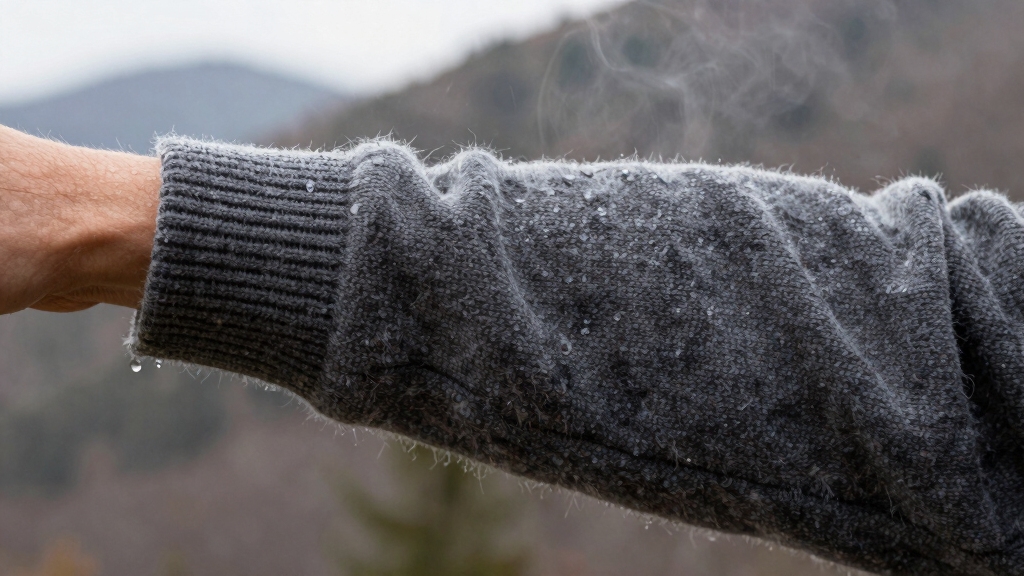
Harnessing moisture to generate heat, merino wool keeps you warm even when wet by leveraging the chemical interactions between water molecules and the fiber’s protein core.
Merino wool generates heat through moisture interaction with its protein core, keeping you warm even when wet.
This exothermic reaction releases energy, creating a microclimate that maintains your body temperature despite external dampness. The fiber’s dual structure, hydrophobic outer layer and hydrophilic inner core, facilitates this process efficiently.
Here’s how merino wool achieves warmth when wet:
- Water molecules absorbed by the hydrophilic core trigger heat-releasing chemical reactions.
- The outer hydrophobic layer prevents excessive water penetration, preserving insulation.
- Air pockets within fibers retain heat and wick moisture away from your skin.
This synergy enables merino wool to provide reliable thermal regulation, outperforming many synthetic fabrics under wet conditions.
OPTIM™ Technology: Enhancing Merino Wool’s Water Resistance
While natural merino wool already offers impressive water resistance, OPTIM™ technology markedly boosts this property without relying on chemical treatments.
By pre-stretching fibers before spinning, OPTIM™ increases fiber tension, allowing them to contract tightly during wet-finishing.
This process produces a denser fabric structure with a higher hydrostatic head, effectively repelling water.
You’ll notice reduced air permeability, enhancing wind resistance and overall comfort.
Importantly, this enhancement preserves merino wool’s inherent breathability and moisture management.
Unlike treatments involving PFAS, OPTIM™ maintains eco-friendly standards while improving durability and machine washability.
When you wear garments made with OPTIM™ technology, you benefit from superior water repellency combined with the natural thermal regulation and elasticity of merino wool.
This makes it ideal for damp and variable conditions.
Regular maintenance, similar to how you care for spinner luggage wheels, can help preserve the fabric’s performance and longevity.
Merino Wool vs. Synthetics in Wet Conditions
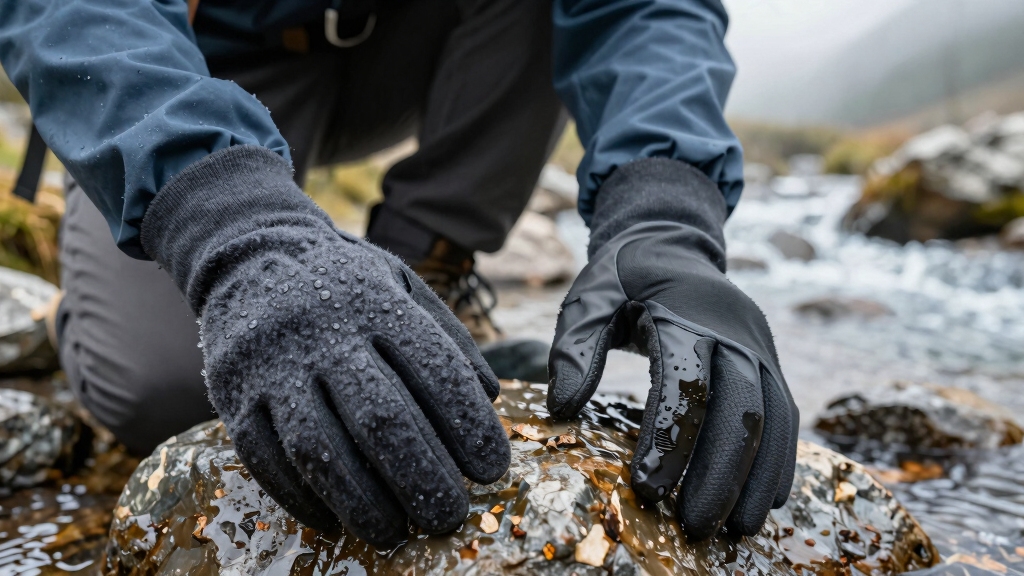
Although synthetic fabrics often promise quick-drying performance, you’ll find that merino wool excels in managing moisture by wicking it away from your skin rather than trapping it. This reduces clamminess and maintains comfort in wet conditions.
Merino wool outperforms synthetics by wicking moisture away, keeping you comfortable and clammy-free in wet conditions.
Merino’s dual-layer fiber, with a hydrophobic outer surface and hydrophilic core, actively pulls moisture from your skin and releases vapor. This is unlike many synthetics that hold moisture against you. Additionally, merino fibers generate heat when wet, providing warmth where synthetics may leave you cold.
Key differences include:
- Moisture management: Merino absorbs up to 35% of its weight without feeling wet; synthetics often trap moisture.
- Thermal regulation: Merino’s exothermic reaction warms you when damp.
- Fiber elasticity: Merino stretches over 30% without deformation, maintaining fit better than many synthetic fabrics.
When choosing outdoor gear, consider how moisture management and fabric performance complement other equipment such as backpacks designed for wet conditions.
How Durable Is Merino Wool for Water Sports and Outdoor Use?
Beyond moisture management and thermal regulation, merino wool demonstrates remarkable durability that makes it well-suited for water sports and rigorous outdoor activities.
Its natural elasticity allows fibers to stretch over 30% without deformation, maintaining garment shape despite repeated use and washing.
The fabric’s resilience endures continuous friction, saltwater exposure, and UV radiation, common in aquatic environments.
Additionally, merino wool’s wrinkle resistance reduces maintenance while preserving structural integrity.
The tightly woven fabric structure, enhanced by OPTIM™ fiber stretching technology, improves hydrostatic head and wind resistance without chemical treatments.
This combination guarantees long-term performance under physical stress, making merino wool a reliable material for demanding outdoor conditions where durability and comfort are critical.
You’ll find merino wool balances toughness and breathability, excelling where synthetics often falter.
For travelers and outdoor enthusiasts, it is important to note that liquids such as waterproofing sprays must comply with TSA liquid restrictions when packed for air travel to avoid confiscation or delays.
How to Get the Most Out of Your Merino Wool’s Water Resistance?
To maximize your merino wool’s natural water resistance, focus on proper garment care and usage techniques that preserve its fiber structure and hydrophobic properties.
Maintaining the cuticular scales on the fiber surface is critical, as they repel moisture and prevent deep penetration. Here are three essential strategies:
- Gentle Washing: Use mild detergents and avoid fabric softeners to maintain fiber integrity and the hydrophobic outer layer.
- Proper Drying: Air dry flat away from direct heat to prevent fiber shrinkage and preserve the fabric’s tight weave.
- Minimize Abrasion: Limit friction and mechanical stress during wear to sustain the OPTIM™ technology’s enhanced water resistance.
Applying these practices guarantees your merino wool retains peak moisture management and durability, maximizing its performance in damp conditions. Additionally, regular gentle cleaning and proper drying are key to maintaining fabric integrity and preventing damage, similar to how nylon bags are cared for.
When You Need More Than Merino Wool: Choosing Waterproof Gear
When your activities expose you to sustained heavy rain or submersion, relying solely on merino wool’s natural water resistance won’t suffice.
You need dedicated waterproof gear engineered to prevent water penetration entirely. Evaluate materials based on hydrostatic head ratings, seam sealing, breathability, and durability.
Synthetic membranes like Gore-Tex excel in creating impermeable barriers while allowing moisture vapor release, complementing merino wool’s insulation and moisture management.
| Feature | Merino Wool |
|---|---|
| Water Resistance | Light moisture only |
| Breathability | High |
| Durability | Moderate |
| Drying Time | Moderate |
| Waterproof Rating | None |
Pair merino wool base layers with waterproof shells for peak performance in harsh wet conditions.
Frequently Asked Questions
Can Merino Wool Be Treated to Become Fully Waterproof?
You can enhance merino wool’s water resistance through treatments like OPTIM™ fiber stretching technology, which improves its natural repellency without chemicals.
However, achieving full waterproofing requires additional coatings or membranes beyond its inherent properties. While treatments boost hydrostatic head and wind resistance, merino remains breathable rather than fully waterproof.
How Does Washing Affect Merino Wool’s Water Resistance?
Think of merino wool like a finely tuned instrument. Washing it carefully preserves its natural water resistance.
You shouldn’t expect harsh detergents or high heat to enhance its hydrophobic outer layer. Instead, use gentle, wool-specific detergents and cold water cycles to maintain the delicate cuticular scales that repel moisture.
Over time, improper washing can degrade these scales, reducing water resistance. So treat your garment with care to keep it performing at its best.
Is Merino Wool Safe for Sensitive Skin When Wet?
Yes, merino wool is safe for sensitive skin when wet. Its fine fibers minimize irritation and itchiness, unlike coarser wool. The fabric’s moisture-wicking ability keeps your skin dry by pulling sweat away, reducing bacterial growth and discomfort.
Even when damp, merino wool maintains breathability and softness, preventing chafing. Its natural elasticity and smooth fiber scales guarantee comfort, making it suitable for sensitive skin during wet conditions.
Does Merino Wool Resist Mold or Mildew in Damp Conditions?
You’d think anything damp would invite mold like clockwork, but merino wool laughs in the face of mildew.
Its natural moisture-wicking and quick-drying properties prevent prolonged dampness, drastically reducing mold risk.
The fiber’s hydrophobic exterior and breathable structure inhibit fungal growth, while its ability to absorb moisture without feeling wet stops the perfect breeding ground.
Can Merino Wool Be Layered With Other Fabrics for Better Water Protection?
Yes, you can layer merino wool with synthetic waterproof shells or coated fabrics to enhance water protection.
Merino wool provides moisture management and insulation even when damp, while outer layers block heavy rain and wind.
This combination leverages merino’s hydrophobic and hydrophilic fiber properties alongside durable, tightly woven or treated fabrics.
It optimizes comfort, breathability, and water resistance without sacrificing thermal regulation or durability in variable conditions.
Merino Wool: Comfort That Holds Up, Even When Wet
While you might think merino wool soaks up water like a sponge, its unique fiber structure actually repels light moisture and manages sweat efficiently. This keeps you dry and warm even when damp.
Though not fully waterproof, merino’s natural water resistance combined with technologies like OPTIM™ makes it a reliable choice for most outdoor activities. For heavy rain or water sports, layering with waterproof gear guarantees you stay protected without sacrificing merino’s comfort and breathability.