
Effects of Carrying a Heavy Bag on One Shoulder Risks

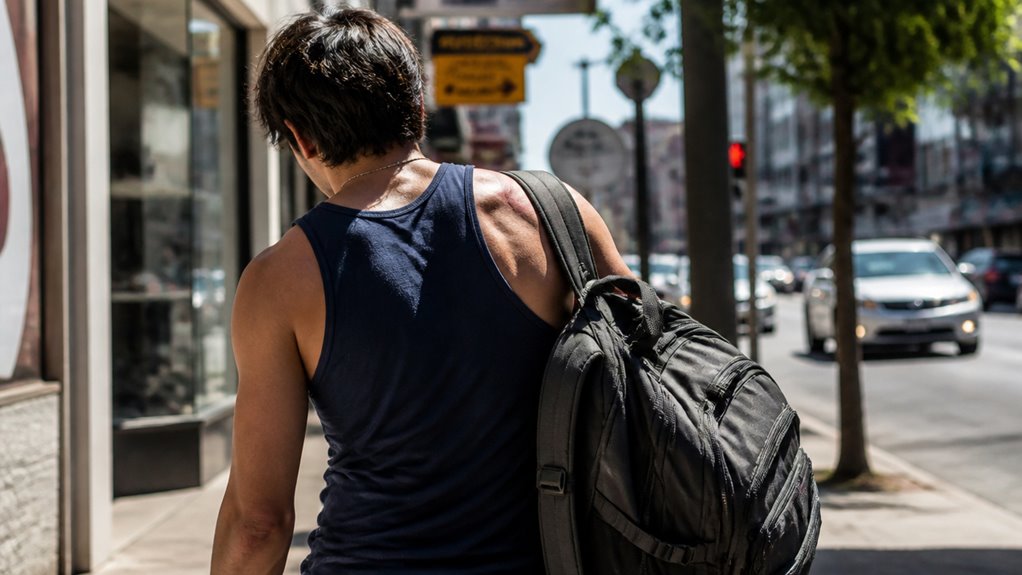
Carrying a heavy bag on one shoulder forces your muscles to work unevenly, causing strain, tightness, and fatigue, especially in the upper trapezius.
This uneven load can disrupt your posture, leading to rounded shoulders, forward head position, and spinal misalignment.
Over time, muscle imbalances develop, increasing your risk of nerve compression, tension headaches, and chronic pain.
If you keep this up, your risk for long-term injury rises.
There are proven ways to reduce these effects and protect your body.
Key Takeaways
- Carrying a heavy bag on one shoulder causes muscle strain, especially in the upper trapezius, leading to tightness, soreness, and fatigue.
- Uneven weight distribution disrupts spinal alignment, causing slouching, rounded shoulders, and forward head posture, increasing neck and back strain.
- Muscle imbalances develop from consistent one-sided loading, weakening opposite muscles and impairing stability and functional movement.
- Prolonged strap pressure can compress nerves, causing tingling, numbness, and tension headaches due to upper trapezius and occipital nerve irritation.
- Poor posture and uneven loading elevate the risk of chronic pain, tendonitis, arthritis, and long-term spinal issues.
Muscle Strain From Carrying a Heavy Bag on One Shoulder
Frequently, carrying a heavy bag on one shoulder causes muscle strain by forcing uneven weight distribution across your shoulder and neck muscles.
This imbalance makes the muscles on the loaded side work harder to support the additional weight, leading to overuse.
You may experience tightness, soreness, and muscle fatigue, especially in your upper trapezius.
The constant contraction of this muscle elevates your shoulder, which further intensifies strain.
Additionally, the bag’s strap can dig into your shoulder, irritating soft tissues and restricting blood flow.
Over time, these factors can reduce muscle efficiency and cause discomfort.
Understanding this mechanism helps you recognize early symptoms and prevents chronic muscle issues.
Properly managing your load and alternating shoulders can mitigate these effects and promote muscle health.
Using a backpack with ergonomic padded shoulder straps can also help evenly distribute weight and reduce muscle strain.
Posture Changes From Carrying a Heavy Bag on One Shoulder
When you carry a heavy bag on one shoulder, it’s pretty common to find yourself slouching or leaning a bit to one side. This kind of shift can throw off your natural spinal alignment, which isn’t great for your body.
Because of this awkward posture, you might notice your head leaning forward and your shoulders rounding. Unfortunately, this can lead to increased strain on your neck and upper back muscles, making things feel pretty uncomfortable over time.
If you keep this up, those little changes in your posture can turn into chronic musculoskeletal issues. So, it’s definitely worth paying attention to how you’re carrying that bag!
Using a bag with an ergonomic strap design can help reduce muscle tension and pressure points caused by uneven weight distribution.
Slouching And Leaning
Carrying a heavy bag on one shoulder often causes you to slouch or lean to one side, disrupting your natural spinal alignment. This imbalance forces your musculoskeletal system to compensate by shifting your torso and hips, creating asymmetrical posture.
Over time, this leads to chronic strain on muscles, ligaments, and spinal structures. The uneven load prompts persistent muscle contraction on the loaded side, increasing fatigue and tightness, while the opposite side becomes underused.
Such compensatory slouching and leaning contribute to altered biomechanics and heightened risk of musculoskeletal pain. Maintaining symmetrical posture is essential, as repeated lateral leaning reinforces poor alignment patterns that may progress to long-term spinal stress and discomfort.
Avoiding one-sided carrying or frequently switching shoulders can mitigate these adverse effects. Using a bag style that offers even weight distribution can help reduce shoulder and back strain during prolonged carrying.
Forward Head Posture
Adopting a heavy bag on one shoulder encourages your head to shift forward to counterbalance the uneven load. This leads to forward head posture, placing excessive strain on your neck muscles and cervical spine. As a result, you may experience increased fatigue and discomfort.
You could develop muscle imbalances as certain muscles overwork to stabilize your head while others weaken.
Key effects of forward head posture include:
- Increased tension in the upper trapezius and cervical extensors, causing neck pain and stiffness.
- Elevated compressive forces on the cervical vertebrae, contributing to early degenerative changes.
- Disrupted neuromuscular control, impairing your ability to maintain proper head alignment over time.
Recognizing and correcting forward head posture is essential to prevent chronic musculoskeletal issues linked to carrying a heavy bag on one shoulder. Choosing a backpack with an appropriate volume classification and ergonomic design can help distribute weight evenly and reduce posture-related strain.
Rounded Shoulder Effects
Although you might not notice it immediately, consistently bearing a heavy bag on one shoulder causes your shoulders to round forward as your body attempts to compensate for the uneven weight.
This posture change leads to muscle imbalances, increased upper trapezius activity, and strain on the cervical spine. Rounded shoulders contribute to neck pain, back discomfort, and reduced mobility over time.
Carrying weight concentrated on one side, especially on the shoulders and upper back, can force posture adjustments that increase strain and fatigue, elevating the injury risk.
| Effect | Cause | Outcome |
|---|---|---|
| Rounded shoulders | Uneven weight distribution | Altered shoulder alignment |
| Muscle strain | Overuse of shoulder muscles | Fatigue and soreness |
| Postural imbalance | Compensatory leaning | Chronic spinal stress |
| Nerve compression | Tight muscles around collarbone | Tingling, numbness |
| Long-term damage | Persistent poor posture | Risk of arthritis, tendonitis |
Muscle Imbalances Caused by Uneven Heavy Bag Weight
When you consistently load one shoulder with a heavy bag, your muscles adapt unevenly. This leads to significant imbalances.
The side bearing the weight becomes overworked, while the opposite side weakens, creating a strength disparity.
This imbalance causes your upper trapezius on the loaded side to dominate. It restricts normal cervical spine rotation.
Additionally, constant tension leads to muscle fatigue and tightness, impairing functional movement.
Here are three key muscle imbalance effects caused by uneven heavy bag weight:
- Overdevelopment of shoulder and upper back muscles on the weighted side.
- Underuse and weakening of contralateral muscles, reducing overall stability.
- Compensatory postural adjustments that reinforce asymmetry and impair biomechanics.
Understanding these changes helps you prevent long-term musculoskeletal complications from uneven bag carrying. Selecting luggage with ergonomic telescoping handles can help reduce strain and promote balanced muscle use during travel.
Neck and Back Pain From Carrying a Heavy Bag Unevenly
Carrying a heavy bag on one shoulder can really throw your body out of whack. You mightn’t even realize it, but your posture shifts, and you end up with a forward head position and uneven alignment in your spine. This imbalance puts extra stress on your neck and back muscles, which can lead to discomfort and, over time, even chronic pain.
And it doesn’t stop there. When your upper trapezius gets tight from all that uneven weight, it can start to compress nerves. This can trigger tension headaches, and let’s be honest—they only get worse the longer you carry that bag. So, if you’ve been feeling off, it might be time to rethink how you’re toting around your stuff! Totes rest on a single shoulder, creating concentrated pressure that can contribute significantly to these issues.
Forward Head Posture
Because carrying a heavy bag on one shoulder disrupts your natural alignment, it often causes forward head posture. This places excessive strain on your neck and upper back muscles.
This posture shifts your head forward, increasing muscle tension and fatigue in the cervical and trapezius regions. Over time, it compromises your spinal biomechanics and leads to discomfort or pain.
To manage this, consider these key points:
- Forward head posture intensifies neck muscle overuse, causing soreness and stiffness.
- Rounded shoulders often accompany the posture, further stressing upper back muscles.
- Persistent muscle tension may trigger tension headaches from nerve compression.
Understanding these effects helps you recognize risks and encourages corrective habits to reduce strain caused by uneven bag carrying. Choosing a backpack with ergonomic suspension systems can help distribute weight evenly and reduce strain.
Uneven Spinal Stress
Although carrying a heavy bag on one shoulder might seem convenient, it places uneven stress on your spine, leading to neck and back pain.
The weight overloads muscles on one side, particularly the upper trapezius and erector spinae, causing fatigue and tightness.
Your body compensates by hiking the shoulder and leaning, which disrupts natural spinal alignment and increases muscular strain.
This imbalance forces your neck and back muscles to work harder, promoting soreness and chronic discomfort.
Over time, the repeated uneven loading can contribute to postural deviations such as rounded shoulders and lateral spinal shifts.
These changes intensify muscle imbalances, worsening pain and risking long-term spinal issues.
To minimize uneven spinal stress, distribute weight evenly or use ergonomic alternatives to avoid chronic musculoskeletal strain.
Choosing a backpack with proper load stability and weight distribution features can help reduce uneven spinal stress when carrying gear.
Tension Headache Causes
Tension headaches often result from muscle tightness and nerve compression caused by carrying a heavy bag unevenly on one shoulder. When you consistently bear weight on one side, your upper trapezius muscle tightens and compresses the greater occipital nerve at the base of your skull. This nerve irritation triggers headaches accompanied by neck and upper back pain.
Consider these key factors contributing to tension headaches:
- Muscle fatigue: Overworked shoulder and neck muscles contract constantly to compensate for uneven load.
- Nerve compression: The bag’s strap irritates muscles and reduces blood flow, increasing nerve sensitivity.
- Postural imbalance: Forward head posture and rounded shoulders strain cervical spine alignment, worsening headache risk.
Addressing these causes early helps prevent chronic pain and improves comfort. Choosing a bag with ergonomic comfort features can significantly reduce the risk of developing these symptoms.
Nerve Compression Risks From Heavy Bag Carrying
When you carry a heavy bag on one shoulder, the constant pressure can compress nerves around your neck and collarbone. This can lead to symptoms like tingling and numbness.
This nerve compression often affects areas served by the brachial plexus, causing discomfort or weakness in your arm, hand, or fingers. Prolonged stress on these nerves may result in thoracic outlet syndrome, where the nerves and blood vessels between your collarbone and first rib become irritated.
Additionally, the reduced blood supply from strap pressure worsens nerve irritation, increasing symptom severity. You might also experience greater occipital nerve compression, which can cause tension headaches.
These nerve-related issues are frequently misdiagnosed due to their subtle onset but are directly linked to uneven weight-bearing from carrying a heavy bag on one side.
How to Prevent Pain and Posture Problems From Carrying Bags?
Reduce the risk of pain and posture problems by adopting proper bag-carrying habits. Carrying heavy bags unevenly causes muscle strain, posture imbalances, and nerve compression.
To prevent these issues, follow these clinical recommendations:
- Distribute Weight Evenly: Use backpacks with padded, adjustable straps to balance the load across both shoulders. This reduces muscle overuse and spinal stress.
- Limit Bag Weight: Keep your bag under 10-15% of your body weight. This helps avoid excessive strain on muscles and joints.
- Alternate Shoulders Frequently: If you must carry a single-strap bag, switch shoulders regularly. This minimizes unilateral muscle fatigue and postural distortion.
Frequently Asked Questions
Can Carrying a Heavy Bag on One Shoulder Cause Long-Term Joint Damage?
Yes, carrying a heavy bag on one shoulder can cause long-term joint damage. You risk developing shoulder arthritis and tendonitis due to chronic joint strain.
Over time, uneven weight leads to spinal misalignment and rotator cuff injuries, reducing your shoulder’s mobility. Repeated stress on one side alters your posture and muscle balance, increasing the likelihood of permanent damage.
To prevent this, you should alternate shoulders and limit the bag’s weight consistently.
Is There a Connection Between Heavy Bag Carrying and Shoulder Arthritis?
Yes, carrying a heavy bag on one shoulder can increase your risk of developing shoulder arthritis.
The uneven load puts excessive strain on your shoulder joints, leading to joint inflammation and wear over time.
This repetitive stress accelerates cartilage breakdown, contributing to arthritis development.
To protect your shoulder health, distribute weight evenly or use ergonomic bags to minimize joint strain and reduce the likelihood of long-term degenerative changes.
Can Uneven Bag Weight Lead to Permanent Mobility Loss?
Like a slowly tightening knot, uneven bag weight can indeed lead to permanent mobility loss if ignored.
When you consistently overload one shoulder, you risk chronic muscle imbalances, joint strain, and nerve compression.
Over time, these issues can cause tendonitis or rotator cuff injuries, limiting your range of motion.
To protect your mobility, you must balance loads and avoid repetitive strain. This helps prevent irreversible damage to your shoulder’s function and structure.
How Does Carrying a Heavy Bag Affect Blood Circulation in the Shoulder?
Carrying a heavy bag on one shoulder compresses blood vessels in that area, reducing blood flow.
The strap digs into your shoulder, irritating muscles and restricting circulation. This can cause numbness or tingling.
This decreased blood supply worsens muscle fatigue and delays recovery.
Over time, poor circulation contributes to nerve irritation and tissue damage.
This increases your risk of chronic pain and nerve compression syndromes like thoracic outlet syndrome.
Does Same-Sided Bag Carrying Increase Risk of Developing Scoliosis?
Yes, carrying a heavy bag on the same shoulder consistently can increase your risk of developing scoliosis or worsening existing spinal misalignment.
This habit causes uneven spinal loading, leading to postural imbalances and curvature over time.
Your body compensates by shifting weight, which stresses muscles and ligaments.
This can potentially result in chronic spinal changes.
To reduce this risk, alternate your bag side regularly and limit heavy loads to maintain spinal health.
Keep Your Neck, Back, and Shoulders Safe
Carrying a heavy bag on one shoulder can turn your body into a modern-day Sisyphus, constantly battling strain and imbalance.
You risk muscle strain, poor posture, and nerve compression, each a warning sign from your body.
To avoid these pitfalls, distribute weight evenly and choose ergonomic bags.
By taking these steps, you’ll protect your neck and back, ensuring your daily load doesn’t become an ongoing health burden.