
Knapsack vs Backpack: Pick the Pack That Fits

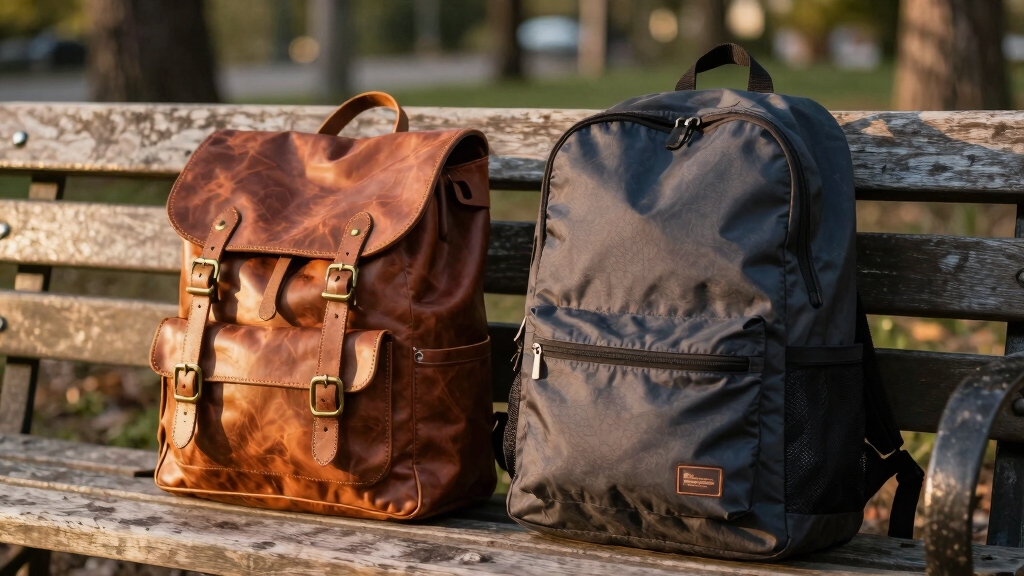
When choosing between a knapsack and a backpack, consider your load and trip length. A knapsack is smaller, under 30 liters, with a simple design. It is great for daily errands or light day trips.
Backpacks offer multiple compartments, padded straps, and hip belts. They provide 50+ liters of space, fitting heavier, bulkier gear for longer adventures.
Backpacks also use frame systems for comfort on extended treks. If you want to optimize capacity, comfort, and durability for your specific needs, you’ll find more insights ahead.

- [Multiple Uses]: Perfect for give away. Used as activities bags or gift bags for a party. Put things…
- [Sturdy Material]: Made Of Washable Polyester Fabric, bottom corners are reinforced with triangle PU…
- [Folding & Lightweight]: Bulk drawstring backpacks are folding and lightweight, very portable. You…

- AFTER SALES SERVICE : We solemnly promise that within one year of receiving this product, if any…
- LARGE CAPACITY AND ORGANIZED: men travel backpack owns 20 independent pockets for storing large…
- CONVENIENT AND MULTIPURPOSE: The external cable provides convenience for charging phone. There is a…
Key Takeaways
- Knapsacks have one main compartment, while backpacks have multiple compartments for better organization.
- Knapsacks typically hold under 30 liters, backpacks often exceed 50 liters for larger loads.
- Backpacks include padded hip belts and frame systems for comfort on long trips; knapsacks lack these features.
- Knapsacks suit short day trips with light gear; backpacks are designed for multi-day hikes and heavier equipment.
- Backpacks use durable, high-denier fabrics; knapsacks have simpler construction and less reinforcement.
Backpack or Knapsack: Comparison Table
| Feature | Knapsack | Backpack |
|---|---|---|
| Capacity | Under 30 liters | 50+ liters (some 30L+ options available) |
| Primary Use | Daily errands, school, short day trips | Multi-day hikes, travel, extended outdoor adventures |
| Compartments | One main compartment | Multiple compartments and specialized pockets |
| Load Type | Light essentials (wallet, bottle, light clothing) | Heavy, bulky gear (tent, sleeping bag, equipment) |
| Frame System | No internal or external frame | Internal or external frame for load support |
| Hip Belt | Typically none | Padded hip belts for weight distribution |
| Strap Padding | Minimal or basic straps | Thick, padded, adjustable shoulder straps |
| Comfort for Long Use | Suitable for short durations | Designed for extended wear and heavy loads |
| Durability | Simpler construction, lighter materials | High-denier fabrics (e.g., Cordura, ballistic nylon) |
| Weight Distribution | Weight rests mainly on shoulders | Transfers weight to hips for reduced fatigue |
| Organization | Basic storage | Advanced organization system |
| Best For | Commuting, quick outings, minimal gear | Trekking, camping, long travel, outdoor exploration |
Knapsack Vs. Backpack: What’s the Difference?
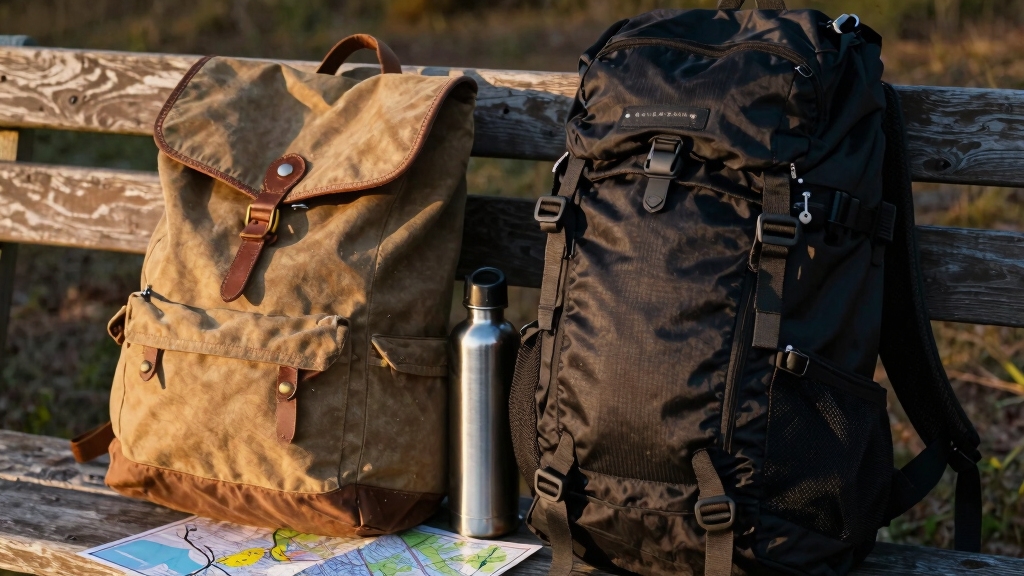
When choosing between a knapsack and a backpack, understanding their distinct designs and uses can help you pick the right option for your needs.
A knapsack is typically a simple, smaller bag with one large central compartment, ideal for day trips or daily tasks requiring minimal gear. It usually lacks internal frames and extra pockets, making it lightweight and straightforward.
A knapsack is a lightweight, simple bag with one main compartment, perfect for light, everyday use.
A backpack, on the other hand, is a broader term that covers various shoulder-worn bags designed for carrying heavier loads or more items. Backpacks often feature multiple compartments, padded hip belts, and frame systems that distribute weight more evenly.
If you need to carry just essentials for a few hours, a knapsack suits you well. For heavier or longer use, a backpack offers better support and organization.
Standard backpacks typically measure around 16x11x8.5 inches, providing a balance between size and capacity for everyday use.
How Design and Size Affect Knapsack and Backpack Use?
Although both knapsacks and backpacks serve the purpose of carrying your belongings, their design and size fundamentally shape how you use them.
Knapsacks, with simpler designs and capacities under 30 liters, suit light daily loads and day trips.
Backpacks, often larger and equipped with padded hip belts and multiple compartments, support heavier, organized packing for extended use.
Consider how these differences impact you:
- Size: Knapsacks fit smaller loads, making them easy to carry for short durations. Backpacks handle bulkier gear for longer periods.
- Design: Knapsacks typically have one main compartment, ideal for fewer items. Backpacks offer specialized pockets for better organization.
- Comfort: Backpacks’ padded straps and hip belts distribute weight evenly, reducing fatigue during extended wear.
Additionally, backpacks in the 30L range provide about 50% more volume than smaller knapsacks, allowing for more versatile packing. Choose based on your load and duration needs.
Which Bag Is Best for Daily Use and Short Trips?
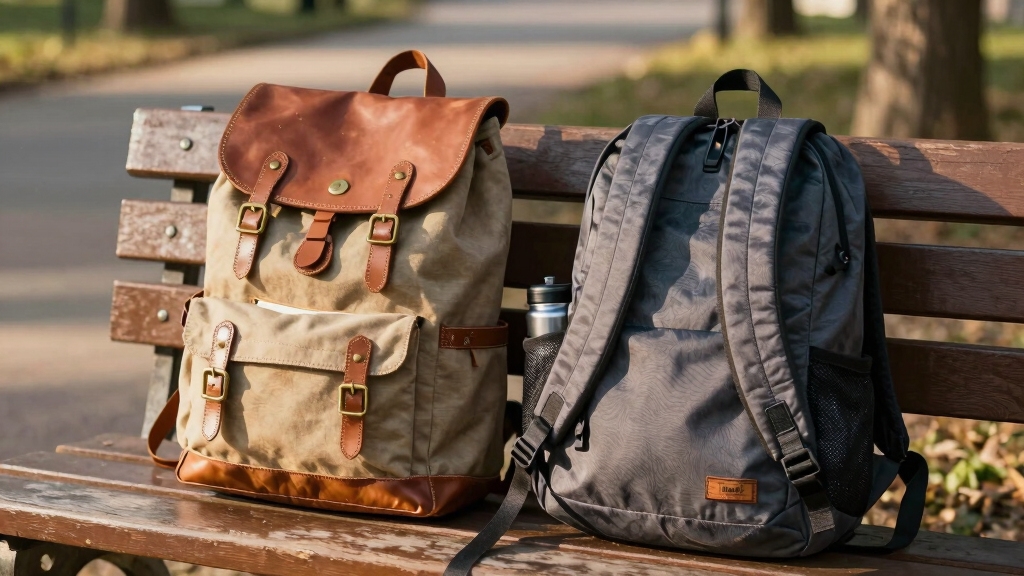
Since daily use and short trips usually involve carrying a moderate amount of items without heavy gear, choosing a knapsack often makes the most sense.
For everyday errands and short trips, a knapsack offers just the right size and simplicity.
Knapsacks are designed with a simple, single large compartment that easily accommodates essentials like a water bottle, wallet, and light clothing.
Their smaller capacity, typically under 30 liters, keeps your load manageable, preventing unnecessary bulk.
Without internal frames or heavy padding, knapsacks remain lightweight and comfortable for short durations.
You won’t need the multiple pockets and reinforced support found in backpacks or rucksacks, which are better suited for heavier or longer excursions.
If your daily routine involves commuting, errands, or quick outings, a knapsack strikes the ideal balance between convenience and capacity, ensuring you carry what you need without feeling weighed down or over-equipped.
For travelers, understanding airline size restrictions is useful when selecting bags for short trips that may involve carry-on luggage.
Why Rucksacks and Backpacks Work Best for Longer Adventures?
If you plan to set out on multi-day hikes or extended outdoor trips, rucksacks and backpacks offer the durability and capacity you’ll need to carry your gear comfortably.
Unlike knapsacks, they feature robust frame systems and padded hip belts that distribute weight evenly, reducing fatigue on long treks. Their multiple compartments let you organize essentials efficiently, keeping bulky items like tents and sleeping bags separate from smaller gear.
Here’s why you should choose them for longer adventures:
- Load Distribution: Padded belts and frames transfer weight to hips, enhancing comfort.
- Ample Capacity: They hold 50+ liters, accommodating all necessary equipment.
- Durability: Crafted from tough materials designed to withstand harsh conditions.
Many use high-denier fabrics like Cordura or ballistic nylon in critical areas to increase abrasion resistance and extend pack lifespan.
These factors make rucksacks and backpacks indispensable for prolonged outdoor exploration.
How to Choose the Right Knapsack or Backpack by Capacity and Comfort?
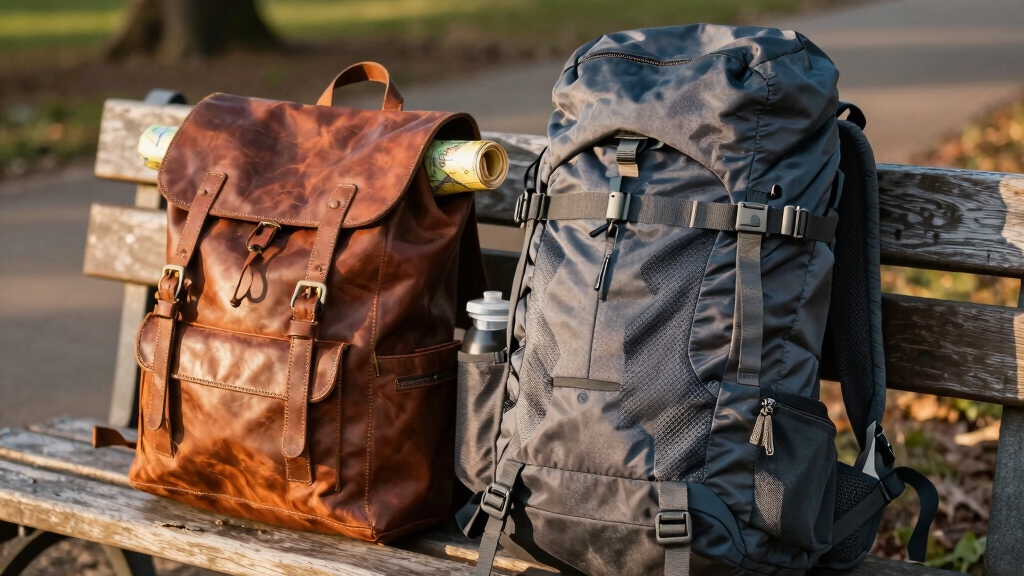
When selecting the right knapsack or backpack, you need to balance capacity with comfort to match your specific activities.
For day trips or school, a knapsack under 30 liters with a simple design and minimal padding will suffice, keeping weight light and movement unrestricted.
If you’re heading on multi-day hikes, choose a rucksack or backpack with 50+ liters capacity, internal or external frame support, and padded hip belts to distribute heavy loads evenly.
Focus on adjustable straps and breathable materials to enhance comfort over long periods.
Consider how you’ll organize gear—multiple compartments help separate essentials.
Ultimately, pick a bag that fits your body size and activity level, ensuring it doesn’t strain your shoulders or back while holding everything you need securely.
To accurately compare bag sizes, measure the exterior dimensions and calculate volume using the Length × Width × Height formula for a reliable capacity estimate.
Frequently Asked Questions
What Is the Origin of the Term “Knapsack”?
You’ll find that the term “knapsack” originates from German, dating back to around 1600.
It combines “knap,” meaning the back of the neck or a small hill, with “sack,” referring to a bag.
If you’re in Canada, you’ll hear “knapsack” more often, reflecting its Germanic roots.
Understanding this origin helps you appreciate how regional language influences naming, even if the item’s function remains similar worldwide.
How Do Knapsacks Differ From Haversacks?
Imagine you’re carrying a Victorian satchel, then shift to modern gear: knapsacks and haversacks differ mainly in design and wear.
You’ll notice a knapsack uses two shoulder straps, distributing weight evenly on your back, with one large compartment.
In contrast, haversacks are single-shouldered bags, slung over one side, less stable for heavy loads but quick to access.
Are Knapsacks Typically Made From Waxed Canvas?
Yes, knapsacks are often made from waxed canvas, especially if they’re designed for durability and some weather resistance.
You’ll find this material useful because it’s tough, water-resistant, and ages well, making it perfect for daily use or light outdoor activities.
However, not all knapsacks use waxed canvas; some rely on nylon or leather depending on style and function.
Why Do Rucksacks Often Include Frame Systems?
You’ll find rucksacks often include frame systems because they help distribute heavy loads evenly across your body, reducing strain on your shoulders and back during long treks or multi-day expeditions.
These frames provide structure and stability, keeping the pack close to your body and improving balance.
Without a frame, carrying bulky or heavy gear becomes uncomfortable quickly.
The frame system enhances comfort and performance on extended outdoor adventures.
How Do Hip Belts Improve Backpack Comfort?
Hip belts improve backpack comfort by shifting the load from your shoulders to your hips, which are better equipped to carry heavy weights.
This coincidence of biomechanics and design means you’ll feel less strain and fatigue during long hikes or daily commutes.
The padded belt stabilizes the pack, reducing sway and pressure points.
Small Load or Big Adventure: What’s Your Move?
Now that you know the subtle yet vital differences between knapsacks and backpacks, the choice might seem straightforward. But wait.
Think about your daily needs, trip length, and comfort preferences before deciding. Will you carry light essentials or gear for a longer adventure?
Your ideal bag isn’t just about style—it’s about function, fit, and capacity. Choose wisely, because the right pack can transform your journey from a struggle into seamless exploration.
What will you pick?
- [Multiple Uses]: Perfect for give away. Used as activities bags or gift bags for a party. Put things…
- [Sturdy Material]: Made Of Washable Polyester Fabric, bottom corners are reinforced with triangle PU…
- [Folding & Lightweight]: Bulk drawstring backpacks are folding and lightweight, very portable. You…
- AFTER SALES SERVICE : We solemnly promise that within one year of receiving this product, if any…
- LARGE CAPACITY AND ORGANIZED: men travel backpack owns 20 independent pockets for storing large…
- CONVENIENT AND MULTIPURPOSE: The external cable provides convenience for charging phone. There is a…
Last update on 2026-04-06 / Affiliate links / Images from Amazon Product Advertising API