
Weighted Vest vs Weighted Backpack: What Should You Choose?

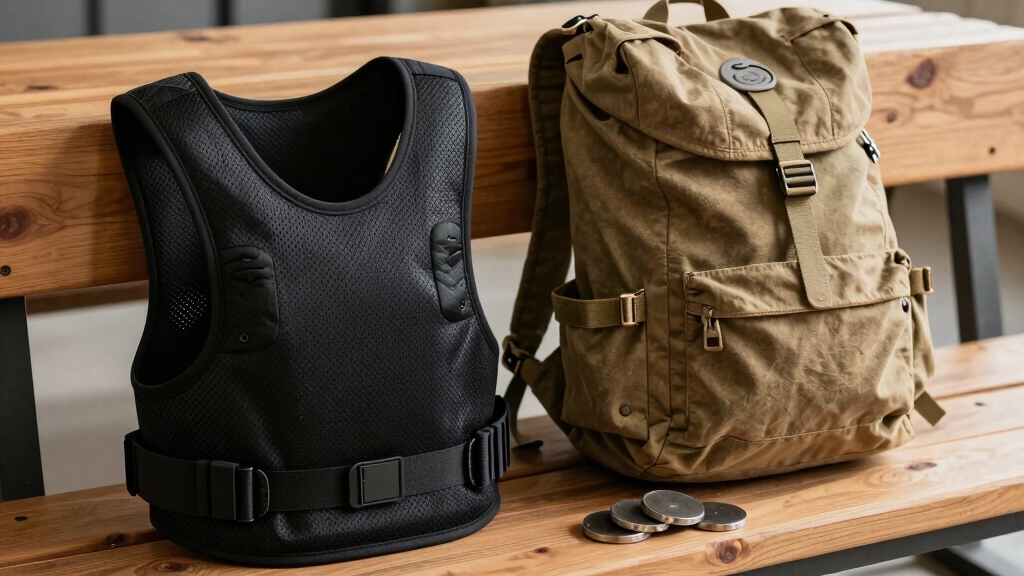
When choosing between a weighted vest and a weighted backpack, think about your goals and comfort. A weighted vest keeps weight close to your torso, boosting posture, core engagement, and workout efficiency with less fatigue.
It’s perfect for high-intensity or bodyweight training. In contrast, a weighted backpack suits longer, loaded hikes or rucking, offering more storage but demanding more energy and balance effort.
Ready to optimize your training approach? Explore how these differences can elevate your performance.
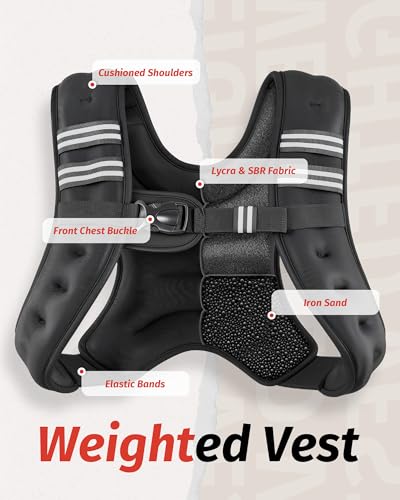
- Faster Fitness Gains: Zelus weighted vests (6/8/12/16/20/25/30 lb) feature evenly distributed iron…
- One Size Fits Most: Our weighted vest for women and men is equipped with adjustable buckle straps…
- Comfort That Lasts: Enjoy lasting comfort with the soft yet wear-resistant spandex fabric, designed…
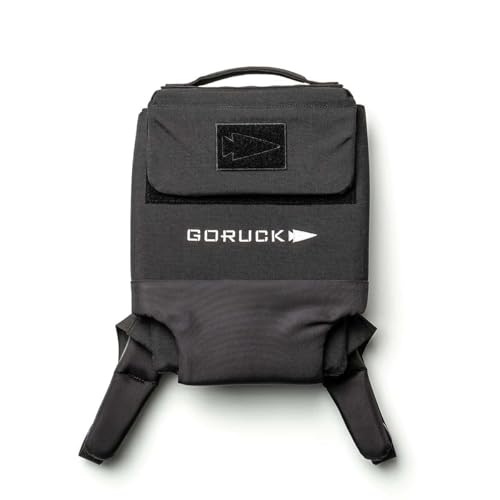
- PURPOSE BUILT FOR RUCKING: The Ruck Plate Carrier is purpose built for streamlined rucking, with an…
- SUPER STRAPS: Thin straps cutting into your neck is the last thing you want while carrying weight….
- HIGH AND STABLE WEIGHT: Keeping the Ruck Plates high on your back, stable, and evenly distributed…
Key Takeaways
- Weighted vests evenly distribute weight close to the torso, enhancing posture and reducing strain compared to backpacks.
- Backpacks concentrate load on shoulders and hips, increasing energy expenditure and fatigue during prolonged use.
- Vests promote core engagement and upright stance, ideal for high-intensity bodyweight and strength exercises.
- Backpacks are better suited for endurance activities like hiking or rucking with heavier loads and storage needs.
- Weighted vests offer precise weight adjustments and minimal shifting, while backpacks provide storage and adjustable comfort features.
Key Differences at a Glance Between Weighted Vest Vs Weighted Backpack
| Feature | Weighted Vest | Weighted Backpack |
|---|---|---|
| Weight Distribution | Evenly spread across the torso | Concentrated on shoulders and hips |
| Posture & Stability | Promotes upright posture and core engagement | Requires more balance and posture control |
| Energy Efficiency | Lower fatigue due to close center of mass | Higher energy demand over time |
| Best Training Use | HIIT, bodyweight, strength workouts | Rucking, hiking, endurance training |
| Comfort During Movement | Minimal shifting, snug fit | Can shift without proper straps |
| Adjustability | Precise weight increments | Broader load changes |
| Storage Capacity | No storage, training-focused | Built-in storage for gear |
| Ideal User | Athletes focused on performance and form | Users needing versatility and carry space |
How Weighted Vests and Backpacks Carry Weight Differently?
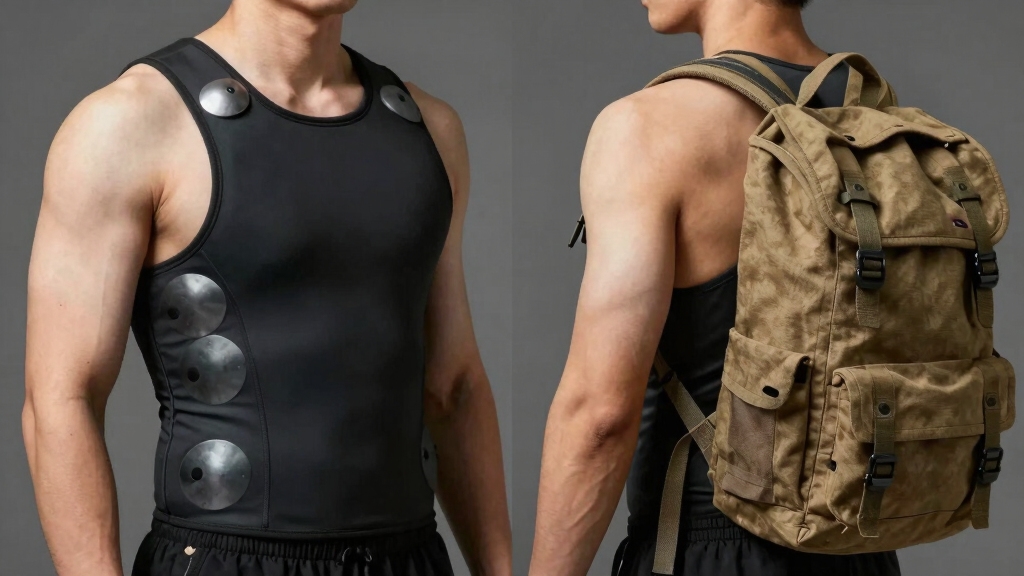
When you choose between a weighted vest and a backpack, understanding how each carries weight can transform your training experience.
Choosing between a weighted vest and backpack shapes how you carry weight and train effectively.
Weighted vests distribute load evenly across your torso, keeping the weight close to your center of mass. This design reduces unnecessary biomechanical adjustments and limits forward lean, letting you move more naturally and efficiently.
In contrast, backpacks concentrate weight on your shoulders, upper back, and hips, placing the load further from your center. This positioning demands more energy to maintain balance and posture.
While backpacks engage your posterior chain more, vests minimize strain on your torso and lower back. Knowing these differences helps you pick the right tool for your goals, whether it’s enhancing core stability with a vest or tackling heavier loads with a backpack.
For optimal comfort and durability, selecting gear made from abrasion-resistant materials ensures it withstands heavy use and maintains its protective qualities.
How Load Placement Affects Energy Use and Fatigue?
By positioning weight close to your torso, weighted vests reduce the energy your body uses to maintain balance and posture. This lets you move with greater efficiency and less fatigue.
This even load distribution near your center of mass lowers oxygen consumption and muscle activation, so you feel less drained during workouts. In contrast, backpacks place weight farther away on your shoulders and hips, forcing your body to work harder to stabilize and counteract the imbalance.
This increased metabolic demand elevates fatigue, especially over longer sessions. Choosing a vest means you can sustain activity with reduced energy expenditure, making it ideal for high-intensity or frequent training.
Understanding how load placement impacts your energy use empowers you to train smarter and maximize endurance without unnecessary fatigue. Proper care and maintenance, such as lubricating moving parts with WD-40, can also improve performance and reduce wear when using weighted gear.
Posture and Stability With Weighted Vests vs. Backpacks
Although both weighted vests and backpacks offer excellent stability, you’ll find that vests promote better posture and core engagement by distributing weight evenly across your torso. This even load encourages an upright stance, reducing forward lean and minimizing lower back strain.
When you wear a weighted vest, your core muscles activate naturally to maintain balance, enhancing stability without overburdening your shoulders. In contrast, backpacks concentrate weight on your shoulders and upper back, pulling you backward and forcing biomechanical adjustments that increase energy use.
While backpacks engage your traps and posterior chain, they can cause imbalance if poorly fitted. Choosing a backpack with the appropriate size and fit can help mitigate some of these issues and improve comfort.
Best Workouts for Weighted Vests and Backpacks
Since weighted vests and backpacks serve different training purposes, choosing the right workout maximizes their benefits.
Use a weighted vest for cardio, bodyweight exercises, and strength moves like push-ups and squats. Its even load boosts core stability and posture without excessive strain. This allows you to push intensity during short, focused sessions.
On the other hand, backpacks excel for rucking, hiking, and endurance training, especially when carrying heavier loads over longer distances. They engage your posterior chain and build stamina by challenging your balance and energy systems.
Tailor your workouts accordingly: opt for vests when aiming for power, agility, and posture. Choose backpacks to increase metabolic demands and endurance during zone 2 cardio or extended loaded walks.
This approach unleashes the full potential of both tools. Additionally, taking preventive measures to maintain your weighted gear can ensure its longevity and reliable performance during your workouts.
Comparing Comfort, Adjustability, and Storage in Weighted Vests and Backpacks
When choosing between weighted vests and backpacks, understanding their comfort, adjustability, and storage options is essential to optimize your training experience.
Weighted vests offer a snug fit that minimizes shifting. They allow you to adjust weights in small, precise increments, perfect for fine-tuning your load.
Weighted vests provide a secure fit and precise weight adjustments for optimal training customization.
They’re easier to load and unload but lack storage, focusing purely on training efficiency. Backpacks provide adjustable compartments or heavier plates but require sternum straps and hip belts to maintain comfort during extended use.
Their 20L storage capacity lets you carry hydration and snacks, making them ideal for outdoor activities or longer sessions. Ultimately, pick a vest for streamlined, intense workouts.
Choose a backpack when you need versatility paired with practical storage for endurance or functional training. Both options should be regularly checked and maintained to ensure long-term durability and optimal performance.
Frequently Asked Questions
Can Weighted Vests Impact Breathing During Intense Exercise?
Yes, weighted vests can impact your breathing during intense exercise, but usually less than backpacks. Because they distribute weight evenly and sit close to your torso, they minimize restrictive pressure on your chest, letting you breathe more freely.
Still, as intensity rises, added load demands more oxygen, so you’ll feel that effort. Focus on controlled breathing and proper vest fit to optimize oxygen flow and maintain performance.
Are Weighted Backpacks Suitable for Children or Teenagers?
You should be cautious with weighted backpacks for children or teenagers; studies show their growing spines handle loads less efficiently, increasing injury risk when carrying more than 10-15% of their body weight.
If you choose to use one, make sure proper fit, load distribution, and limit duration. Prioritize lighter weights and focus on gradual strength building to protect posture and avoid fatigue.
Promote safe and effective training habits for young users.
How Do Weighted Vests Affect Heat Retention Compared to Backpacks?
Weighted vests help you retain less heat compared to backpacks because they distribute weight evenly and stay snug against your torso, reducing excess bulk and air trapping. Backpacks increase heat production and fatigue since they concentrate weight on your back and shoulders.
This forces your body to work harder to maintain balance.If you want to stay cooler during workouts, vests are a smarter choice to minimize overheating and boost endurance.
What Materials Are Typically Used in Weighted Vests Versus Backpacks?
You’re stepping into a world where materials make all the difference. Weighted vests typically use durable neoprene or mesh fabrics with steel or iron plates for precision loading.
Backpacks, on the other hand, rely on rugged nylon or polyester with heavy-duty zippers, reinforced stitching, and compartments housing steel or sandbag inserts.
Knowing these materials helps you choose gear built to endure intense workouts or lengthy treks, maximizing your performance and comfort.
Can Weighted Backpacks Cause Long-Term Shoulder or Back Injuries?
Yes, weighted backpacks can cause long-term shoulder or back injuries if you don’t use them properly. The concentrated weight on your shoulders and upper back forces your body to adjust posture, increasing strain and fatigue.
To avoid injury, make sure the load is well-distributed. Use sternum straps and hip belts, and keep weight manageable, ideally under 15% of your body weight. Prioritize good form and listen to your body to stay safe and strong.
Making the Smart Choice Between Vest and Backpack Training
Picture yourself moving with ease, whether wearing a weighted vest snug against your chest or a backpack balanced on your shoulders. Each carries weight differently, shaping your posture and energy uniquely.
Knowing how load placement affects your fatigue helps you train smarter and push harder. Choose the gear that fits your goals, comfort, stability, or storage, and watch your workouts transform. You’re not just carrying weight; you’re carrying progress.

- Every items comes with weights included
- Weights can be removed in all models
- Shoulder pads options also available
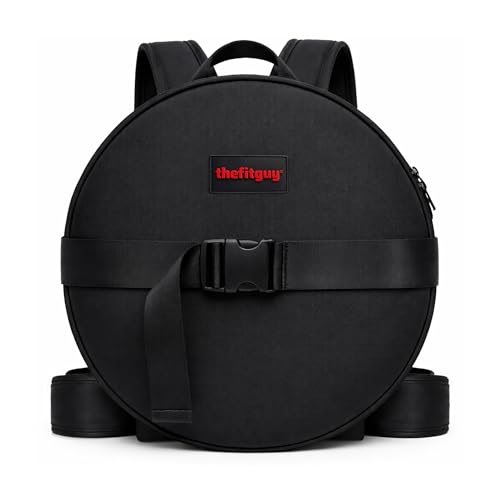
- TURN PUSH-UPS INTO REAL STRENGTH TRAINING: Purpose-built backpack that loads a full-size gym plate…
- SIZED FOR A 17.5″ GYM PLATE (47 CM WIDTH): Fits plates up to 17.5″ diameter and 2.5″ thick. Bigger…
- HEAVY-DUTY BUILD THAT STAYS TIGHT: Reinforced stitching, padded straps, and a dual buckle system…
Last update on 2026-03-12 / Affiliate links / Images from Amazon Product Advertising API