
Can You Bring Rope on a Plane: Airport Policies Differ

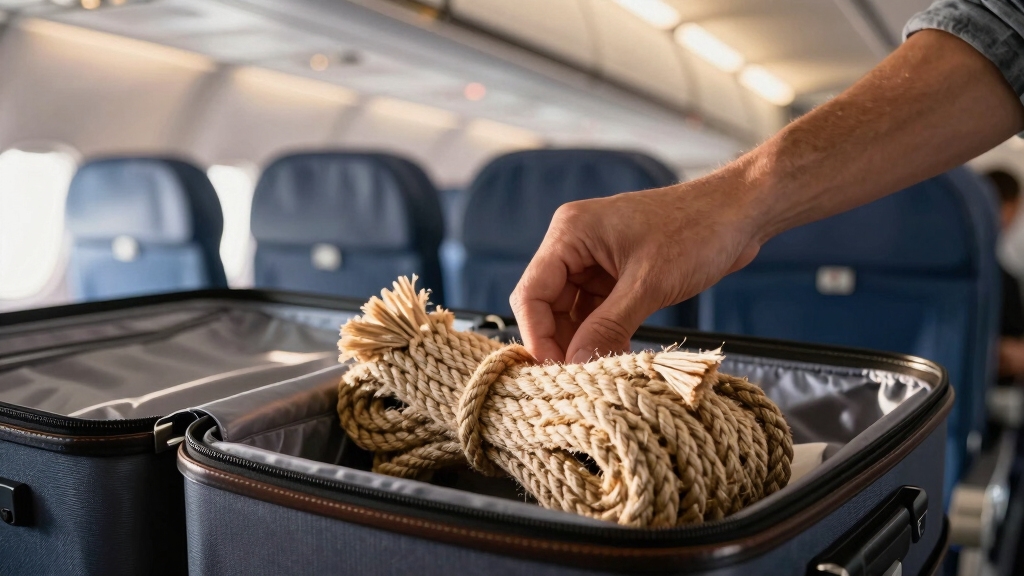
You can bring rope on a plane, but rules vary. TSA generally allows rope in checked baggage if properly coiled and secured. Carrying it in your hand luggage is subject to strict screening.
Rope may trigger inspections or even confiscation, depending on length, material, and airport policies. Specialized or climbing ropes should be clearly labeled to ease checks.
Security concerns about restraint and safety drive these rules, so preparing for unpredictable outcomes is wise. Explore how different airports and airlines handle rope for smoother travel.
Key Takeaways
- TSA allows rope in checked baggage but carry-on rope is subject to inspection and possible confiscation based on security concerns.
- Rope in carry-on may trigger delays or removal due to its potential use as a restraint or security threat.
- Packing rope neatly, labeling as climbing or sports gear, and avoiding metal hardware can ease TSA inspection.
- Rope rules vary by airport and country; some airports, especially internationally, require rope to be checked only.
- Compliance with airline size and weight limits and cooperating with TSA requests ensures smoother screening and travel.
TSA Guidelines for Carrying Rope in Hand Luggage
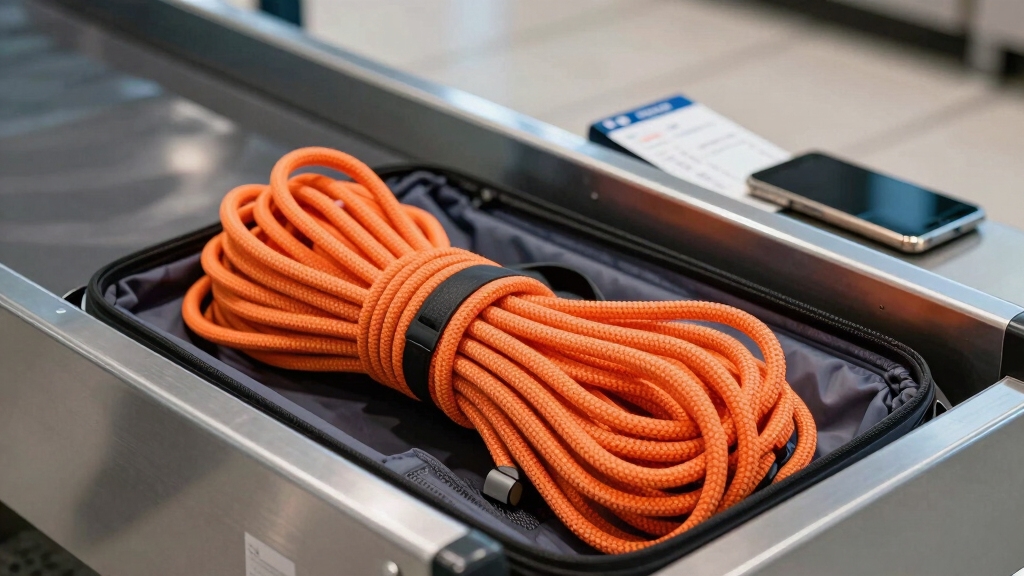
Although TSA guidelines don’t explicitly ban rope in carry-on luggage, agents have broad discretion to flag and inspect it as a potential security risk. This discretion is similar to how TSA officers have final authority to allow, inspect, or confiscate other items based on security risk.
When rope appears on X-ray scanners, agents may remove it for closer examination or ask you to transfer it to checked baggage. Travelers have reported that enforcement can vary widely even on the same trip, with some airports allowing rope in carry-on while others confiscate it, highlighting the inconsistent enforcement.
TSA doesn’t differentiate rope by type or length; any rope can trigger additional inspection due to security concerns about restraint or hijacking.
Their decisions rely heavily on subjective judgment, and enforcement varies between airports.
You should expect possible delays and unpredictable outcomes if you carry rope in your hand luggage.
To minimize issues, coil rope neatly and be ready to explain its purpose.
Ultimately, TSA reserves the right to inspect or prohibit rope in carry-ons to guarantee passenger safety.
Rules for Packing Rope in Checked Baggage
You can definitely bring rope in your checked baggage, but it’s important to pack it carefully to avoid any damage or extra scrutiny.
To get started, make sure to coil the rope neatly. This helps keep it organized and prevents it from tangling. After that, secure it well to stop it from unraveling during your travels. Using a cable tie can provide additional security by keeping the rope tightly bound.
When you’re packing, think about where you place the rope in your bag. It’s a good idea to put it somewhere that TSA agents can easily access it, just in case they need to inspect it. Also, adjusting the rope lanyard to be all the way short can help prevent snagging during handling.
Allowed in Checked Bags
When packing rope in your checked baggage, it’s important to know that TSA and most airlines allow it without restrictions, provided you secure it properly. Rope isn’t classified as a prohibited item, making checked bags the ideal place for longer or bulkier ropes. Choosing a duffel bag made of durable materials can help protect the rope during transit.
However, you should coil and secure the rope tightly to prevent tangling and damage during rough handling. TSA may inspect your bag to verify contents, so clear packing that identifies the rope as sports or climbing gear helps ease inspections. Keep in mind that security experiences can vary, and sometimes items in checked bags are subject to extra screening.
Keep your bag within airline weight and size limits, as overweight or oversized baggage can incur fees or be rejected. Properly packed rope reduces the risk of snagging on equipment and speeds up security checks, ensuring smooth travel with your gear.
Packing Tips for Rope
Packing rope efficiently takes careful planning to maximize space and protect your gear during transit.
Start by coiling the rope neatly and securing the ends to prevent unraveling. Use rope bags or stuff sacks to keep it compact and organized inside your checked luggage. Selecting the right size and material for your rope bag can enhance durability and protection during travel, similar to choosing suitable duffle bag materials.
Always prioritize rope length and diameter based on your trip to avoid excess bulk and weight, which can complicate packing and handling. Since a rope or cord can be used to tie, choke, or restrain someone, skipping ropes and similar items are often flagged during security checks.
Place rope centrally in your bag, cushioned by softer items to prevent damage. Keep rope dry using waterproof bags to avoid mold or mildew. Label rope bags clearly for quick identification during inspections.
Following these packing rules helps you stay within airline limits, safeguards your rope, and ensures a smooth security process while traveling with rope in checked baggage.
TSA Inspection Considerations
Although TSA generally permits rope in checked baggage, you should prepare it thoughtfully to minimize inspection delays.
Coil your rope neatly and consider labeling it clearly to help TSA agents identify it quickly. Avoid packing it loosely or tangled, as this can raise suspicion and prompt additional scrutiny. Regularly inspect your packing to keep items organized and prevent issues during security checks.
While TSA doesn’t require special wrapping, protecting your rope from damage is advisable. Keep rope coiled and packaged for clear TSA inspection. Remember, TSA officers have discretion to inspect or confiscate items they deem security risks.
Organizing your rope reduces the chance of your bag being opened. If TSA inspects your bag, they typically leave a notification card.
Reasons TSA Restricts Rope in Carry-On Bags
Because rope can be used in various harmful ways, TSA restricts rope in carry-on bags to prevent potential security threats. When you attempt to bring rope onboard, agents assess its potential misuse in hijacking, restraint, or sabotage scenarios.
This evaluation includes considering length, thickness, and appearance, which can trigger additional screening or confiscation. TSA’s policies reflect concerns about flight safety and passenger comfort, aiming to minimize onboard risks.
Key reasons TSA restricts rope include:
- Rope’s potential use in hostage situations or assembling weapons.
- Difficulty in screening due to rope’s shape and density, prompting physical bag searches.
- The need to guarantee unobstructed passenger movement and rapid emergency evacuation.
Understanding these factors helps you comply with TSA rules and avoid complications at security checkpoints. Additionally, similar to how TSA requires laptops to be removed from bags for security screening, rope’s presence can necessitate extra inspection steps to ensure safety.
Variations in Rope Policies Across Airports and Countries
You’ll notice that rope policies can really vary from one airport to another and even between countries. It’s pretty interesting how local security priorities and international regulations shape these rules. For example, some countries/regions may restrict additional items beyond listed restrictions, so it’s always wise to check the specific rules at your departure and arrival airports.
For instance, some areas might emphasize the type of object and potential threats, while others may focus more on size limits and use their discretion during screening. Understanding measurement guidelines can also be crucial when determining if an item like rope complies with carry-on size restrictions.
Airport Policy Differences
When you travel with rope, expect airport policies to vary markedly across regions and countries. In the U.S., TSA’s stance fluctuates, sometimes refusing rope in carry-on bags due to security concerns. Enforcement varies by airport and agent discretion
Note that rope is often considered a choking hazard and restraint device, which contributes to its restriction in cabins. Additionally, TSA regulations emphasize carry-on item safety to prevent potential threats during security screening.
Indian airports enforce strict bans on rope in cabins, mandating checked baggage.
Latin American airports apply discretionary rules, leading to inconsistent passenger experiences. Meanwhile, UK and EU airports uniformly require rope to be checked, citing safety regulations.
Key policy differences include:
- U.S.: Inconsistent enforcement; some airports strictly ban rope carry-ons, others allow them.
- India: Rigid prohibition on rope in cabin baggage; must be checked.
- UK/EU: Standardized rules mandate checking rope to prevent misuse.
International Carry-On Rules
Although no international aviation security regulation explicitly bans rope in carry-on luggage, airports and airlines enforce varied policies based on local rules and security assessments. Verify your rope’s dimensions and weight to ensure compliance with airline size restrictions.
You’ll find that some airports, like Hermosillo in Mexico, require climbing rope to be checked due to security concerns. Others allow it if it meets size and weight limits.
Airlines often classify rope under general baggage or sports equipment, but local security personnel’s discretion plays a key role. Passengers should also be aware that TSA officers’ instructions must be followed for smooth processing when carrying any unusual items.
| Airport/Country | Rope Policy | Notes |
|---|---|---|
| Hermosillo, Mexico | Carry-on prohibited, check-in required | Heightened security concerns |
| US Airports | Generally allowed if size permits | Subject to TSA discretion |
| European Airports | Allowed with size and weight limits | Some require removal of tags |
| Japan | Allowed, security may request explanation | Language barriers can complicate communication |
Enforcement Discretion Variability
Because enforcement discretion varies markedly, how rope is treated at airports depends heavily on local authorities and federal guidelines.
You’ll find that both U.S. airports and international ones apply different standards based on security context and perceived threat.
The FAA often exercises discretion, especially when rope poses no clear danger, but local airport authorities may have stricter rules or penalties.
Consider these key factors affecting enforcement variability:
U.S. airport policies: Some, like San Francisco International, can revoke access or confiscate rope depending on security concerns.
International differences: Countries follow distinct aviation security standards; rope may be allowed in checked baggage but restricted in carry-on.
Security level and intent: Higher threat levels prompt tighter enforcement; suspicious rope use triggers immediate action.
Understanding these nuances helps you navigate rope policies effectively. Additionally, travelers should be aware that security devices like TSA-approved locks facilitate inspection without damage during luggage screening.
Special Considerations for Climbing and Specialty Ropes
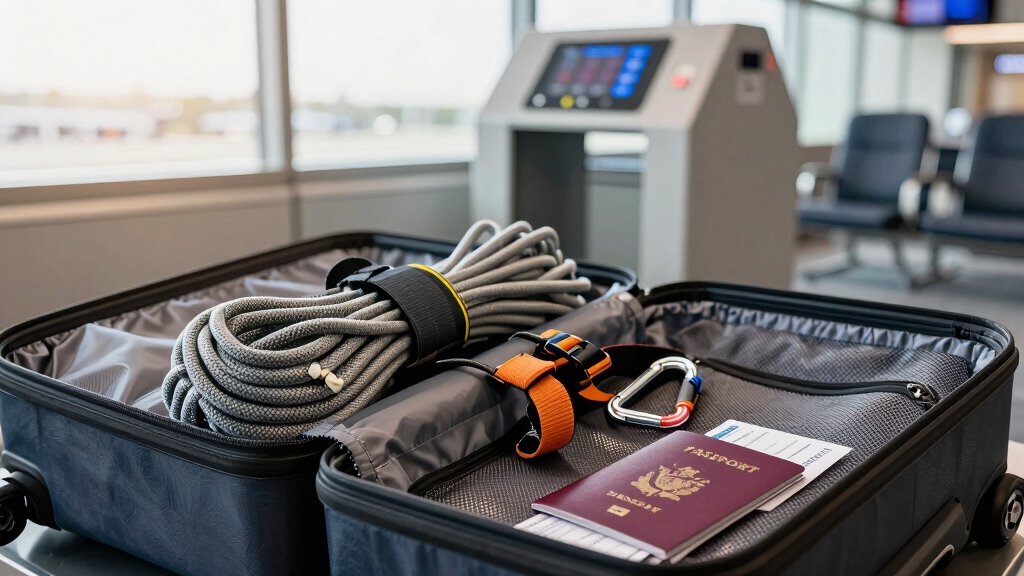
Guiding airline and TSA regulations on climbing and specialty ropes demands careful preparation to guarantee smooth travel. You should pack climbing ropes, especially those with coatings or chemical treatments, with clear labels to avoid confusion and delays.
Specialty ropes, such as rescue or industrial types, often require documentation or advance notification to airlines. Airlines may impose weight limits and specific policies for sporting equipment, so confirm these before your trip.
To minimize inspection issues, separate specialty ropes from other gear and avoid carrying metallic hardware in your carry-on. International regulations vary widely, so researching both airline and destination country rules is essential.
When flying, it is recommended to pack ropes and metal gear in checked luggage while placing shoes and chalk bags in hand luggage to comply with standard travel advice for climbing equipment (Flight packing). Following these considerations helps you transport your ropes securely, comply with regulations, and reduce the risk of travel disruptions.
Tips for Packing Rope Safely When Flying
Start by choosing the right packing materials to protect your rope during travel. Use a dedicated rope bag to keep it organized, clean, and dry. This prevents tangling and damage. Coil or flake the rope neatly inside the bag to maintain its integrity and simplify packing. Cushion the rope within your luggage to shield it from crushing or abrasion.
Keep these tips in mind:
Pack rope separately for easy inspection and quick access during security screening. Avoid attaching metal hardware to the rope when carrying it onboard. Pack those items separately or in checked luggage.
Check airline-specific rules on rope size and weight to ensure compliance and avoid delays. Regular inspection of tiedown hardware and ropes is recommended to detect damage or chafing before and after travel to maintain safety and functionality inspection and maintenance.
Following these practices guarantees your rope stays safe, accessible, and TSA-friendly throughout your journey.
How TSA Officers Decide on Allowing Rope Onboard?
Packing your rope carefully helps, but whether you can bring it onboard ultimately depends on TSA officers’ judgment.
Careful packing matters, but TSA officers make the final call on bringing rope onboard.
They assess rope based on length, thickness, material, and its potential security threat, such as use for restraint or sabotage.
Rope clearly linked to climbing or sports gear typically faces less scrutiny.
TSA relies on X-ray images and may physically inspect the rope to confirm its purpose.
Decisions vary widely by airport, airline policies, and individual officers.
Some allow rope in carry-on luggage, while others require checking it.
Explaining the rope’s recreational use and avoiding concealment often eases the process.
You should be prepared for inconsistent outcomes and cooperate promptly with TSA requests to help facilitate a smoother screening experience.
Understanding Security Risks Associated With Rope on Planes
Although rope might seem harmless, it poses significant security risks on planes that you need to understand.
Improperly secured ropes can compromise aircraft stability, especially during strong winds or storms. Proper tie down points or weights must be appropriate for the actual aircraft weight to ensure safety tie down points.
Loose knots and inadequate materials increase the chance of tie-down failure, leading to structural damage or operational hazards.
You must recognize these critical concerns when handling or transporting rope on planes. Consider these risks:
- Structural damage from poorly tied or unsecured ropes during adverse weather
- Material degradation and incorrect load ratings weakening rope effectiveness
- Safety hazards posed by loose ropes on taxiways and during aircraft movement
Understanding these factors helps you appreciate why rope is strictly regulated and why safety protocols demand rigorous inspection, proper knotting, and use of certified materials to prevent accidents and maintain aircraft integrity.
Frequently Asked Questions
Can I Bring Rope on a Private Jet or Charter Flight?
Yes, you can bring rope on a private jet or charter flight, but you must notify the operator in advance.
Pack it in soft, manageable luggage that fits weight and size limits. The captain can refuse items posing safety risks, so clear communication is crucial.
Make certain your rope doesn’t obstruct storage or aisles, and weigh all luggage to comply with aircraft constraints. Confirm acceptance early to avoid surprises on flight day.
Are There Specific Rope Lengths or Thicknesses Allowed on Planes?
There aren’t specific rope lengths or thicknesses officially allowed on planes. TSA and airlines don’t publish exact limits, but longer, thicker ropes, especially climbing ropes, are more likely to draw scrutiny.
If your rope is short and thin, it’s usually fine, especially when packed with other climbing gear. To avoid issues, pack longer or thicker ropes in checked baggage, since security can prohibit items they view as potential restraints or threats.
Does the Type of Rope Material Affect TSA Screening Decisions?
Material matters most. You’ll find natural fibers like cotton or hemp smoothly sail through security, while synthetic strands such as nylon or polyester typically pass without problem.
However, if your rope includes embedded metal wires or chemical treatments, expect extra examination. They can trigger TSA’s scrutiny due to density or safety concerns.
Can I Carry Rope in My Personal Item or Only in Luggage?
You can carry small amounts of rope integrated into personal items, like drawstrings or bag straps, without issues. However, loose or coiled lengths of rope in your personal item are more likely to be flagged and possibly removed.
To avoid delays, it’s best to pack rope in checked luggage, where TSA restrictions are less strict. Always be prepared for additional screening when carrying rope through security checkpoints.
Are There Different Rules for Rope Used in Sports Versus General Use?
No, TSA doesn’t officially differentiate between sports rope and general-use rope.
Whether it’s climbing rope or basic cordage, agents may subject it to the same scrutiny and discretion.
You might be asked to check it or face delays, regardless of its intended purpose.
Always pack rope carefully and be prepared for possible inspection, as TSA focuses on safety concerns rather than the rope’s specific use or sport association.
Avoid Delays: Pack Specialty Ropes the Right Way
When flying, knowing TSA’s rope rules can save you hassle. Curiously, TSA inspects over 2 million bags daily, making their scrutiny strict but consistent. While you can usually pack rope in checked baggage, carrying it onboard often raises red flags due to security risks.
Always check specific airport policies and pack specialty ropes carefully. Staying informed guarantees smooth travel and avoids unexpected delays at security checkpoints.