
How to Calculate Liters of a Bag: Defuse the Guesswork

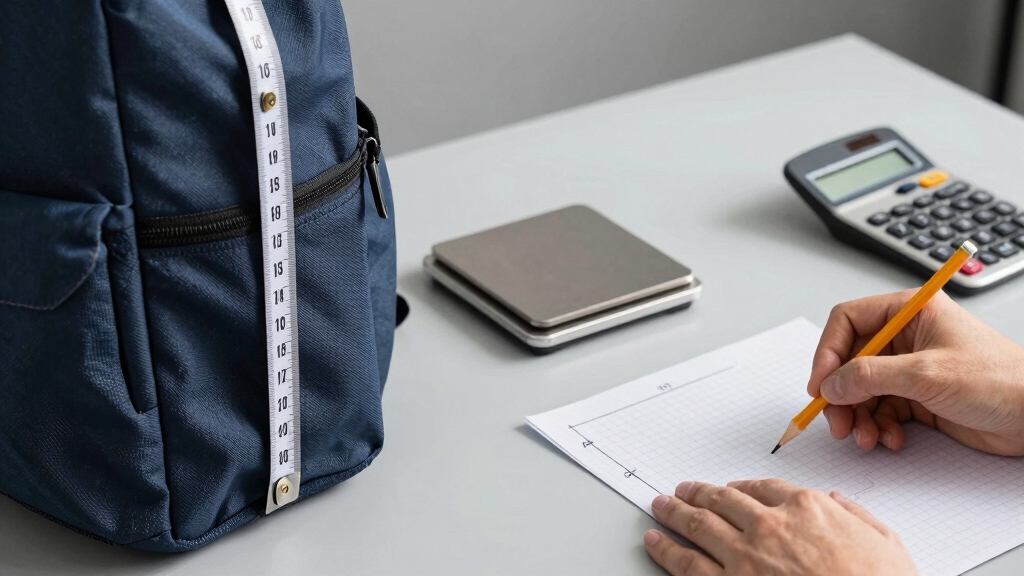
To calculate a bag’s liters, first measure its length, width, and height in centimeters, including protrusions like pockets. Multiply these dimensions to get volume in cubic centimeters. For non-rectangular shapes, apply correction factors or use displacement methods like water fill for accuracy.
Then convert cubic centimeters to liters by dividing by 1,000. Manufacturers’ claims often overstate volume, so use standardized or empirical measures for precision. Exploring more methods will deepen your understanding of volume estimation nuances.
Key Takeaways
- Measure the bag’s external length, width, and height accurately in centimeters, including protrusions like pockets or handles.
- Calculate volume using the formula: Volume (cm³) = Length × Width × Height for rectangular bags; adjust for irregular shapes.
- Convert cubic centimeters to liters by dividing the volume in cm³ by 1,000 (1,000 cm³ = 1 liter).
- For bulging or irregular bags, apply correction factors (typically 1.2 to 2.0) or segment into standard shapes for better accuracy.
- Verify results with empirical methods like water displacement or bead-fill tests to measure usable internal volume.
Measuring Bag Dimensions Accurately
Begin measuring your bag by selecting the appropriate tools to guarantee accuracy. Use a flexible measuring tape for curved surfaces, calipers for small or detailed bags, and a ruler for flat tote bags. It is recommended to measure with the bag empty and on a flat surface to ensure precise exterior dimensions.
Prepare the bag by laying it flat on a stable surface, smoothing out wrinkles, and gently filling soft bags to mimic actual use. Open all compartments on structured bags and secure the bag with tape if needed for precision. Note that the gusset reduces usable height proportionally in gusseted bags.
Measure the width at the widest point, including protrusions like zippers or buckles, typically at the base between the longest sides. For height, measure from the base to the top closure, excluding removable handles.
Including all external features such as pockets and handles ensures the measurement reflects the bag’s true size for airline compliance. Determine the gusset depth by measuring front to back at the broadest section, accounting for the bag’s expanded or collapsed state.
Calculating Bag Volume Using Length × Width × Height
Calculate the volume of a rectangular bag by multiplying its length, width, and height (V = L × W × H). This formula applies to cuboid shapes like backpacks or boxes. Measuring with the bag fully packed or in its typical use state can provide a more realistic volume estimation and assist in accurate capacity calculation.
Calculate a rectangular bag’s volume by multiplying length, width, and height (V = L × W × H).
First, measure the bag’s external dimensions accurately using a tape measure or obtain them from the manufacturer’s specifications. Multiply these three values in consistent units—centimeters, inches, or feet—to get the volume in cubic units. Keep in mind that external dimensions may not reflect the actual usable storage space accurately.
To convert cubic centimeters to liters, divide by 1,000; for cubic inches, divide by 61.024. Using online calculators or software tools can automate unit conversion and multiplication, ensuring precision.
This method yields the bag’s geometric volume, critical for estimating capacity, shipping volume, or storage space without accounting for irregularities or bulging.
Adjusting Bag Volume Estimates for Bulging and Irregular Shapes
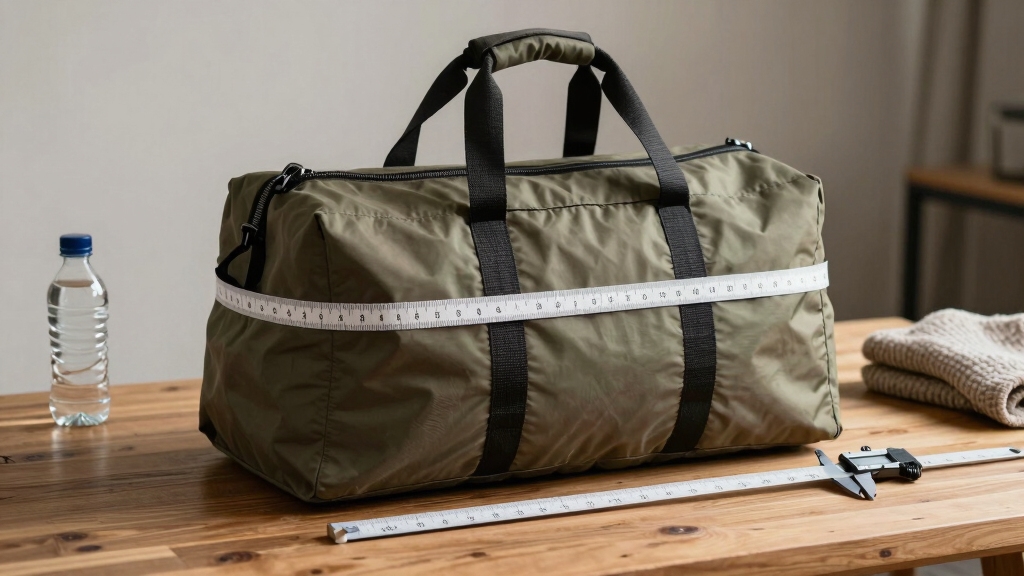
When estimating the volume of bags, it’s important to tweak those basic calculations a bit. You see, bulging fabric and irregular shapes can throw off your numbers.
So, you’ll want to apply some correction factors, which usually range from 1.2 to 2.0. This really depends on the geometry and how much the material expands. Considering the material and portability of the bag can also influence how much bulging affects the total volume.
Now, if you’re dealing with shapes that aren’t your typical cuboids, you might want to use techniques like modeling them as elliptical cylinders or summing up the volumes of different sections.
This can help improve the accuracy of your estimates. Remember that volume is an extensive property and depends on the amount of space the object occupies.
And if the bag is particularly irregular or flexible, the water displacement method is a great option. It gives you an empirical volume measurement that goes beyond just geometric calculations. This way, you get a more reliable estimate of your bag’s capacity.
Bulging Volume Correction
While geometric dimensions provide a baseline volume estimate, adjusting for bulging and irregular shapes is essential to achieve accurate bag capacity predictions.
You start by calculating the volume from panel dimensions, then apply correction factors reflecting fabric stretch and filling pressure. For cuboid bags, multiply the geometric volume by roughly 1.2 to account for bulging.
This 1.2 multiplier aligns with mathematical and inflation studies showing how a cube’s volume increases when filled and bulged beyond flat fabric dimensions (1.2 multiplier).
For stand-up pouches, apply a 0.6–0.8 factor due to sidewall angles and air gaps. Bulk bags expand beyond flat dimensions because of flexible materials, often increasing capacity by 15–20%.
Use average geometric and cylinder volumes for better bulging approximation. Reduce dimensions by 5–10% in inverse calculations to offset bulging. Consider material density since it affects effective volume under pressure.
Irregular Shape Techniques
Adjusting volume estimates for bags with irregular shapes requires breaking down complex geometries into simpler, measurable components.
You start by visually segmenting the bag into standard shapes—rectangles, cylinders, cones, spheres, or hemispheres—and measure each part’s dimensions precisely. Understanding volume as a key factor in backpack size classifications helps ensure accurate capacity estimations.
Apply the appropriate volume formula to each component: length × width × height for rectangular prisms, πr²h for cylinders, (4/3)πr³ for spheres, and so forth. For irregular rectangular prisms, it is helpful to break the shape into multiple parts and label measurements before calculating.
For partial shapes like hemispheres, multiply the full volume by 0.5. Sum all component volumes carefully, ensuring dimensional consistency at shared boundaries to avoid overlap.
This additive volume method tackles bags with bulges, protrusions, or multiple compartments effectively. For complex continuous bulging, consider cross-sectional analysis and integration, which provide higher precision but require advanced calculus techniques.
Water Displacement Method
When you submerge a waterproof bag in water, the volume of water displaced directly corresponds to the bag’s volume. This provides a precise measure for irregular shapes and bulging forms. It is important to ensure the bag is completely waterproof and all pockets are sealed prior to submersion to avoid water damage.
To adjust for bulging, fully expand the bag before submersion. Apply a correction factor between 0.6 and 0.8 if combining with dimensional estimates. Regular maintenance and cautious handling can help preserve the bag’s structure for more accurate volume measurements.
Measure displacement by subtracting the initial water level from the final level in a graduated container; 1 mL displaced equals 0.001 liters. Make certain all air pockets are released by gradual submersion and pushing floating parts underwater.
Use a clear, large container to prevent overflow. Confirm bag is fully waterproof and sealed. Convert displaced volume from cm³ to liters by dividing by 1000.
This method accounts accurately for non-cuboid volumes and irregularities. Proper care and attention can prolong the bag’s usability and prevent premature damage.
Measuring Odd-Shaped Bags With Water Displacement and Fill Methods
To measure the volume of odd-shaped bags, you can rely on two precise techniques: the water displacement method and the filling method.
The water displacement method uses the principle that the volume of water displaced equals the bag’s volume. You submerge a waterproof bag in a container filled to a known level, record the rise, and calculate volume from the difference. This method offers high accuracy for irregular shapes but requires a large container and waterproofing.
Additionally, for complex pouch shapes, 3D CAD simulation can provide the highest accuracy in volume determination. To ensure precise measurement, it is important to avoid introducing air bubbles that may affect the displacement reading.
Alternatively, the filling method involves filling the bag with uniform material like rice or beans, then measuring the fill volume. While more adaptable to any bag material, this method depends on minimizing gaps for accuracy.
Choose based on your bag’s material, available tools, and precision needs. Proper preventive maintenance of measuring tools and containers can improve reliability and repeatability in volume measurements.
Converting Bag Volume From Cubic Centimeters to Liters
To convert bag volume from cubic centimeters to liters, it’s pretty straightforward.
First off, you should know that one cubic centimeter is equal to one milliliter. This little fact makes it easy to switch between the two measurements.
So, when you want to convert cubic centimeters to liters, all you have to do is divide your cubic centimeter figure by 1,000. Alternatively, you could also multiply by 0.001. Either method works, and it helps make sure your volume calculations are spot on. Remember, 1 cm³ = 0.001 L is the fundamental conversion factor that ensures precision and consistency.
Oh, and don’t forget to keep some practical tips in mind! Always check that your units are consistent throughout the calculation, and remember to round accurately. This way, you can maintain the integrity of your measurements. Happy calculating!
Cubic Centimeters Definition
Volume measurement in cubic centimeters (cm³) provides a straightforward basis for converting bag volume to liters, since one thousand cubic centimeters equal exactly one liter. This precise measurement is crucial when determining the capacity and size of bags for accurate comparison.
A cubic centimeter represents the volume of a cube with edges one centimeter long, serving as a precise SI-derived unit for volume. Because 1 cm³ equals 1 milliliter, the metric system guarantees consistent and direct relationships in capacity measurements.
Understanding this unit is essential for accurately interpreting bag volume data before conversion. A cubic centimeter (cc) is the volume of a 1 cm × 1 cm × 1 cm cube. 1,000 cm³ equals exactly 1 liter, facilitating simple volume conversions.
Cubic centimeters are commonly used in scientific, medical, and engineering calculations to measure liquid and solid volumes. It is important to note that 1 cm³ is equivalent to 1 milliliter (mL), making it a convenient unit for fluid volume measurements.
Conversion Calculation Steps
Now that you understand what a cubic centimeter represents and its relation to liters, converting bag volume from cubic centimeters to liters becomes a straightforward calculation.
Start by identifying the bag’s volume in cubic centimeters (cm³). Then, apply the conversion factor: divide the volume by 1000 or multiply it by 0.001 since 1 cm³ equals 0.001 L. This conversion factor is a fundamental conversion fact used universally.
For example, a volume of 500 cm³ converts to 0.5 L by calculating 500 ÷ 1000. Alternatively, multiplying 15 cm³ by 0.001 yields 0.015 L. When measuring bag volume, it is important to consider external dimensions, including wheels and handles, to ensure accurate luggage size measurement.
This formula, liters = cubic centimeters ÷ 1000, is consistent and reliable. Always verify your result by confirming that 1000 cm³ equals exactly 1 L. This process applies universally to any bag volume measured in cubic centimeters, ensuring precise and accurate conversion to liters.
Practical Measurement Tips
When measuring bag volume in cubic centimeters, applying the correct conversion factor guarantees accuracy in liters. Understanding precise measurement techniques ensures consistency and reliability in data.
Remember, 1 cm³ equals 0.001 liters, so you divide the cubic centimeter measurement by 1000 to obtain liters.
This constant factor simplifies calculations and assures consistency across applications. Always verify your results with quick reference values to prevent errors.
Since 1,000 cubic centimeters equals 1 liter, you can easily scale measurements up or down with this straightforward ratio.
Consider these practical tips:
- Use a calculator or software to divide cm³ by 1000 precisely, similar to how digital calipers provide exact measurements in other fields.
- Cross-check with standard equivalences; for example, 500 cm³ equals 0.5 L.
- Apply this method consistently in scientific, engineering, or everyday contexts.
Why Manufacturer Bag Volume Claims Can Be Misleading and How to Get Accurate Estimates?
Although manufacturers provide volume claims to guide your purchase, these figures often misrepresent actual capacity due to inconsistent measurement methods and simplified formulas.
Manufacturer volume claims often mislead due to varying measurement methods and oversimplified calculations.
Many brands rely on length × width × height calculations, which overestimate volume by ignoring irregular shapes and tapered designs. Others measure compartments separately, summing inflated totals without accounting for space conflicts.
Even standardized ASTM F2153 testing varies, with plastic bead fill methods yielding results 10–39% off manufacturer claims. It is important to note that reputable brands follow standardized measurement protocols like ASTM F2153 for trustworthy volume figures.
To get accurate estimates, you should verify measurement protocols—preferably ASTM F2153 compliance—and consider conducting your own bead or water-fill tests. Comparing manufacturers only makes sense when they adhere to consistent standards.
Frequently Asked Questions
How Does Bag Material Affect Its Volume Capacity?
Bag material directly affects its volume capacity by determining shape retention and flexibility. If you use rigid materials, your bag keeps a fixed volume, limiting expansion. Flexible fabrics let you pack irregular items and slightly exceed nominal liters.
However, padding, internal frames, or compartment features reduce usable space regardless of material. So, material stiffness and design collectively influence how much gear you can actually fit beyond just stated liter measurements.
Can Temperature Changes Impact Bag Volume Measurements?
Yes, temperature changes directly impact bag volume measurements. As you increase temperature, gas inside expands, causing the bag to appear larger and inflate volume readings.
Conversely, cooling contracts the gas and reduces volume. Material flexibility also shifts; higher temperatures soften materials like EVA, increasing expansion, while low temperatures harden them, decreasing capacity.
To guarantee accuracy, you must correct for these thermal effects and pressure variations, as they introduce systematic volume errors.
What Tools Are Best for Measuring Very Small Bags?
Picture holding a tiny bag between your fingertips. Every millimeter counts. You’ll want digital calipers for sharp precision along edges and seams. Pair them with micrometers to gauge ultra-thin film thickness flawlessly.
Ultrasonic thickness gauges offer non-destructive depth checks, especially for delicate materials. Use flexible measuring tapes to capture height, width, and depth with ease.
Combining these tools guarantees you capture every dimension accurately. This is critical when working with very small bags.
How Do Straps and Compartments Influence Total Bag Volume?
Straps compress under load, decreasing effective volume by 5-15%. You should factor in strap deformation when measuring. Compartments like main pouches dominate volume calculations, but external pockets add 10-20% more.
They deform easily and often aren’t fully enclosed. You’ll want to exclude mesh or hipbelt pockets from rigid volume estimates since they compress. Accurately evaluating total bag liters means combining compartment volume with realistic strap and pocket deformation effects.
Are There Standard Volume Sizes for Different Bag Types?
You’d think bag sizes vary infinitely, but yes, standard volumes exist for different bag types.
Daypacks usually range 15-24 liters, medium backpacks 24-35 liters, and large ones 30-45 liters.
Tote bags span from 5-50 liters depending on size, while duffels range 20-95 liters based on purpose.
Luggage follows strict volume tiers like 30-45 liters for carry-ons and 60-120+ liters for checked bags, ensuring consistent capacity expectations.
From Guesswork to Precision: Mastering True Bag Volume
Now, imagine stuffing your bag so full it bursts like a balloon. Calculating its true liters isn’t guesswork; it’s precision engineering. By measuring dimensions accurately, adjusting for bulges, or using water displacement, you transform vague manufacturer claims into solid data.
Don’t let your estimates float in the air like helium; ground them in exact numbers. With these techniques, you’ll master bag volume calculations as if you’re defusing a scientific bomb—accurate, efficient, unstoppable.