
How to Reshape a Leather Purse: Secret to Reshaping

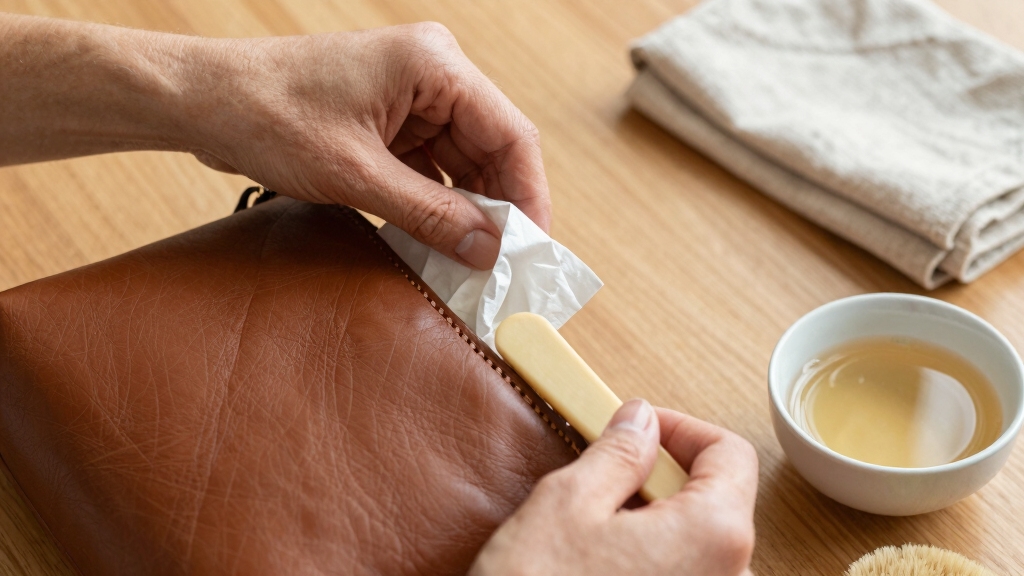
To reshape your leather purse, first clean and dry it thoroughly. Then apply controlled moisture using a damp cloth or steam to soften the leather fibers. Gradually mold the purse by hand, using internal stuffing like acid-free tissue or soft fabric to support its form. Use low heat with a hairdryer or steamer to set the shape.
Then condition the leather to restore suppleness and prevent cracking. Repairs and seam reinforcement may be needed to maintain structure; further steps can enhance results.
Key Takeaways
- Clean and condition the leather purse thoroughly before reshaping to ensure suppleness and avoid damage.
- Apply controlled moisture or steam to gently soften leather fibers without soaking or overheating.
- Use gentle hand molding and internal stuffing with tissue paper or towels to reshape and support contours.
- Employ low heat from a hairdryer or garment steamer to set the new shape safely, avoiding direct heat or sunlight.
- Allow the purse to air dry naturally with stuffing inside, then apply a leather conditioner to maintain softness and shape.
Preparing the Leather Purse for Reshaping
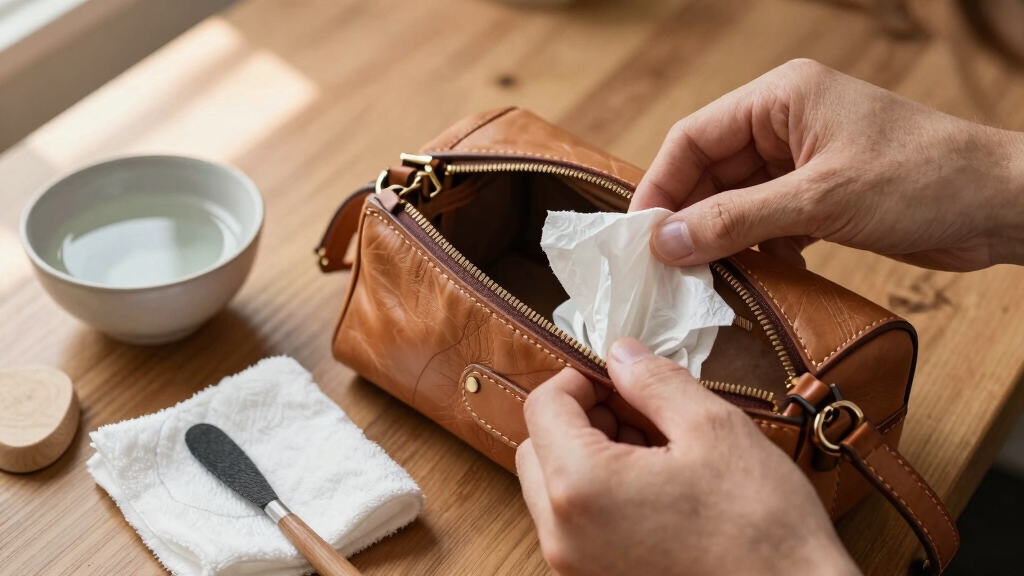
Begin by thoroughly cleaning your leather purse to remove all surface dirt and grime, as this step is essential for effective reshaping.
Start by deeply cleaning your leather purse to eliminate dirt and grime for successful reshaping.
Use a soft, damp cloth to gently wipe away dust, then apply a mild leather cleaner or a gentle soap-water solution sparingly to tackle stubborn spots.
Avoid saturating the leather to maintain its strength. Letting leather dry naturally in a cool, shaded area helps prevent damage and preserves its quality. Let it air-dry naturally in a shaded, well-lit area to prevent cracking or discoloration.
After drying, apply a high-quality leather conditioner evenly with a microfiber cloth in circular motions to restore suppleness and prevent cracking during reshaping.
Allow the conditioner to dry at room temperature, then buff the purse to a soft sheen. Maintain a consistent warm environment, avoiding direct heat or sunlight, to keep the leather flexible for reshaping.
Understanding that leather is a natural material with shape memory helps ensure you treat it gently during cleaning and preparation to preserve its form.
Effective Stuffing Methods to Restore Form
Once your leather purse is properly cleaned and conditioned, restoring its original shape requires careful stuffing. Start by choosing appropriate materials: tissue paper for gentle support, bubble wrap for flexible padding, or old towels to fill larger spaces.
Avoid storing your leather purse in plastic bags because they can trap moisture, leading to mold and mildew growth high-humidity environments. Applying a leather conditioner before stuffing helps maintain the leather’s suppleness and prevents scratch visibility.
Insert stuffing incrementally, using a wooden spoon handle to push materials into corners and curves. This ensures uniform support without overstretching leather or stressing seams.
Avoid tight packing, which can deform the purse. Wrap newspapers in cloth to prevent ink transfer if used. For added structure, consider custom-cut hard plastic inserts or bag shapers tailored to your purse’s dimensions.
After stuffing, store the purse in a cotton cover away from heat and sunlight. Periodically check and adjust stuffing to maintain form and prevent compression or creasing over time.
Using Moisture and Heat to Soften Leather
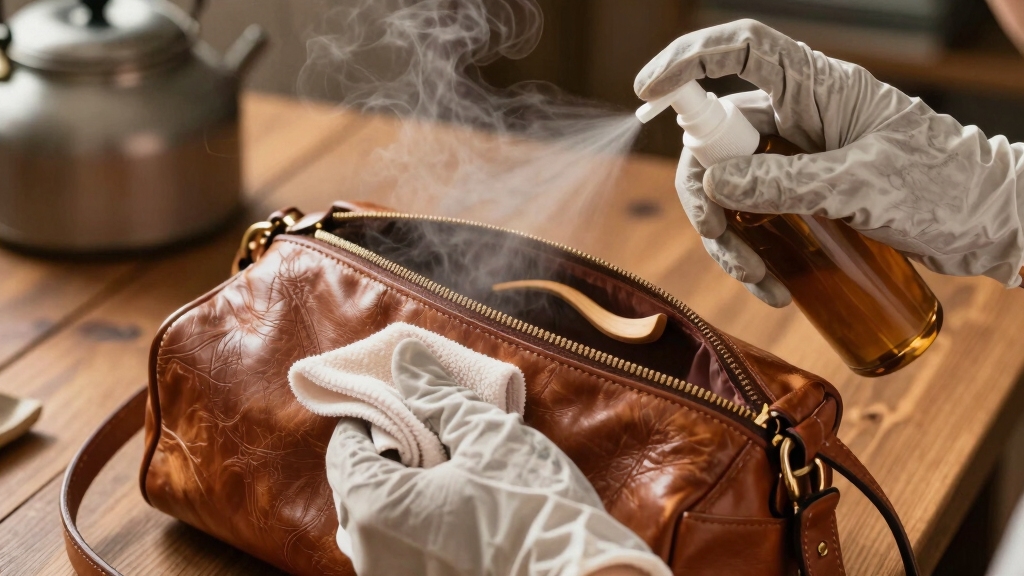
To start softening leather, you’ll want to apply some controlled moisture. This can be done with steam or a damp cloth. Just be careful not to soak the leather—you’re aiming to loosen those fibers, not drown them!
Moisture affects leather’s flexibility by either expanding or shrinking the fibers, so maintaining the right level is key to reducing stiffness without causing damage moisture control. Using internal supports during natural drying can help maintain the bag’s shape while softening the material.
Once you’ve done that, it’s time to introduce some gentle heat. A hairdryer set on low works wonders for gradually warming and softening the leather. Just remember to keep it at a distance; you don’t want to expose your leather to direct or excessive heat, as that could cause damage.
After you’ve softened the leather, the next step is to condition it. This is super important for keeping it supple. Applying high-quality conditioners with lanolin or beeswax helps replenish natural oils and prevent cracking leather conditioning.
Moistening Techniques
Applying moisture and controlled heat effectively softens stiff leather by penetrating its fibers and increasing flexibility.
Before you begin, clean the leather surface with a damp cloth to remove dust and grime. This ensures even moisture absorption. Stiffness indicates leather’s inherent strength and long-term resilience, so gentle preparation is essential.
Use moderate moisture from a lightly wet cloth, spray bottle, or brief dunking to avoid saturating the leather. Saturation can weaken its structure. Different tanning methods can affect how leather absorbs moisture and responds to heat.
Once moistened, apply heat carefully to promote pliability. Keep these points in mind when moistening leather:
- Avoid soaking; dampening prevents fiber damage.
- Use circular rubbing with a wet cloth and brush for uniform softness.
- Dry quickly with a soft cloth to maintain fiber integrity.
- Follow with conditioning to restore lost moisture and protect leather longevity.
Safe Heating Methods
Although moisture alone can soften leather, combining it with controlled heat markedly enhances pliability, making reshaping far more effective.
To do this safely, use a hairdryer on low heat, keeping it about 6 inches away and moving constantly to avoid overheating.
Alternatively, a garment steamer held a few inches from the surface applies even moisture and heat, relaxing fibers without aggressive stretching.
For precise control, place a clean cloth over the leather and use a steam iron on a low setting with quick, light passes. You can also soak the leather in water around 60°C for 30 minutes if it’s unfinished and unlined.
Oven heating at about 49°C with damp leather works too, but never exceed 60°C to prevent damage.
Always monitor the leather’s response closely. This careful approach helps prevent warping, shrinking, brittleness caused by exposure to extreme environments. After reshaping, dry the leather flat in its natural shape to maintain the new form and avoid damage.
Post-Heat Leather Care
Once you’ve softened leather with controlled heat and moisture, guaranteeing residual dampness becomes critical to preserving its integrity. Immediately blot excess moisture with a soft cloth to prevent water pooling. Use deionized or distilled water to avoid mineral stains.
Apply moisture sparingly; avoid soaking, and let the leather air dry naturally in a ventilated area, away from direct heat or sunlight. Avoid prolonged sun exposure and direct heat as they can dry, fade, or crack leather. It is important to maintain proper drying techniques to prevent damage and ensure the leather’s longevity.
Once fully dry, apply a suitable leather conditioner in thin, even layers to replenish lost oils and restore suppleness. Key post-heat leather care steps:
- Blot excess moisture immediately; use distilled water.
- Air dry away from direct heat or sunlight.
- Condition only after complete drying using appropriate products.
- Apply protective barriers post-conditioning for stain and UV defense.
Proper care guarantees durability, flexibility, and shape retention.
Techniques for Molding and Reshaping
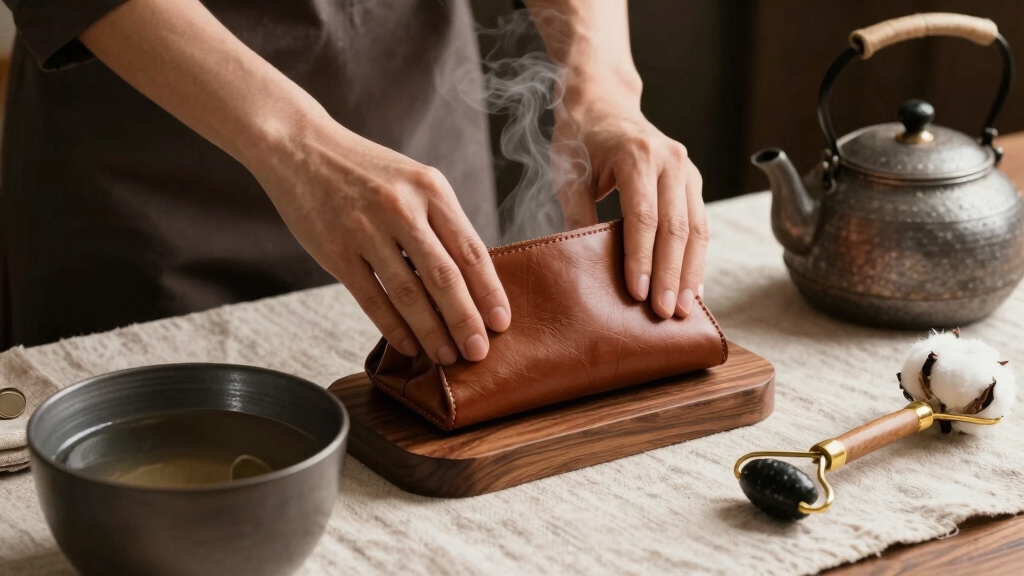
To get started, you’ll want to soften the leather fibers a bit. A light application of conditioner or moisture works wonders for this—it really increases pliability. Using specialized cream cleaners and conditioners designed for leather can enhance this effect and protect the material.
After that, it’s all about gentle hand molding. Just reshape the purse with care, applying even pressure. You want to avoid stressing the leather.
Now, if you have a hairdryer or a steamer, controlled heat can really help out here. Just set it to a low setting and direct the heat to the purse. This will help set the new form without risking any damage.
It’s a delicate process, but with a little patience, you’ll get there! To maintain the new shape, be sure to store the purse flat rather than hanging to prevent stretch and distortion.
Softening Leather Fibers
When softening leather fibers for reshaping, applying natural oils plays a crucial role in enhancing flexibility and malleability.
Start by exposing the leather to sunlight to open pores for better oil absorption. Use oils like mink, neatsfoot, or jojoba, applying multiple thin layers with circular finger motions. Allowing the leather to be treated in a controlled environment can help prevent overexposure and damage.
Allow each layer to dry before the next. Follow oil application with mild heat from a hairdryer on low, held 6 inches away, to relax fibers and deepen absorption.
It is important to consider the tanning method of the leather, as vegetable-tanned leather is often stiffer and may require more conditioning than chrome-tanned leather.
This controlled warmth prevents damage while preparing leather for reshaping. Regularly inspecting and maintaining the leather condition can help prevent long-term stiffness or cracking.
Key practices include:
- Using natural, non-processed oils for superior fiber penetration
- Applying oils in thin, multiple layers for uniform softness
- Utilizing mild heat post-oil treatment to enhance conditioning
- Avoiding over-saturation to prevent damage or discoloration
Gentle Hand Molding
Frequently, gentle hand molding serves as the most effective method for reshaping a leather purse without compromising its integrity.
Begin by cleaning the purse and lightly dampening only the areas needing reshaping with a soft cloth and room-temperature water. Remove any hardware to enhance flexibility.
It is important to use vegetable-tanned full-grain leather for the best contour results when reshaping. Using a dust bag during storage after reshaping helps maintain the purse’s newly restored shape and protects it from dust and environmental damage.
Use your palms and fingers to apply even pressure, pushing and pulling the leather gradually into the desired shape. Work from the center outward to maintain symmetry, employing rounded tools like a wooden dowel to refine corners without scratching.
After shaping, stuff the purse with acid-free tissue or soft cloth to support its form during air-drying at room temperature. Check stuffing periodically to ensure consistent support.
Avoid aggressive pulling, excessive moisture, or sharp tools to prevent damage and maintain the leather’s finish throughout the process.
Controlled Heat Application
Although reshaping leather requires careful handling, controlled heat application offers a precise method to soften and mold the material without compromising its structure.
You start by applying warm—not hot—water inside the purse to gradually soften fibers, ensuring even penetration for consistent plasticity. Since thickness influences the amount of effort needed and how well the leather retains its reshaped form, thinner leather is easier to mold effectively.
It is important to avoid soaking the leather to prevent damage and maintain its natural qualities. Next, stuff the purse internally with towels or newspaper to guide reshaping and support new contours.
Allow the leather to air dry fully while maintaining this internal pressure to set the form permanently. Key practical points include:
- Use warm water to avoid fiber damage and brittleness
- Employ internal stuffing to direct and hold shape
- Air dry thoroughly to reset leather fibers
- Avoid rapid drying to prevent cracking or warping
This technique balances flexibility and structural integrity for effective reshaping.
Conditioning and Protecting Your Leather
Maintain your leather’s durability and appearance by conditioning it regularly to replenish oils lost over time.
Begin by cleaning the purse with a damp cloth to remove dirt. Then apply a high-quality leather cream or natural oil using small circular motions with medium pressure. Saphir Leather Lotion is a recommended product that deeply nourishes and conditions leather.
Allow 15 to 20 minutes for absorption before buffing with a horsehair brush or cotton chamois to eliminate excess product and enhance shine. Condition every 3 to 6 months, adjusting frequency based on exposure to elements like sun and moisture.
For suede or nubuck, use waterproofing sprays to prevent moisture damage. Store your purse in cool, dry areas away from direct sunlight or heat sources.
Quick blotting of spills prevents absorption and deterioration, ensuring your leather remains supple, stain-resistant, and visually consistent.
Repairing Seams to Support Reshaping
Begin repairing seams by carefully evaluating the extent of the damage to determine the appropriate restoration approach. Leather is natural, develops patina, and changes with use, sunlight, moisture, and friction, so understanding these factors helps prevent future damage to repaired seams.
Identify small stretched stitch holes by fiber displacement and locate original seam endpoints to align new stitching properly. Larger holes may require reinforcing with leather patches underneath before restitching.
Use curved and heavy-duty needles with waxed polyester thread for strength and water resistance. Keep these essentials in mind during repair:
- Clean seam area with leather-safe cleaners for optimal adhesion.
- Use leather awls to realign stretched fibers gently.
- Employ ladder stitches to conceal thread lines and close gaps.
- Maintain snug yet flexible thread tension to avoid fiber damage while ensuring stitching strength.
This method guarantees durable seam restoration that supports effective reshaping and preserves the leather’s structural integrity.
Frequently Asked Questions
Can Reshaping Damage the Color or Finish of My Leather Purse?
Yes, reshaping can damage your leather purse’s color and finish if you’re not careful.
Excessive heat, moisture, or harsh chemicals can cause fading, dullness, or cracking.
Abrasive handling may wear down dye layers.
To protect your purse, always test methods on a hidden spot first.
Use minimal heat and moisture, apply leather-specific conditioners, and consider sealing with a protective top coat afterward.
When in doubt, consult a professional to avoid irreversible damage.
How Long Does the Reshaping Process Typically Take to See Results?
Think of reshaping your leather purse like setting jelly—it starts to take form within hours.
You’ll see immediate improvements after gently moistening and applying light heat, but for the shape to stabilize, let it rest stuffed for about 24 hours.
For best results, continue resting it undisturbed for up to a week. Thicker leather or older purses might need longer, sometimes several days, to retain the new shape effectively.
Are There Specific Leather Types That Should Not Be Reshaped at Home?
Yes, you should avoid reshaping suede, nubuck, patent, bonded, and aniline leathers at home.
These types are highly porous, coated, or structurally weak, making them prone to stains, cracks, or irreversible damage when handled improperly.
Similarly, bookbinder and box calf leathers are rigid and crack easily without professional tools.
For these delicate or coated leathers, reshaping requires controlled environments or expert intervention to prevent permanent deformation or surface damage.
What Should I Do if My Purse Has a Strong Odor After Reshaping?
If your purse has a strong odor after reshaping, start by airing it out in a well-ventilated spot, away from direct sunlight.
Use baking soda or charcoal inside to absorb odors without removing contents.
Gently wipe the leather with a damp cloth and apply a leather-safe cleaner, testing first on a hidden area.
Finish by conditioning the leather to restore suppleness and prevent dryness, avoiding harsh chemicals that can worsen the smell or damage the leather.
Can Reshaping Help With Leather Purses That Have Mold or Mildew?
Reshaping alone won’t fix mold or mildew on your leather purse. You need to eliminate mold spores first using proper cleaning solutions, like vinegar-water, to kill mold deeply embedded in the leather.
Only after thorough mold removal and drying should you reshape the purse. Otherwise, mold will quickly return. Always condition leather afterward and store it in a dry, ventilated spot to prevent regrowth.
From Misshapen to Polished: Bring Back the Original Form
Reshaping your leather purse is like sculpting clay. You need patience, precision, and the right tools. By preparing the leather properly, using effective stuffing methods, and applying controlled moisture and heat, you can restore its original form.
Don’t forget to condition and protect the leather to maintain flexibility and durability. Repair any weak seams to support the structure, ensuring your purse looks refined and lasts longer with everyday use.