
National Park Packing List: Simplicity on Your Journey

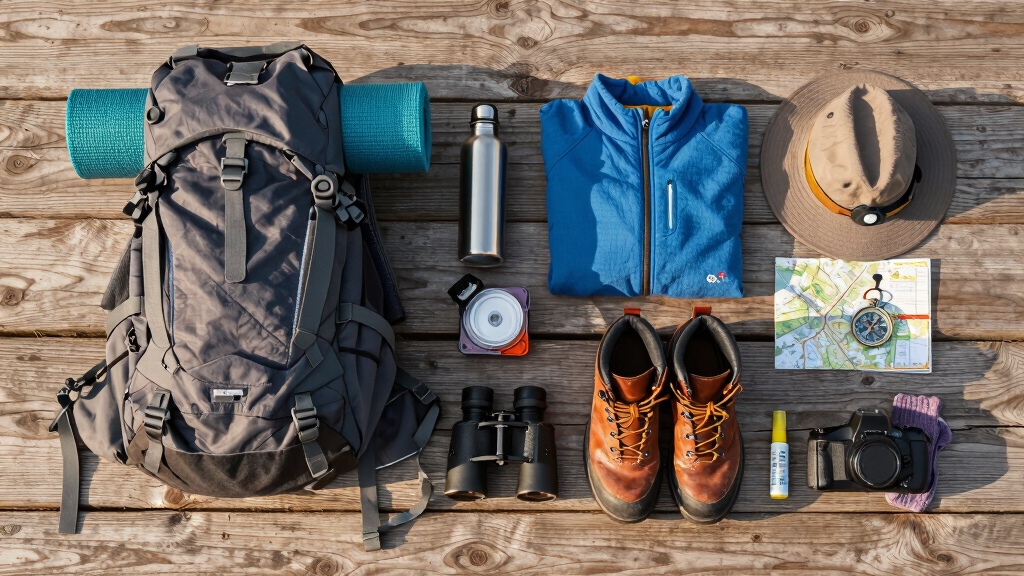
Pack moisture-wicking shirts, a wide-brim hat, and a waterproof jacket to stay dry and protected from sun and rain. Bring durable hiking boots, a map with compass, and a GPS for navigation.
Carry at least 2–3 liters of water plus purification tools, high-energy snacks, and a first-aid kit with insect repellent. Don’t forget the Ten Essentials like fire starters, a flashlight, and emergency shelter.
Keep your personal documents safe and plan for variations in weather. For a thorough guide to gear and safety, keep exploring here.
Key Takeaways
- Pack moisture-wicking and UPF 50+ clothing, including sun hats and sunglasses, for sun and insect protection in diverse weather conditions.
- Bring a waterproof rain jacket, tent with rain fly, sleeping bag, pad, and necessary camping gear for shelter and comfort.
- Carry detailed paper maps, a compass, GPS device, and a personal locator beacon for reliable navigation and emergency signaling.
- Plan water and food carefully, carrying 2–3 liters baseline water, purification options, trail snacks, and extra day’s supply.
- Include a customized first-aid kit with wound care, medications, insect repellent, and emergency supplies for safety and repairs.
Clothing Essentials for National Park Visits
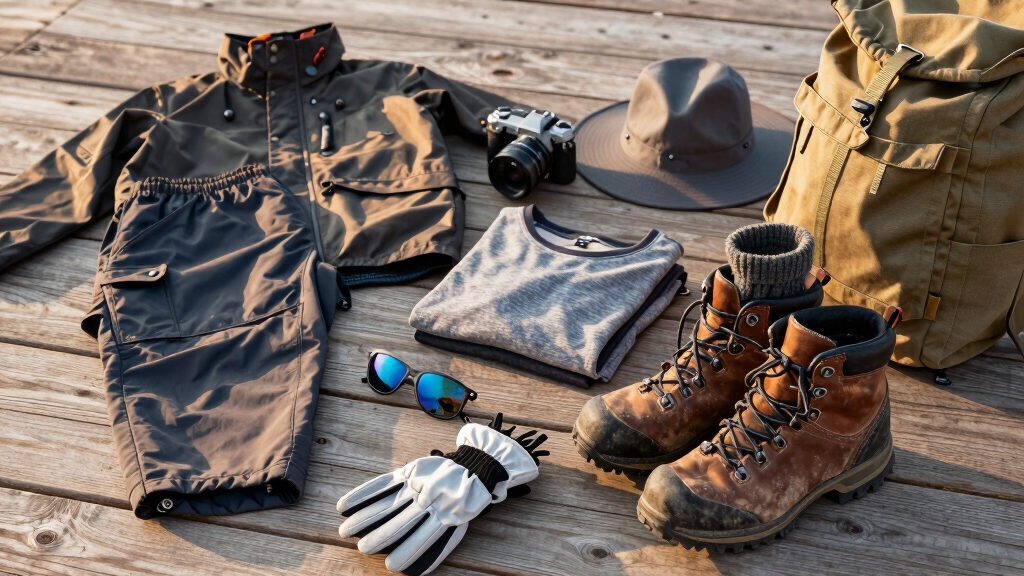
Prepare for shifting temperatures by layering your clothing when visiting national parks.
Layer your clothing to stay comfortable amid changing temperatures in national parks.
Start with lightweight, moisture-wicking short-sleeve shirts to stay dry and odor-free. Add a long-sleeved shirt or a hooded rash guard for sun protection and to guard against bugs.
Mid-weight hoodies with deep pockets and soft interiors offer warmth as mornings cool, and merino wool base layers help regulate temperature effectively. Pack a fleece jacket or ¼-zip for fog or sudden cloudbursts.
A packable down vest provides featherlight insulation without bulk and compresses into its own pocket for easy storage packable down vest. For extreme cold, thermal underwear tops and bottoms serve as an essential base layer.
On the bottom, choose quick-drying pants or stretch leggings for flexibility and damp conditions. Zip-off nylon pants adapt well from cool mornings to warm afternoons.
Don’t forget a wide-brim hat and a packable rain jacket to handle sun and sudden storms efficiently, ensuring you have a waterproof breathable jacket for reliable rain protection.
Hiking Gear and Equipment Recommendations
When you’re heading out for a hike, it’s super important to choose a lightweight backpack that has padded straps. You want one that fits your needs for the day without feeling like a burden. Trust me, comfort is key!
And hey, don’t forget about navigation tools! Always pack a reliable map and compass, or even a GPS device if you have one. Checking the visitor center before your hike can provide you with the latest trail closures and safety updates.
These essentials really help keep you on track and ensure you stay safe while you’re out there exploring those beautiful trails.
Essential Navigation Tools
Equipping yourself with reliable navigation tools is essential for safe and confident hiking in national parks. Always carry a detailed paper map; USGS 7.5-minute topographic maps are ideal and a magnetic compass with adjustable declination to orient your route accurately.
Navigation is best learned through accumulated experience on progressively challenging trips to achieve mastery. For precise measurement of your gear dimensions to ensure proper packing, consider using professional-grade measurement tools.
Protect maps in waterproof cases to keep them functional in wet conditions. While GPS watches and smartphone apps like GaiaGPS offer handy tracking and offline maps, don’t solely rely on them; batteries can fail.
Consider a rugged handheld GPS unit for extended trips and bring portable power banks to maintain device life. Supplement your setup with an altimeter for elevation data and a weatherproof notebook plus a pen for marking routes.
Lightweight Backpack Features
Choosing the right lightweight backpack can make all the difference on your national park adventures, balancing comfort, capacity, and durability. Look for adjustable torso lengths and straps to fit your body perfectly, like the Zpacks or Nashville Pack.
Many ultralight backpacks, such as the Zpacks Arc Haul Ultra and Arc Zip Ultra, feature a curved Arc Frame that enhances load stability and comfort. Additionally, selecting a backpack with durable materials similar to those used in high-quality luggage ensures longevity on rugged trails.
Durable, ultralight materials combined with strong frames, such as carbon fiber or internal frames, guarantee load stability and comfort. Capacity varies widely, from 35L to 80 lbs load, so pick one that suits your trip length and gear.
Here’s a quick comparison:
| Feature | Examples & Specs |
|---|---|
| Weight | Zpacks Arc Haul Ultra: 21.1 oz; Framus: 25 oz |
| Capacity | Zpacks 40-70L; Seek Outside Flight 3: 75-80 lbs |
| Frame & Suspension | Carbon fiber Arc Frame; Internal frame padded |
| Adjustability | Adjustable torso, belts; multiple frame sizes |
The Ten Essentials for Safety and Preparedness
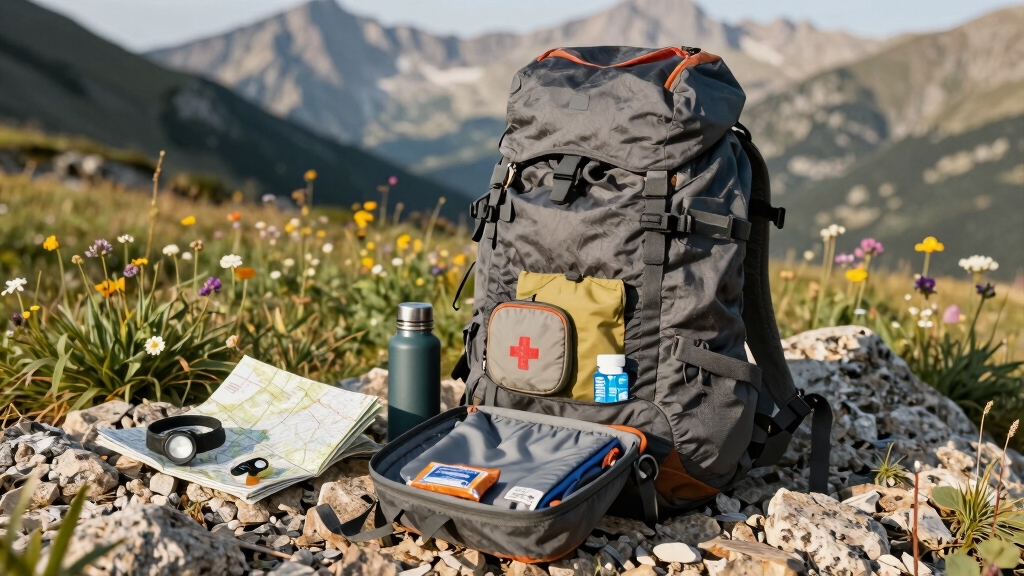
When you’re heading out for an adventure, it’s super important to pack the ten essentials that ensure you’re ready for anything. Think about things like shelter and insulation to keep you cozy, solid navigation tools so you don’t get lost, and reliable lighting for those times when visibility drops. Using a rigid base platform can help keep your gear organized and stable during transport, preventing damage.
Oh, and let’s not forget about emergency health supplies! A well-stocked first aid kit is a must—just make sure it’s tailored to your specific trip. Also, having some basic repair tools on hand can really save the day.
Trust me, being prepared with these items can make all the difference when the weather takes a turn or unexpected challenges pop up in the park. It’s also a great idea to visit park website to learn more about the specific park and planned activities before heading out.
Core Survival Items
When heading into the backcountry, make sure you pack the Ten Essentials designed to keep you safe and prepared for unexpected challenges.
Start with proper insulation: bring extra layers like a jacket, hat, gloves, and a rain shell. Dress in moisture-wicking layers to adapt to sudden weather shifts and cold nights. Regularly inspect your gear and perform preventive maintenance to avoid equipment failure during your trip.
Sun protection is vital; carry sunscreen, SPF lip balm, UVA/UVB-blocking sunglasses, and a wide-brim hat, especially at higher elevations. Your first-aid kit should be customized, including blister care and insect repellent, plus a current emergency guide.
Don’t forget fire-starting tools: waterproof matches or a lighter with tinder, plus a stove backup. Finally, pack a repair kit with a knife, multi-tool, and duct tape to fix gear or handle emergencies efficiently.Also, bring a map as backup and compass to navigate safely if technology fails.
Navigation and Lighting
Packing core survival gear like insulation, sun protection, and first-aid sets lays the groundwork for a safe trip.
But knowing exactly where you’re and how to navigate is just as important. Bring a detailed topographic map and a baseplate compass; learn to orient the map to true north and take bearings accurately.
Carrying a personal locator beacon (PLB) or satellite messenger can provide a critical emergency alert system when cell signals fail. Many outdoor enthusiasts also use a GPS device with global coverage to enhance positioning accuracy.
An altimeter watch helps confirm elevation changes, while a GPS device offers real-time positioning. Always carry a laminated paper map as a battery-free backup.
For lighting, a reliable LED headlamp with at least 50 meters of beam and 12 hours of runtime is essential. Pack extra batteries and consider a red LED mode to preserve night vision. Carrying multiple fire-starting gear options ensures you can create heat when needed.
Tailor your navigation and lighting gear to your trip’s complexity, ensuring redundancy to handle unexpected challenges.
Emergency Health Supplies
Although unexpected injuries and health issues can disrupt your trip, carrying well-chosen emergency health supplies guarantees you’re prepared for most situations.
Start by customizing a first-aid kit with essentials for major injuries, foot care, insect repellent, and personal medications. Don’t forget to check expiration dates and include a compact emergency guide, especially if you lack formal first aid training.
Next, pack fire-starting tools like waterproof matches, a lighter backup, and reliable fire starters to keep warm or signal for help. Carrying these items in a watertight container ensures they stay dry and usable in wet conditions.
Finally, prioritize sun protection with high-SPF sunscreen, sunglasses, sun-protective clothing, and SPF lip balm to prevent heat-related illnesses.
Sun and Insect Protection Must-Haves
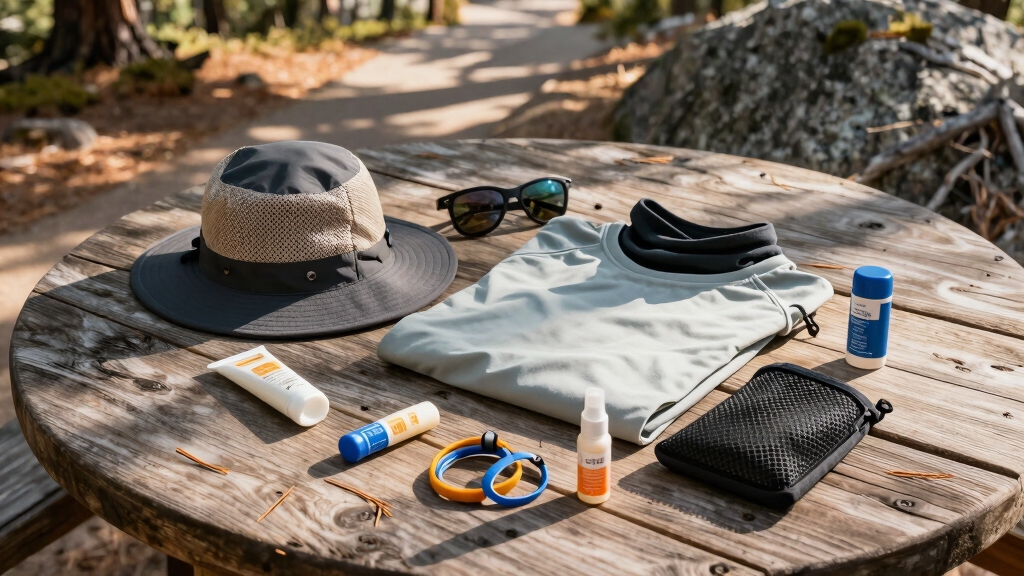
Because exposure to intense sunlight and insects can quickly ruin your outdoor experience, you need reliable protection to stay comfortable and safe.
Start with UPF 50+ clothing. Long-sleeve sun hoodies with thumbholes shield your upper body, face, neck, and ears while breathable, moisture-wicking fabrics keep you cool. This is particularly important in high-altitude alpine terrain where UV exposure is increased due to proximity to the sun.
For added comfort in variable weather, layering with merino wool base layers can help manage moisture and insulation. Add a wide-brimmed, packable nylon hat with a chinstrap to protect your face and neck, even in windy conditions.
Don’t forget wrap-around sunglasses to block UV rays and prevent snow blindness. Apply SPF 30+ paraben-free sunscreen generously, especially at higher altitudes or near water, and reapply regularly.
Accessories like sun gloves, lip balm, and a buff for neck coverage are essential. Consider a sun umbrella for extra shade. Together, these items keep you shielded from harmful rays and insect bites, ensuring a safe, enjoyable adventure.
Personal Items and Important Documents
Beyond sun and insect protection, keeping your personal items and important documents organized and accessible makes a big difference on the trail.
You want to safeguard your essentials while making them easy to reach when needed. Start by packing these three must-haves:
- Identification and Protection Gear: Carry your ID, cell phone, prescription glasses or contacts, and sunglasses with UV protection. Use reusable waterproof bags to protect documents and electronics from moisture. Consider packing electronic devices like electric toothbrushes in your carry-on to comply with TSA regulations.
- Hygiene and Health Items: Bring prescription meds, headache or stomach remedies, menstrual products, and a compact potty pack with toilet paper and antibacterial wipes in a Ziploc bag. Carrying hand sanitizer is essential for maintaining hygiene on the trail.
- Personal Accessories: Include a National Park Passport Book, a notebook with pencil or pen, and a portable charger or solar power bank for emergencies. Keep spare lithium-ion batteries in your carry-on, protected against short circuits, for safety during travel.
Camping-Specific Equipment Checklist
When you’re preparing for a camping trip in a national park, having the right equipment guarantees safety, comfort, and convenience throughout your stay.
Start with shelter essentials: a tent with stakes and footprint, a mallet to secure them, plus a rain fly or sun shelter and mosquito netting to keep bugs at bay. Remember to bring resealable plastic bags for organizing small items and protecting electronics from moisture.
Also, ensure your gear is properly maintained to extend its usability and reliability. For sleeping, bring temperature-rated sleeping bags, pads or mats, and a camping pillow or air mattress with a repair kit. Don’t forget lighting and tools: headlamps, lanterns, extra batteries, a multi-tool, duct tape, and repair kits.
Finally, pack campsite setup items like chairs, a table, lanterns, a broom, clothesline, and clips for a well-organized camp. Proper cleaning and storage of your gear after use will help preserve its condition for future adventures.
Navigation Tools and Technology
Packing the right camping gear sets you up for a comfortable stay, but finding your way through the park safely requires reliable tools and technology.
Start with multiple maps: small-scale overview maps for general planning, large-scale detailed maps for precision, and digital map layers downloaded to your smartphone as backups. Using multiple maps together provides more useful information than relying on a single map alone. Carrying these maps in a pack sized between 15-24 liters ensures easy access and portability during day hikes.
Next, choose a magnetic compass suited to your route. Baseplate compasses are great for easy trails, while declination-adjustable models are better for off-trail navigation.
Finally, bring GPS devices or satellite messengers. GPS watches track routes and elevation, handheld units offer advanced features, and satellite messengers ensure communication in emergencies.
Don’t rely solely on electronics; carry spare batteries and protect devices from weather. Combine these tools for confident navigation throughout your adventure.
Hydration and Food Supplies
Since staying properly hydrated and fueled can make or break your experience, you should carry enough water and food to meet your hike’s demands plus an extra day’s supply. Start with 2-3 liters of water and adjust for intensity, weather, and personal needs.
Use durable, insulated bottles or hydration packs and carry water treatment options. It is important to maintain hydration throughout your hike to maximize performance and prevent fatigue.
| Item | Recommendation | Notes |
|---|---|---|
| Water Quantity | 2-3 liters + 1L/hr hiking | Adjust for conditions |
| Containers | Insulated stainless steel bottles | BPA-free, leakproof |
| Water Treatment | Filters, purifiers, iodine tablets | Essential for backcountry |
| Food | Trail snacks + extra day’s supply | High-energy, salty, no-cook |
Emergency and First-Aid Supplies
Although you hope to avoid emergencies, carrying a well-stocked first-aid kit tailored to your trip and medical needs is essential.
Always carry a first-aid kit customized to your trip and health requirements for unexpected emergencies.
Start by customizing your kit with necessary prescription meds, allergy treatments like epinephrine pens, and an emergency medical guide. Organize everything in labeled resealable bags for quick access.
Focus on these three critical areas:
- Wound care: assorted bandages, sterile gauze, closure strips, antiseptic ointment, tweezers, and scissors.
- Medications: pain relievers, antacids, oral rehydration salts, sunscreen, insect repellent, and wound irrigation tools.
- Protective gear and emergency tools: gloves, CPR mask, multi-tool, whistle, duct tape, emergency blanket, and waterproof container for documents.
Check expiration dates regularly and replace items as needed to stay prepared for any situation. It is also important to keep your kit accessible for quick evacuation to ensure you can grab it without delay if you need to leave suddenly.
Frequently Asked Questions
Can I Bring Pets Into National Parks?
You can bring pets into national parks, but you must keep them on a leash no longer than six feet and never leave them unattended.
Pets aren’t allowed on most trails, backcountry, or inside buildings and shuttle buses. Stick to developed areas, paved roads, and some specific trails.
Always clean up after your pet and dispose of waste properly. Service dogs have more access but must stay under control.
Check each park’s rules before you go.
Are Drones Allowed in National Parks?
No, you can’t fly drones in national parks. The National Park Service banned launching, landing, and operating drones inside every park to protect wildlife and visitors.
If you break this rule, you risk fines up to $5,000 and possible jail time. Exceptions are rare, usually only for emergencies or research with special permits.
You can only take off or land outside park boundaries, keeping the drone in sight at all times.
What Are the Rules for Campfire Use?
You’ve got to play it safe with campfires in national parks.
When no restrictions apply, use only designated fire rings or grills in frontcountry areas.
During Stage 2 Fire Restrictions, wood fires are off-limits, but propane-fueled stoves usually get a green light.
In backcountry zones, campfires are mostly banned; you’ll need self-contained stoves.
Always keep fires attended, fully douse embers, and keep flames away from tents.
Break the rules, and you could face fines or worse.
Is There Cell Phone Reception in Most Parks?
You won’t find reliable cell reception in most national parks. Coverage varies widely, even within a single park, because towers are scarce to preserve nature.
Some parks near cities offer decent 4G or 5G, but remote spots usually don’t. You’ll get signals near visitor centers, lodges, or park entrances, but deep valleys and forests block service.
To stay connected, plan ahead and don’t count on your phone for emergencies.
How Do I Dispose of Trash Properly in Parks?
You might think tossing trash in a nearby bin is enough, but it’s not that simple.
You must pack out all your trash, including food scraps and kitchen waste, to protect wildlife and keep nature pristine.
Always check your area before leaving to pick up any litter or spilled food.
Carry durable bags for trash and never bury or burn waste. These actions harm the environment and violate park rules.
Smart Packing for a Smooth and Unforgettable Park Trip
You’ll want to pack light but smart, balancing the minimal with the essential. Don’t let bulky gear slow you down, yet don’t skimp on safety items that could save your trip.
While cozy clothes keep you comfortable, reliable navigation tools keep you on track. Remember, a well-packed bag is both your best friend and your safety net. Prepare thoroughly, and your national park adventure will be as smooth as it is unforgettable.