
What Color Are Biohazard Bags: Ensures Safety and Compliance


You typically use red biohazard bags for infectious waste like blood-contaminated materials, as they provide a clear visual warning and often substitute for biohazard labels.
Yellow bags handle pathological waste requiring incineration, while blue bags are for non-hazardous pharmaceutical waste or soiled linen.
OSHA mandates fluorescent orange or orange-red backgrounds for biohazard labels but not for bags. Proper color use helps prevent contamination and ensure regulatory compliance.
Understanding these standards will clarify essential waste management practices.
Key Takeaways
- Biohazard bags are typically red to indicate infectious waste contaminated with blood or bodily fluids.
- OSHA requires biohazard labels on fluorescent orange or orange-red backgrounds, but orange bags are not used for containment.
- Yellow bags are used for pathological waste requiring incineration, not general biohazard waste.
- Blue bags are designated for non-hazardous pharmaceutical waste and soiled linen without infectious risk.
- Red bags can substitute biohazard labels for blood-contaminated waste and are mandated for transporting contaminated laundry off-site.
Standard Colors Used for Biohazard Bags
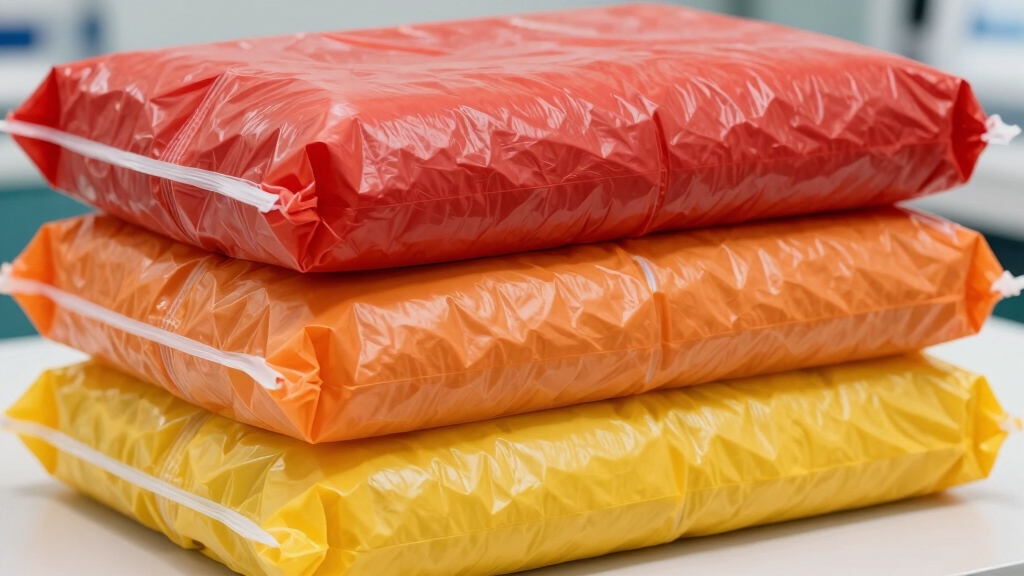
When handling biohazardous materials, it’s crucial to know which color-coded bags to use for different waste types.
Red bags are for medical waste contaminated with blood or bodily fluids, such as swabs, gauze, and catheter tubes. They’re non-chlorinated and marked with a biohazard symbol in multiple languages. Red bags are widely used in hospitals due to the large volume of blood-contaminated waste generated daily.
Red bags safely contain blood-contaminated medical waste like swabs and catheter tubes, marked clearly with multilingual biohazard symbols.
Yellow bags contain infectious linen and pathological waste requiring incineration, also labeled bilingually.
Blue bags handle non-hazardous pharmaceutical waste and soiled linen without biohazard labels, including denatured drugs and inhaler cartridges.
Orange bags are solid orange or red-orange and used for autoclavable biowaste, featuring a sterilization indicator and multilingual procedures.
Other colors like purple, black, brown, white translucent, and blue-marked boxes serve specific state or waste-type coding, such as sharps or contaminated glass.
Knowing these standards is vital to proper disposal and safety compliance.
OSHA Regulations on Biohazard Bag Colors
Understanding the standard colors for biohazard bags sets the foundation for complying with OSHA’s specific regulations on labeling and color-coding.
OSHA mandates that biohazard labels feature the universal symbol and the word “biohazard” on fluorescent orange or orange-red backgrounds with contrasting text. Facilities must use biohazard bags to remain compliant with state and federal regulations. Proper labeling helps maintain employee safety and prevent workplace hazards.
Red bags serve as an alternative to labels for regulated medical waste and contaminated laundry.
Orange bags are prohibited.
| Bag Color | Use Case |
|---|---|
| Red | Regulated medical waste, contaminated laundry |
| Clear/Transparent | Non-regulated biohazardous waste |
| Orange | Prohibited for biohazard disposal |
You must ensure bags are single-use, moisture-impervious, and robust to prevent exposure and maintain safety.
Role of Red in Biohazard Waste Management
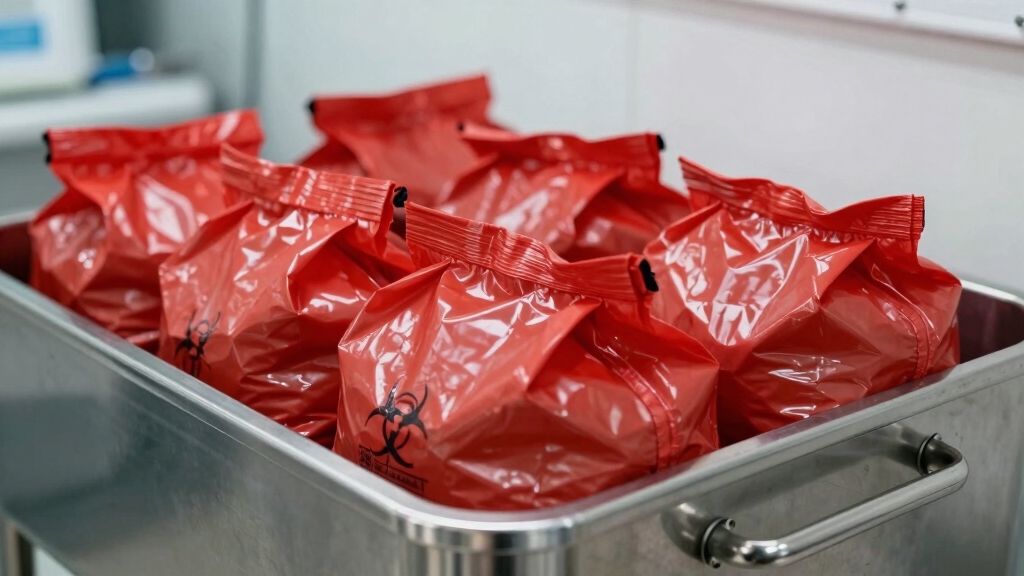
Red biohazard bags consistently serve as a critical visual warning tool in medical waste management, enabling healthcare professionals to quickly identify and segregate potentially infectious materials.
The bright red color universally signals danger, minimizing mix-ups by clearly distinguishing biohazardous waste from regular trash. OSHA requires the bags to be fluorescent orange or orange-red with contrasting lettering or symbols, but red remains the most common choice.
State regulations, like California’s Health and Safety Code Section 117630(C), mandate red bags for storing and transporting non-sharps biohazard waste, ensuring compliance with handling protocols.
You must avoid placing pharmaceuticals, sharps, or non-hazardous items in these bags to prevent contamination and reduce disposal costs.
Proper use includes lining bins with DOT-approved red bags, limiting weight to 50 pounds, securing against leaks, and employing personal protective equipment.
This standardized red color supports a unified safety approach across healthcare settings.
Labeling Requirements for Biohazard Bags
When it comes to biohazard bags, there are specific labeling requirements you need to keep in mind. First off, these bags absolutely must display the universal biohazard symbol along with the word “biohazard.” Both the symbol and the text must be in clear, contrasting colors.
Typically, you’ll see fluorescent orange or red-orange paired with dark lettering for maximum visibility. Using proper labeling practices ensures that these containers are handled correctly during inspections.
Now, while there are size and legibility standards for these labels, it’s good to know that some exceptions exist. For instance, if you have inner bags that are contained within outer bags that are properly labeled, you might have a bit more flexibility with the inner bags’ labels.
Employers must ensure that containers are closable and constructed to prevent leakage during handling and transport, which is a key part of compliance with regulated waste disposal.
Understanding these specifications is crucial, as they help ensure compliance with OSHA and DOT requirements. Plus, they play a vital role in maintaining safety during the handling and transport of biohazard materials. So, keeping these guidelines in mind will help you stay safe and compliant!
Symbol and Legend
When handling biohazard bags, you must make certain they display the recognized biohazard symbol: a black trefoil set against a fluorescent orange or orange-red background, accompanied by the contrasting “BIOHAZARD” legend.
This symbol, cataloged in Unicode as U+2623, features three sharp-edged crescents circling a center dot, engineered for immediate recognition and distinct from other icons.
OSHA mandates this labeling on containers holding infectious materials, ensuring healthcare workers can quickly identify hazards. The labels must remain legible during handling despite moisture and friction to maintain safety.
While red bags can substitute for labels, any symbol used must never be replaced by look-alike icons or non-approved colors. The legend “BIOHAZARD” must contrast sharply with the background for legibility.
These requirements support safe management of infectious waste and help you comply with federal and state regulations.
Color Contrast Standards
Although biohazard bags vary in color, strict contrast standards guarantee that labeling remains highly visible and immediately recognizable. You must guarantee labels use fluorescent orange-red backgrounds with black symbols and text to meet OSHA visibility requirements.
The color contrast between red bags and black symbols prevents information loss during handling. Here’s what you need to know:
- Red bags serve as the primary color for blood-contaminated waste, providing high contrast for warning labels. This consistent use of color aids in quick identification during emergency situations.
- Labels on orange-red bags feature black lettering to maintain visibility, especially in lab autoclavable waste.
- In some cases, red bags replace labels on containers when the color itself clearly signals biohazard risk. These practices are part of OSHA’s Bloodborne Pathogens Standard which mandates specific labeling and handling to protect healthcare workers.
These standards comply with ASTM and OSHA regulations, guaranteeing safety and regulatory adherence.
Labeling Exceptions
Since biohazard bags often serve as substitutes for labels on regulated waste containers, it’s vital to understand specific exceptions to labeling requirements. Red bags replace biohazard labels for blood-contaminated waste, laundry under Universal Precautions, and Florida’s biomedical waste autoclave bags.
Additionally, laundry bags or containers may use alternative label or color-coding if the facility employs Universal Precautions for all soiled laundry and the alternative marking permits employee recognition.
However, internal specimen transport inside facilities exempts secondary biohazard labeling unless contamination exists externally. DOT regulations overlap but don’t override OSHA’s internal labeling mandates. Individual blood containers also qualify for labeling exemptions when placed within labeled secondary containers.
| Situation | Labeling Requirement |
|---|---|
| Blood or infectious waste | Red bags substitute biohazard labels |
| Internal specimen transport | No secondary label if primary container clean |
| Contaminated laundry (off-site) | Red bags or biohazard labels required |
State-Specific Color Mandates for Biohazard Bags
Because biohazard bag color requirements vary by state, you must understand specific mandates to guarantee compliance.
For instance, California requires red bags meeting ASTM D1709 standards, with yellow allowed for certain waste segregation. It is important to use approved materials that provide durable containment to withstand handling and transport.
New Mexico enforces color-coded bags under Infectious Waste Regulations, demanding licensed haulers and manifests. Proper labeling and secure sealing ensure compliance with state regulations and reduce risk of contamination.
Federally, OSHA permits red bags as an alternative to biohazard labels for regulated waste.
It is critical to note that red bags are typically placed inside robust, leak-proof containers to ensure layered containment and prevent exposure.
Key state-specific mandates include:
- California: Red bags for medical waste; yellow for specific categories; USDOT-approved containers for transport.
- New Mexico: Mandated color-coding, tracking via manifests, strict disposal methods, and penalties for violations.
- Federal OSHA: Red bags substitute biohazard labels; fluorescent orange labels required on containers; transparent bags allowed for nonregulated waste.
Complying with these guarantees safety, legal adherence, and effective waste management.
Use of Fluorescent Orange and Orange-Red in Labeling
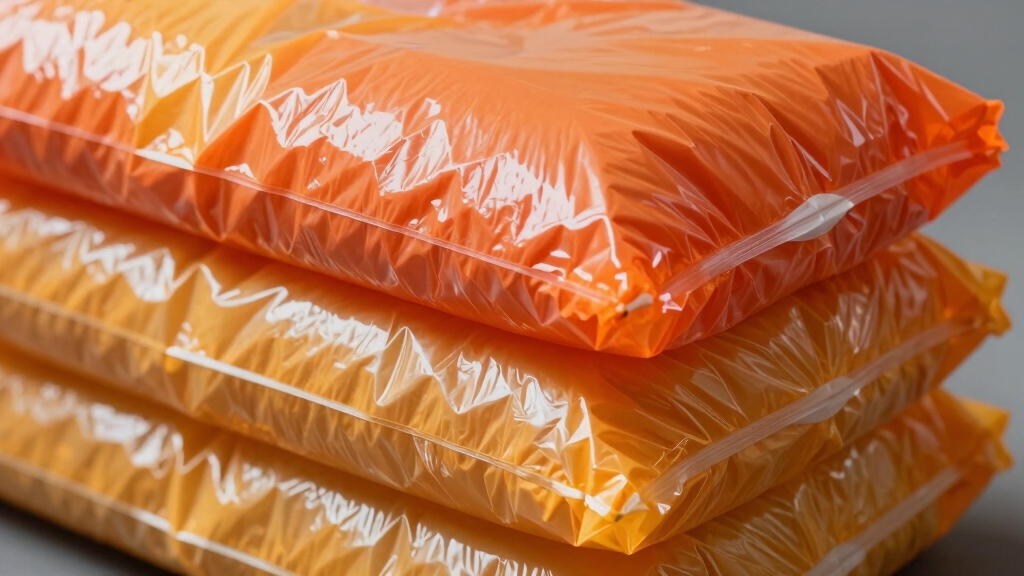
Beyond the color requirements for biohazard bags, OSHA mandates the use of fluorescent orange or orange-red backgrounds for biohazard labels to guarantee immediate recognition.
These labels must feature a chiefly fluorescent orange or orange-red background with symbols and lettering in a contrasting color, typically black. This assures clear visibility of both the biohazard symbol and the term “biohazard.”
You must affix labels directly to containers or attach them securely using adhesive, strings, or wires to prevent loss. Clear tape can protect label color integrity during disinfection. [If you encounter an error with online resources related to labeling, it may be due to a request blocked by CloudFront, which suggests a configuration error or too much traffic.]
This labeling applies to all regulated waste containers, sharps disposal units, and storage equipment containing potentially infectious materials. Compliance with OSHA standard 29 CFR 1910.1030 guarantees rapid identification and safe handling in clinical and laboratory environments.
Alternative Colors in Healthcare Settings
You know how orange-red labeling is the go-to for biohazard identification? Well, some healthcare facilities shake things up a bit and use alternative colors like blue and yellow for certain types of waste.
For instance, blue is typically used for non-hazardous pharmaceuticals and soiled linen. On the other hand, yellow is specifically for pathological and infectious linen waste. Proper use of these colors prevents cross-contamination and ensures safety for healthcare workers and patients. Regularly reviewing waste segregation protocols helps maintain compliance and reduce health risks.
Understanding these color codes is really important. It helps ensure that waste is sorted properly and complies with disposal regulations.
Orange-Red Labeling Use
While red bags remain the primary containers for regulated medical waste, fluorescent orange and orange-red labeling play a vital role in biohazard identification.
OSHA mandates that biohazard warning labels feature a fluorescent orange or orange-red background with contrasting symbols and lettering for maximum visibility.
These labels must be affixed securely to containers to prevent loss or removal.
When you handle biohazard materials, keep these points in mind:
- Labels must contrast clearly against the fluorescent orange or orange-red background, usually in black.
- The color standard guarantees consistent recognition of biohazardous materials across healthcare and laboratory settings.
- Orange bags themselves aren’t permitted for waste containment; only the fluorescent orange or orange-red labels are used for marking.
- Biohazard bags must be disposable, impervious to moisture, and strong enough to resist ripping or tearing to ensure safe containment of waste impervious to moisture.
This precise color coding supports regulatory compliance and safe waste management.
Blue and Yellow Exceptions
Although fluorescent orange and orange-red labels dominate biohazard warnings, healthcare settings employ blue and yellow bags for specific waste streams that fall outside typical regulated medical waste.
You’ll find blue bags used primarily for non-RCRA pharmaceutical waste, including unused antibiotics, denatured drugs, and inhaler cartridges. They also handle soiled linen during room turnover, clearly marked in English and Spanish, and aren’t designated infectious. Facilities must maintain a facility infectious waste management plan that outlines proper packaging and transport procedures for these waste types.
Yellow bags, in contrast, contain clinical infectious waste with chemical or pharmaceutical residues, such as contaminated gowns, pathological waste, and research animal carcasses exposed to infectious agents.
Yellow bags require incineration, differing from red bags that undergo autoclaving. Using these color-coded bags correctly aligns with OSHA and DOT regulations, helping you avoid health risks, regulatory fines, and environmental impacts while ensuring proper waste segregation and disposal.
Color-Coding for Different Types of Medical Waste
Because medical waste poses varied risks, facilities use specific color codes to guarantee safe segregation and disposal. This system helps you manage waste safely, comply with regulations, and protect both staff and the environment.
Medical waste color coding ensures safe handling, regulatory compliance, and protection for staff and the environment.
- Red bags handle biohazardous materials like blood-soaked gloves and infectious waste, requiring sterilization or incineration.
- Yellow bags are for pathological waste, including tissues and trace chemotherapy items, demanding incineration due to infection risks.
- Black containers hold hazardous chemical wastes and bulk chemotherapy drugs, labeled per RCRA and DOT standards to guarantee safe transport and disposal.
Using these colors helps you quickly identify waste types, avoid contamination, and meet OSHA, EPA, and CDC guidelines efficiently.
Exceptions and Exemptions to Standard Color Use
So, here’s the deal with laundry bags. If your facility is all about those Universal Precautions, you can totally use different colors for your laundry bags. Just make sure everyone on staff knows what those colors mean. For example, if you decide to swap out red bags for something else, that’s fine as long as it’s clear to everyone.
Now, when it comes to transporting specimens internally, you mightn’t always need to slap a biohazard label on them. However, once those specimens leave your facility, it’s a must to have those labels on. Understanding these little exceptions really helps you stay compliant without putting safety protocols at risk.
Know that medical waste must always be segregated into appropriately labeled biohazard bags for autoclaving and disposal. Using color-coded bags can help maintain proper segregation and prevent contamination.
Specimen Transport Exemptions
When transporting specimens within a facility, you don’t need to use biohazard labeling on secondary containment bags as long as the containers clearly indicate they hold specimens and Universal Precautions are followed.
This exemption applies strictly to internal transport; once specimens leave the facility, proper red color-coding or labeling is required. You must also use secondary containers only if the primary container’s exterior is contaminated.
Key points to remember:
- Secondary containment bags inside the facility don’t require biohazard labels if specimens are clearly marked and Universal Precautions are observed.
- Red bags or labels are mandatory when specimens exit the facility or enter external transport regulated by DOT.
- Primary containers must be leak-proof and recognizable; secondary containment is only necessary for contamination control.
When measuring luggage for transport, include all protruding parts such as wheels and handles to ensure compliance with size measurement standards.
Alternative Laundry Bag Colors
Anyone managing contaminated laundry within a facility can apply alternative color-coding or labeling systems, provided the facility strictly follows Universal Precautions for handling all soiled laundry. This approach allows flexibility in selecting non-standard colors for internal laundry operations, as long as all employees clearly recognize these containers require Universal Precautions compliance.
Alternative colors must be accompanied by biohazard labels with contrasting lettering and secure adhesion to maintain visibility. All biohazardous waste must be disposed of in bags marked with the biohazard symbol to ensure proper identification.
Additionally, consistent measurement and labeling practices help maintain compliance and prevent packing problems during handling and storage. However, when contaminated laundry is sent off-site to facilities not using Universal Precautions, red bags or containers labeled with the biohazard symbol become mandatory.
You must document Universal Precautions implementation and train staff accordingly to qualify for alternative color use. Always verify state and federal regulations, as OSHA permits alternative codes only within facility boundaries. These don’t apply to sharps containers or external laundry transport.
Importance of Leak-Proof and Rigid Biohazard Bags
Because biohazard waste poses significant infection and contamination risks, using leak-proof and rigid containers is essential to guarantee safe handling, storage, and transport.
You must rely on bags meeting ASTM D1709 certification and OSHA guidelines for puncture and leak resistance, ensuring containment under stress. Rigid containers, especially sharps bins, prevent leakage and protrusion, complying with USDOT and regulatory standards.
Their puncture-resistant design safeguards against spills and exposure.
Key reasons to prioritize these containers include:
- Preventing contamination by containing infectious materials securely during all handling stages.
- Meeting regulatory requirements such as OSHA Bloodborne Pathogens Standard and CDPH mandates for film strength and labeling.
- Facilitating safe segregation and transport by using color-coded, autoclavable bags within rigid, puncture-resistant bins.
Adhering to these standards protects health workers and the public effectively. Additionally, regular preventive maintenance of biohazard containers helps ensure ongoing integrity and leak resistance over time.
Frequently Asked Questions
How Should Biohazard Bags Be Disposed of After Use?
You should dispose of biohazard bags by sealing and treating them properly before placing them in designated clinical waste containers marked with yellow/black icons.
Autoclaved bags go into white bins labeled as medical waste.
Arrange for licensed medical waste disposal or incineration services to collect them.
Never mix with regular trash, hazardous chemicals, radioactive waste, or sharps.
Follow local regulations and contact your council for routine collection schedules.
Can Biohazard Bags Be Reused or Recycled Safely?
Can you safely reuse or recycle biohazard bags? No, you can’t. They’re designed for single use to prevent cross-contamination with bloodborne pathogens.
OSHA mandates leak-proof, closable bags that must be disposed of after one use. Recycling is prohibited since treated bags carry infection risks and must be segregated from routine waste.
Always follow strict disposal protocols, using designated medical waste bins after autoclaving and cooling, ensuring safety and regulatory compliance.
What Materials Are Biohazard Bags Typically Made From?
You’ll find biohazard bags typically made from high-density polyethylene (HDPE) for durability and leak resistance, low-density polyethylene (LDPE) for flexibility and recyclability, and non-woven polypropylene that withstands autoclaving and provides tear control.
Some bags use bio-based polyethylene derived from sugarcane, offering eco-friendly, fully recyclable options without sacrificing safety. Each material serves specific containment, sterilization, and environmental needs in handling infectious or hazardous waste effectively.
How Do Biohazard Bags Differ From Regular Medical Waste Bags?
You’ll notice biohazard bags differ from regular medical waste bags by their color-coding: fluorescent orange or red with a biohazard symbol indicating infectious risk.
They’re made leak-proof, puncture-resistant, and rigid to prevent tears and spills. Regular bags lack these strict standards and symbols, often used for non-infectious waste like linens.
These features guarantee safe handling and regulatory compliance for bloodborne pathogen-contaminated materials you dispose of.
Are There Special Handling Procedures for Biohazard Bags During Transport?
Sure, strict steps safeguard biohazard bags during transport. You’ll always keep them closed to curb contamination and prevent protrusion.
Bags must be puncture-proof, properly sealed, and maintained upright to avoid spillage. If the outer container gets contaminated, you need secondary containment.
Plus, red color-coding or biohazard labeling is mandatory when specimens leave your facility. Following these protocols guarantees you comply with regulatory safety and handling standards every time.
Protecting People and the Environment Through Proper Waste Segregation
You might think using only red biohazard bags is sufficient, but understanding the specific color codes is essential for proper waste segregation and compliance. Different colors help you identify waste types quickly, reducing contamination risks and ensuring OSHA and state regulations are met.
Always choose leak-proof, rigid bags with clear labels to maintain safety standards. This attention to detail protects you, healthcare workers, and the environment from hazardous exposure.