
How Much Weight Can Paracord Hold? Real-World Load Limits

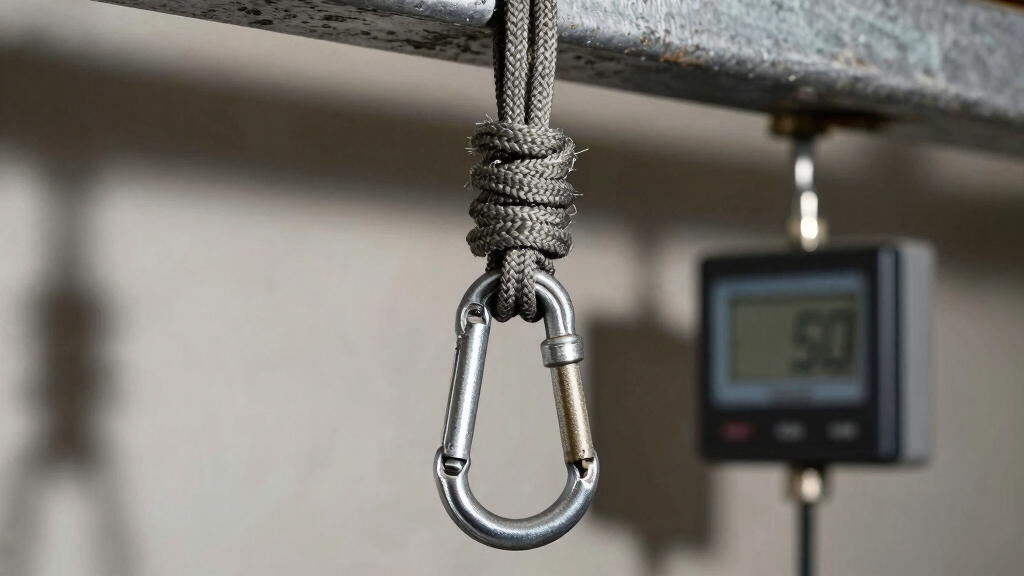
You can count on standard Type III paracord to hold a minimum static breaking strength of 550 pounds, though actual strength often exceeds 620 pounds.
Keep in mind knots reduce strength by up to 30%, and dynamic loads or wear lower its effective capacity.
Safe working loads are usually set around one-third of the breaking strength to accommodate real-world conditions and safety margins.
To fully understand paracord’s capabilities and limitations, exploring its construction and usage nuances is essential.
Key Takeaways
- Type III paracord typically holds a minimum breaking strength of 550 pounds, with actual samples often exceeding 620 pounds.
- Knots reduce paracord strength by about 25%, so working load limits are lower than the breaking strength.
- Outer sheath supports around 200 pounds, while each inner strand can handle approximately 50 pounds.
- Dynamic loads, abrasion, and environmental factors significantly decrease paracord’s effective load capacity.
- Type III paracord’s safe working load limit is roughly 190 pounds for practical, everyday use.
Paracord Types and Their Breaking Strengths
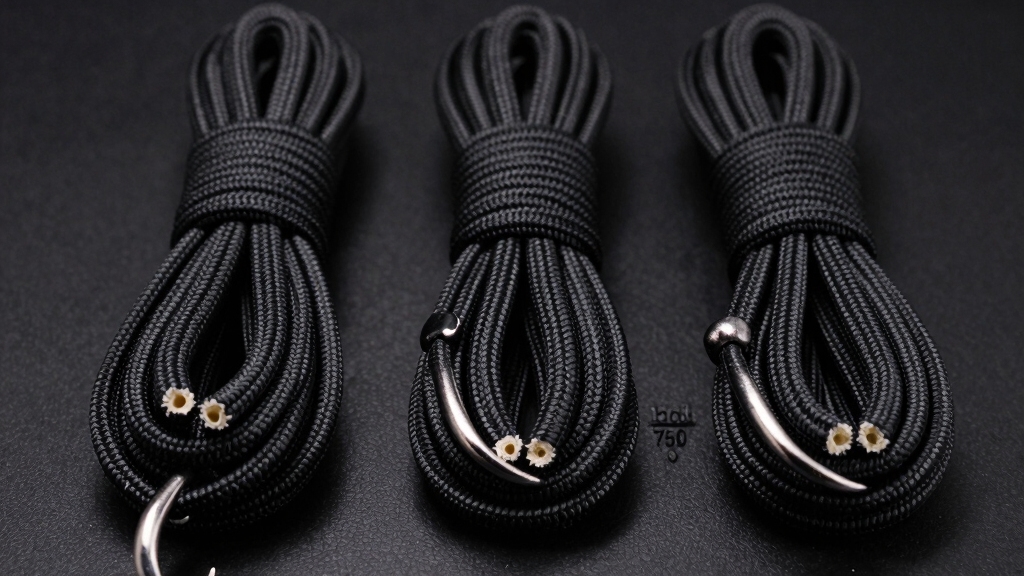
Although paracord comes in various types, each offers a distinct breaking strength tailored to specific applications.
Paracord types vary, each providing unique breaking strengths for different uses and demands.
Type I paracord features a single internal strand, a 5/64-inch diameter, and a minimum breaking strength of 95 pounds, making it suitable for lightweight tasks.
Type II raises capacity to 400 pounds with commercial-grade variants and a 30 percent elongation minimum, though it’s less common than Type III.
Type III, the most prevalent, supports 550 pounds thanks to seven inner strands within a 5/32-inch diameter sheath, balancing strength and flexibility. This type is widely recommended for survival and outdoor activities due to its versatility and reliability.
Type IV, with 11 strands and the same diameter as Type III, achieves 750 pounds, offering roughly 26 percent greater strength.
Specialized heavy-duty cords like Para-Max and Battle Cord exceed 1,200 pounds, designed for extreme loads but sacrifice flexibility.
Understanding Tensile Strength and Testing Conditions
When you assess paracord’s tensile strength, you measure the average force required to break a new, unused cord under a controlled, direct-line load. This load is applied at a consistent speed by a pull testing machine.
This quantifies the minimum breaking strength, like the 550 pounds mandated for Type III paracord. Testing uses standardized pull machines to guarantee uniform loading rates, isolating cord performance without dynamic impacts.
Genuine Mil Spec paracord is batch-tested by authorized labs, and certification is issued only if all tests and requirements are met or exceeded Certificate of Compliance. The consistency in manufacturing ensures that each batch maintains the structural integrity necessary for reliable performance.
Nylon yarn variations cause real breaking forces to range, often exceeding specs. Type III samples can surpass 620 pounds, averaging around 785 pounds.
Military standards specify strand count, material composition, diameter, and minimum elongation to maintain strength and reliability. These controlled conditions exclude environmental stressors and knots, providing a baseline tensile metric critical for comparing cord quality.
This ensures safe application in demanding scenarios.
Impact of Knots and Usage on Paracord Strength
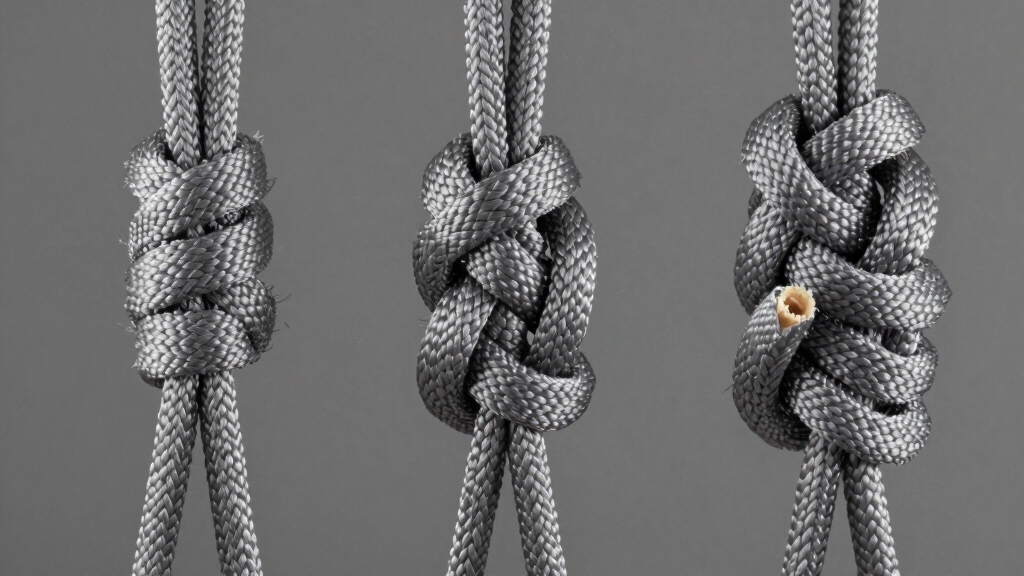
Understanding a paracord’s tensile strength under controlled conditions gives you a baseline for its maximum capacity. However, real-world applications introduce variables that markedly reduce this strength.
Knots, for example, reduce tensile capacity by approximately 25%, with some knots causing up to a 30% reduction. You should note that bowline knots weaken paracord less than others while remaining secure and easy to untie. Proper maintenance and regular inspection help prevent unnoticed wear that can further diminish strength.
Additionally, paracord’s nylon material and slippery surface make knot security critical. Improper tying can cause slippage and further strength loss. Paracord’s multi-strand construction allows the inner strands to be unraveled and used separately for smaller tasks.
Extended loads cause irreversible stretch, or creep, especially in single strands.
Dynamic loads from movement exponentially increase force, risking failure. Consequently, you must factor knot-induced weakening and usage conditions into your strength calculations to ensure safety and reliability.
Working Load Limits and Safety Margins
When you’re working with paracord, it’s super important to know the difference between its breaking strength and the Working Load Limit (WLL). The WLL is basically the safe max load you should use it for over time. This way, you can avoid any nasty surprises when you’re relying on it.
Paracord is typically rated by its breaking strength, such as the popular #550 cord which can hold up to 550 pounds. For safety, it’s also crucial to consider how you pack and protect the rope during use and transport to maintain its integrity and strength.
Now, let’s talk about safety margins. These are usually set between 15-35% of the breaking strength. This cushion is there to help the cord handle any dynamic stresses that might come its way without giving up on you.
If you ignore these safety margins, you could be setting yourself up for trouble, like gradual wear and tear that could lead to snapping when you least expect it. So, always keep those safety margins in mind!
Understanding Working Load
Although paracord’s breaking strength is often highlighted, its working load limit defines the maximum weight you can safely apply continuously without risking failure.
This limit typically ranges from 15% to 35% of the breaking strength, depending on the paracord type and construction. Measuring the cord under real-use conditions rather than just laboratory tests helps ensure accurate working load limits.
For example, mil-spec Type III 550 paracord, rated at 550 pounds breaking strength, has a working load limit around 190 pounds, roughly 35%.
This value accounts for prolonged use under static loads, unlike breaking strength measured under controlled pull tests.
Dynamic stresses, material properties, and cord condition influence the working load.
You should also consider that testing assumes new, straight-pulled cord.
Paracord’s MIL-C-5040-H specification ensures consistent quality and performance that directly affect these load limits.
Exceeding the working load increases failure risk over time, even if the breaking strength isn’t reached immediately.
Consequently, understanding and respecting working load limits guarantees safe, reliable paracord performance.
Importance of Safety Margins
When working with paracord, you must factor in safety margins that markedly reduce the effective load capacity compared to the nominal breaking strength.
The minimum breaking strength is measured under ideal, static, laboratory conditions and doesn’t account for real-world variables.
Knots, dynamic loads, wear, and environmental factors all degrade strength markedly. To make certain safety, you should apply a safety factor typically between 5 and 10 times.
Additionally, proper handling and protective measures, similar to those recommended for durable travel gear, can help maintain paracord integrity under stress by minimizing damage from abrasion and environmental exposure.
Key considerations include:
Knots can reduce paracord strength by over 50%, drastically lowering safe loads. Dynamic forces from movement or falls can multiply load by 10 times or more.
Strength ratings are based on static force tests that differ significantly from dynamic conditions encountered in use. Industry standards require working loads far below breaking strengths for critical uses.
Always calculate working load limits conservatively. Never exceed 1/5 to 1/12 of rated strength to maintain safety and reliability. It is equally important to regularly inspect the cord for wear, as abrasion resistance can greatly influence its long-term performance and safety.
Construction and Material Specifications of Paracord
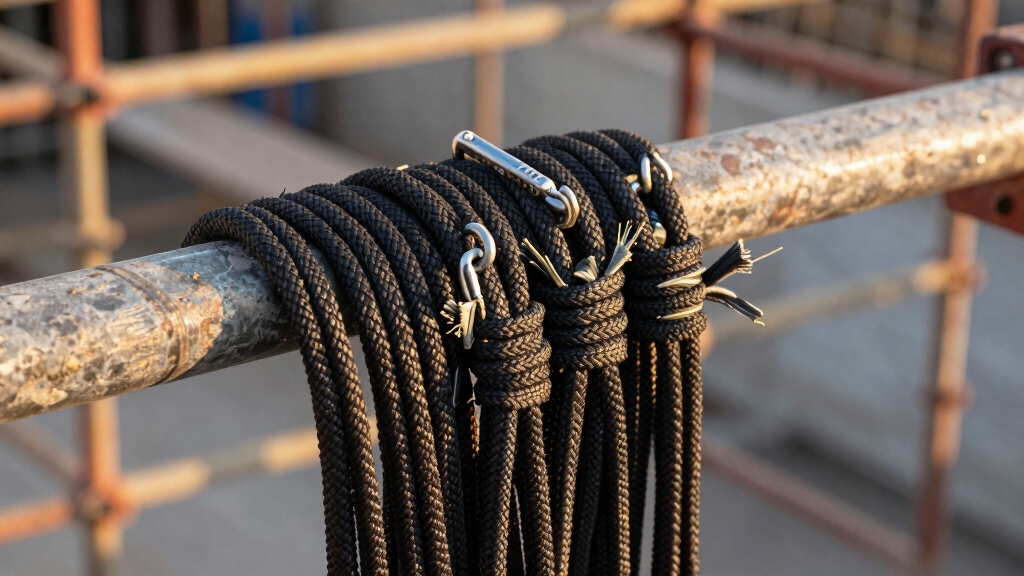
You’ll find that the strength and elasticity of paracord hinge on its core yarn composition. Typically, it’s made from nylon fibers that are twisted into multiple yarns. Isn’t that interesting? Proper conditioning and maintenance of nylon fibers can help preserve their durability and flexibility over time.
The sheath’s braided structure, which is often composed of 32 interwoven nylon strands, plays a crucial role too. It adds vital tensile support while still maintaining flexibility.
Additionally, the cord is steamed during manufacture to tighten and add stretch, allowing it to absorb shock especially during parachute deployment. This steaming process is similar to controlled heat application techniques used to enhance material properties.
Core Yarn Composition
Since the core yarn composition directly influences paracord’s strength and flexibility, understanding its construction and material specifications is essential.
The core consists of twisted nylon fibers, typically three per yarn, made from high-tenacity polyamide with a melting point of 244°C.
Type III paracord, the most common, contains 7 to 9 such core yarns, each tightly twisted and wet-shrunk at 90-96°C to enhance compactness and strength without stretching, preserving fiber integrity.
You’ll find core yarns built from 100% nylon, delivering at least 30% elongation for elasticity.
MIL-C-5040H standards dictate minimum yarn counts and strength ratings (e.g., 550 lbs for Type III).
A colored tracer yarn is embedded for military-spec identification. This precise core construction dictates the paracord’s load-bearing capabilities and durability.
Additionally, the outer sheath is a 5/32-inch braided sheath made up of 32 interwoven strands that protect the core and contribute to the overall strength.
Sheath Yarn Structure
The core yarn composition sets the foundation for paracord’s strength, but the sheath yarn structure plays an equally pivotal role in defining its overall performance and durability.
For MIL-SPEC Type III paracord, the sheath consists of 32 tightly braided nylon strands (32/1), yielding a smooth 5/32-inch diameter and enhancing abrasion resistance.
This tightly braided construction also improves the cord’s flexibility and wear resistance, similar to how leather conditioning maintains suppleness in leather goods.
Nylon’s elasticity allows a minimum 30% elongation, while wet shrinking at 68–74°C maintains fiber integrity without micro-tears. This temperature range is carefully controlled to ensure the sheath yarns are wet-shrunk properly, contributing to the cord’s compactness and strength.
The sheath’s nylon polyamide composition resists rot, mildew, UV fading, and foul odors, protecting the core from external damage.
Authentic MIL-SPEC paracord uses single-strand nylon fibers dyed without bleaching agents, ensuring structural stability.
Deviations like polyester sheaths compromise bond compatibility and strength. Therefore, the precise sheath yarn structure supports paracord’s load-bearing capabilities and longevity.
Restrictions and Risks of Using Paracord for Heavy Loads
Although paracord boasts impressive tensile strength, you must recognize its limitations when subjected to heavy loads, especially dynamic forces.
Dynamic stresses from falling or swinging loads can multiply forces far beyond the static rating, risking sudden failure.
Paracord’s safe working load is typically only 15-35% of its breaking strength, reduced further by knots and environmental factors.
Consider these restrictions:
Knots can decrease tensile strength by up to 30%, compromising load capacity.
Dynamic loads, such as falls, can exert forces up to ten times static weight. Wet, aged, or UV-exposed cord further diminishes strength, increasing failure risk.
Paracord is also water-resistant but not waterproof, meaning moisture absorption can weaken the cord over time.
You should avoid relying on paracord for climbing, rappelling, or rescue scenarios where unpredictable dynamic loads prevail.
Practical Applications and Weight Considerations
When selecting paracord for practical use, you must account for its rated strength, weight, and construction to guarantee safety and efficiency. Using reliable load stabilization clips can help distribute tension evenly when paracord is employed in gear setups.
Choosing paracord requires considering its strength, weight, and build to ensure reliable and safe use.
For instance, Type III paracord offers a minimum breaking strength of 550 lbs with a working load limit around 190 lbs, making it suitable for applications like hammock suspension when multiple strands share the load.
Its lightweight profile—approximately 0.07 oz per foot—supports portability without compromising durability.
You should consider static load ratings carefully, noting that the outer sheath can handle about 200 lbs, while each inner strand supports roughly 50 lbs. Additionally, the 30% minimum elongation provides shock absorption, essential for dynamic stresses.
Paracord’s inner filaments can be extracted for versatile tasks such as sewing, fishing, or whipping, enhancing its multi-use functionality.
Balancing diameter, weight, and tensile capacity assures you select paracord tailored for tasks from everyday carry to heavier load requirements.
Frequently Asked Questions
How Does Temperature Affect Paracord Strength?
Temperature directly affects paracord strength by causing shrinkage and fiber degradation. When exposed to heat near 90-96°C, nylon cores shrink, tightening the weave but potentially reducing elasticity. Excessive heat above 244°C melts fibers, drastically weakening the cord.
Moist heat further diminishes tensile strength by 15-20%. Repeated thermal cycling or exposure to dryers accelerates breakdown. To maintain strength, avoid extreme temperatures and ensure the paracord dries fully before use.
Can Paracord Be Safely Used in Marine Environments?
You can absolutely trust paracord to brave marine environments like a seasoned sailor. Its nylon fibers resist rot, mildew, and UV damage, keeping strength intact even when soaked.
While it loses some tensile power underwater, it remains reliable for securing gear, rigging shelters, or managing lines.
Just flush it with fresh water after salt exposure and use proper knots to maintain peak performance and safety in wet, salty conditions.
What Is the Shelf Life of Unused Paracord?
You can expect unused paracord to have a shelf life of 7 to 8 years if stored correctly. Keep it in cool, dry, and dark conditions, away from direct sunlight to minimize UV degradation.
Avoid exposure to extreme heat, chemicals, and moisture to prevent weakening. Using waterproof containers enhances preservation.
Regularly inspect for any signs of fraying or damage before use to guarantee reliability and maintain its structural integrity over time.
How Does UV Exposure Degrade Paracord Over Time?
UV exposure breaks down paracord’s polymer chains through photooxidative degradation, causing chain scission and free radical formation.
This weakens the fibers, leading to surface cracks and brittleness. Within months, you’ll see about a 30% tensile strength loss, escalating beyond 50% after several years.
The damage isn’t always visible, so you must inspect regularly and replace paracord proactively to guarantee safety in load-bearing applications.
Are There Differences in Strength Between Brands of Paracord?
Yes, you’ll find strength differences between paracord brands due to variations in construction and quality control.
Some brands meet strict mil-spec standards, guaranteeing verified 550-pound tensile strength, while others use fewer inner strands or inferior materials, reducing reliability.
For instance, 5col meets military specs consistently, whereas generic Amazon brands often show weaker performance. Always verify certification and strand count to guarantee you get the intended strength for your application.
Making Smarter Gear Decisions With Proper Paracord Ratings?
When you rely on paracord, think of it as a strong rope bridge, capable but sensitive. Its weight capacity varies by type, knots, and conditions, so you must respect its limits and safety margins.
Always consider tensile strength and real-world factors before loading it. Using paracord beyond its working load risks failure.
By understanding these technical details, you’ll guarantee your paracord performs reliably without unexpected breaks or hazards.