
How to Organize Fly Box: Sort Smarter, Fish Better

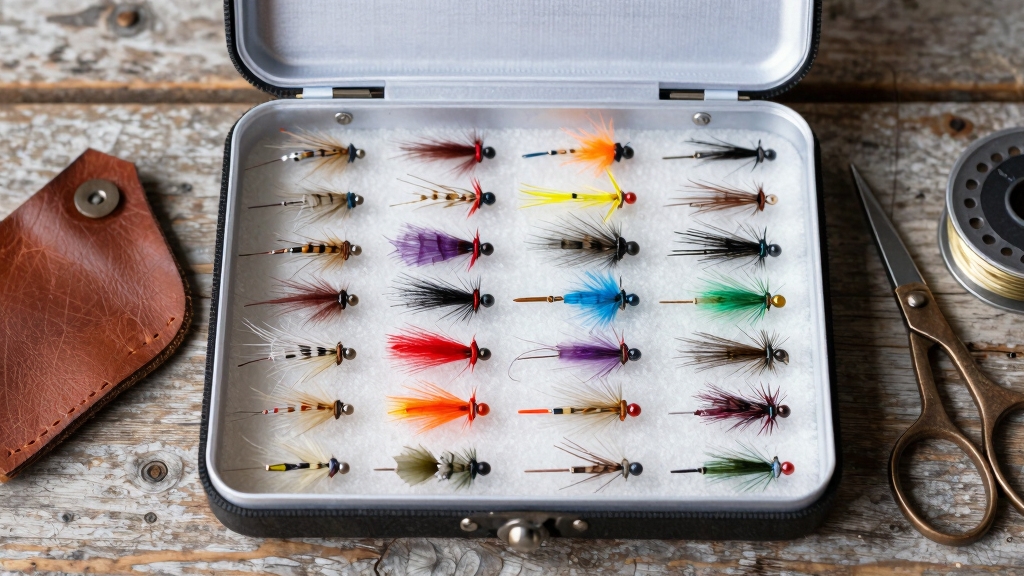
To organize your fly box efficiently, start by arranging flies from smallest to largest sizes, grouping similar patterns to speed identification. Separate dry flies, nymphs, and streamers by function, and keep bulky streamers in deep compartments to prevent damage.
Sort flies seasonally or by hatch timing to match your fishing schedule, and customize boxes for target species or water conditions. Maintaining clear labels and adjustable compartments will further streamline your selections and boost on-the-water success.
Explore these techniques to enhance your fly box setup.
Key Takeaways
- Arrange flies by size from smallest (top-left) to largest (bottom-right) to mirror natural reading order and simplify selection.
- Group flies by type and function, separating dry flies, nymphs, streamers, and terrestrial patterns for hatch and tactic matching.
- Use compartmentalized foam boxes with adjustable inserts tailored to fly profile and weight to protect and secure different fly types.
- Organize boxes seasonally and by hatch timing, labeling clearly to speed pattern choice based on current insect activity.
- Customize fly boxes by target species and water conditions, grouping flies for specific fish, habitat, and fishing techniques.
Organizing by Size and Pattern Variation
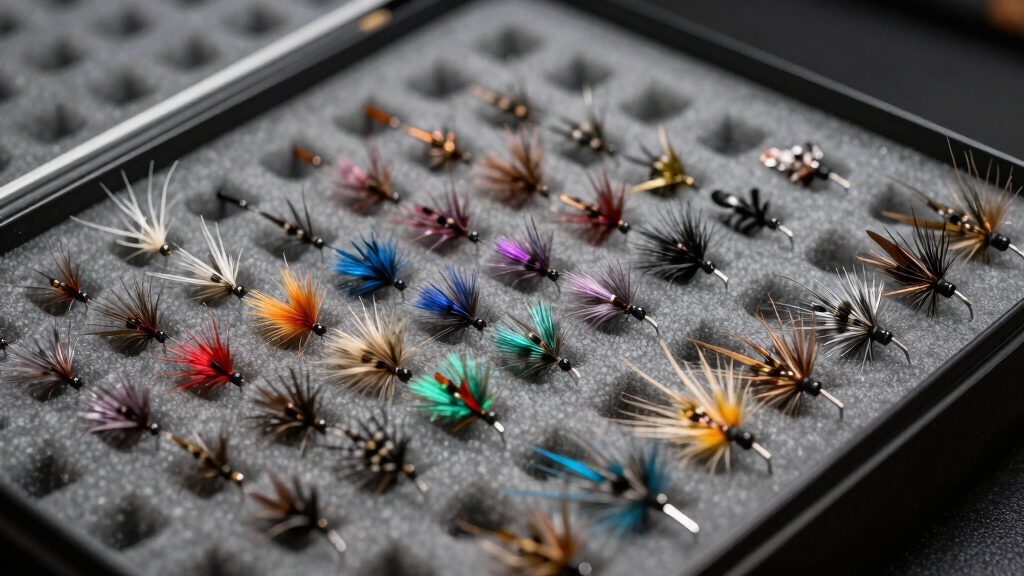
When organizing your fly box by size and pattern variation, start by placing the smallest flies at the top-left corner, following the natural reading path to the bottom-right. This approach aligns with the general recommendation to arrange flies left-to-right, top-to-bottom, mirroring reading order.
Position non-bead head nymphs of similar colors and styles here, using standard slit foam boxes for sizes 10-22 and tiny midge boxes for flies smaller than size 22. It is important to measure the dimensions of your fly boxes accurately to ensure all flies fit securely and maintain their shape during transport.
Arrange flies row-by-row from smallest to largest, keeping larva, pupa, and terrestrial imitations in size order. Reserve the bottom-right for the largest flies—sizes 6-10 nymphs, streamers, attractors, and hoppers, using larger boxes designed for hefty patterns.
Group similar patterns in sequence with size consistency within rows, such as all black RS2s or various Copper Johns, to streamline selection and maintain an efficient, well-structured fly box ready for any fishing scenario.
Additionally, securing variations of a pattern in sequence simplifies locating specific sizes and reduces time spent searching, enhancing overall organization pattern sequence.
Grouping Flies by Type and Function
Although organizing by size and pattern is essential, grouping flies by type and function guarantees quick access tailored to specific fishing techniques and conditions. Organizing flies by type and function ensures fast, technique-specific access for every fishing condition.
You’ll want to separate your flies into clear categories that reflect their purpose and presentation style. This approach streamlines your selection process and enhances fishing efficiency.
- Group dry flies together for surface fishing, nymphs for subsurface tactics, and streamers for predatory strikes. Regularly clean fly boxes to remove damaged or seldom-used flies and declutter space, ensuring your selection remains sharp and relevant. Consider the volume capacity of your fly box to keep your collection organized without overcrowding.
- Arrange insect imitations by species: mayflies, caddisflies, terrestrials, so you match hatch specifics quickly.
- Build boxes focused on hatches and fishing disciplines, including emergers, spinners, and tag nymphs for precision.
- Keep junk flies like eggs and mops in a separate compartment to avoid confusion during critical moments.
Arranging Flies by Profile and Weight
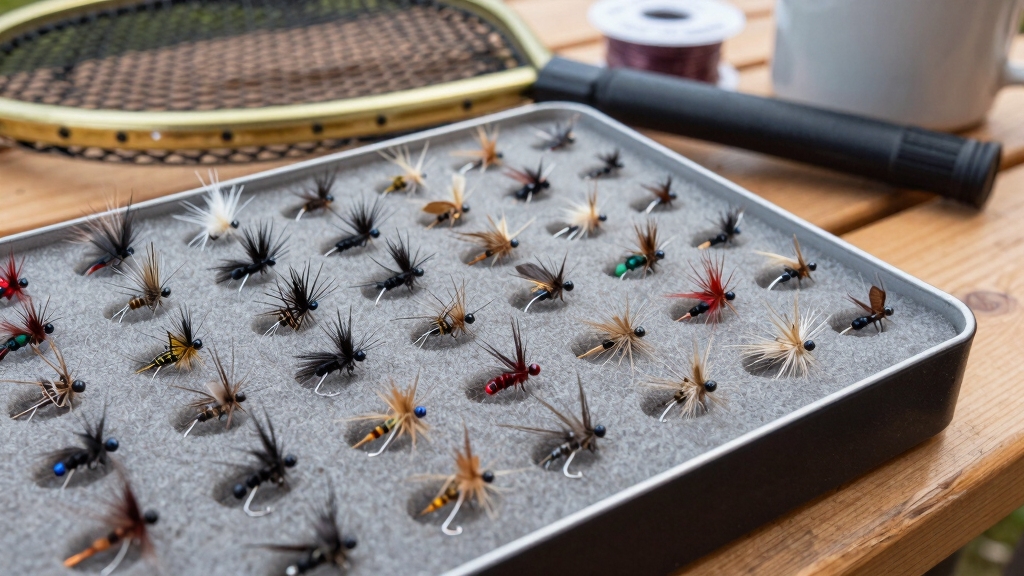
Since the profile and weight of your flies directly influence casting performance and presentation, organizing your fly box with these factors in mind guarantees quick selection and protects delicate patterns.
Start by grouping bulky streamers in deep compartments with ample vertical clearance to avoid crushing. Slim-profile dry flies need headroom in narrow boxes to preserve hackles, while smaller midges fit compact sections without wasted space.
Using compartment boxes with adjustable inserts can provide ideal spaces tailored to different fly sizes, keeping them secure and organized. Choosing durable materials for your fly box ensures protection against moisture and physical damage during transport.
Sort flies by weight; lighter nymphs around 12-15 centigrams in slim boxes, heavier ones near 25 centigrams in medium compartments, helping you adjust to current and depth. Use thick foam slits for heavy hooks and reserve sections for bushy dries.
Match box size and foam density to fly profile and weight, ensuring neat rows that maintain fly integrity and speed up rig balancing on the water. Proper organization also facilitates easier handling and reduces the risk of damage, similar to how durable materials enhance luggage protection during travel.
Sorting Flies According to Season and Hatch
Organizing your fly box by season and hatch streamlines your fishing experience by ensuring you carry the right patterns for the time of year and local insect activity.
Organizing flies by season and hatch ensures you’re prepared with the right patterns when it matters most.
Use calendar-based divisions: spring, summer, fall, and winter or more detailed seasonal breakdowns to match hatch timing. This seasonal organization aids quick preparations for expected hatches and conditions.
Audit your inventory during off-seasons to identify gaps and restock accordingly. Label boxes clearly to speed pattern selection on the water.
- Prioritize early-season mayflies like Baetis in spring boxes.
- Emphasize terrestrials and large attractors during summer.
- Include streamers and dry-dropper combos for fall’s transitional hatches.
- Stock winter boxes with cold-water confidence patterns like egg patterns and green weenies.
This method cuts down weight and decision time while aligning with regional hatch schedules.
Customizing Boxes for Target Species and Water Conditions
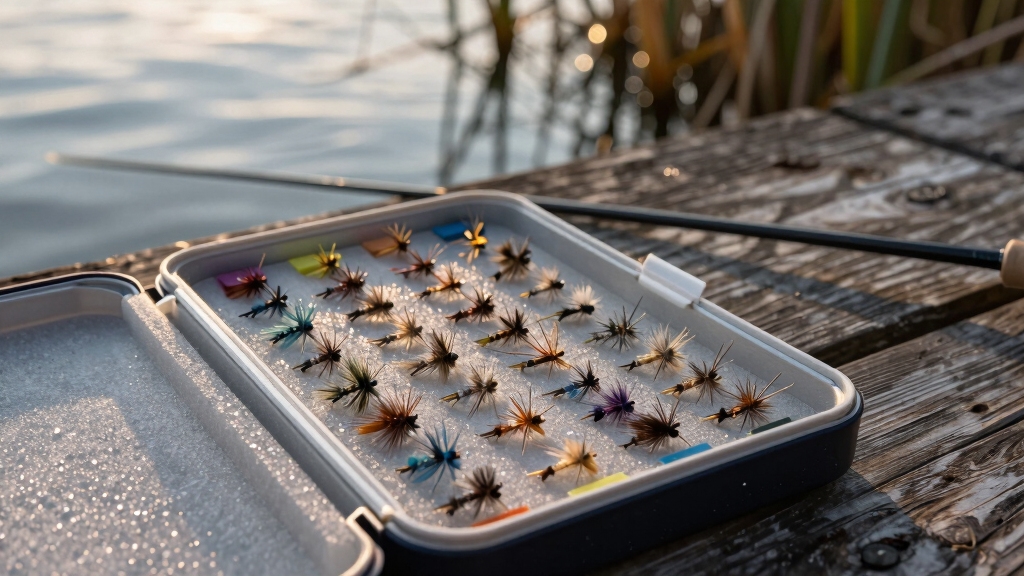
When you tailor your fly boxes to specific target species and water conditions, you maximize efficiency and effectiveness on the water.
Create species-specific boxes: one for bass with largemouth and smallmouth patterns, another for carp separating common and grass carp imitations, and a panfish box overlapping with trout patterns. Organize these boxes by fish target to bring only what is needed for the expected species. Incorporating compartments and dividers helps keep these patterns neatly separated and easily accessible.
For water types, design a small stream box with compact, lightweight flies; a tailwater box with larger hooks for deep runs; and a stillwater box focusing on floating line patterns. Saltwater boxes require corrosion-resistant materials, while surf boxes limit flies to small, portable confidence patterns.
Organize nymphs by weight for depth control and group flies by profile or hatch similarity. This focused approach streamlines your selection and improves your success in varied fishing environments.
Frequently Asked Questions
How Often Should I Clean and Maintain My Fly Box?
You should clean and maintain your fly box after every few trips or at least once per season.
Rinse your gear with fresh water right after use, especially if you’ve been in saltwater or muddy conditions.
Inspect flies for rust after wet outings and toss any compromised hooks.
Dry everything thoroughly before storing, and add silicone gel packets to keep moisture at bay.
Regular maintenance makes certain your gear stays reliable and rust-free.
What Materials Are Best for Waterproof Fly Boxes?
Waterproof fly boxes are your fortress against moisture, and materials like ABS plastic and aluminum form sturdy walls.
ABS plastic offers shock absorption and crush resistance, while aluminum shines in dry fly cases.
Silicone gaskets and rings create airtight seals, keeping water out like a tight-lipped secret.
High-density silicone or micro-slit foam holds flies securely and resists moisture.
Look for IPX 6.5-rated boxes with sealed lids to keep your flies dry and safe.
Can I Mix Fly Box Storage With Other Fishing Gear?
Yes, you can mix fly box storage with other fishing gear, but take precautions.
Use waterproof silicone or magnetic compartment boxes to keep flies dry and secure.
Choose boxes with dense foam to prevent crushing and slotted designs to maintain order.
Label your boxes clearly, and size them to fit your packs to avoid shifting.
Adding desiccant packets helps control moisture, ensuring your flies stay protected alongside your other fishing tools.
How Do I Prevent Flies From Getting Crushed in My Box?
Imagine your delicate flies as fragile works of art. Crushing them is unacceptable. To prevent damage, use slotted foam or silicone boxes that hold flies securely without squeezing hackles.
Opt for tiny midge boxes for small flies and large streamer boxes for bigger ones. Arrange flies vertically or in compartments to avoid pressure.
Choose floating foam boxes to protect dry fly hackle. These steps preserve your flies’ shape and effectiveness during every trip.
What Is the Best Way to Label Individual Flies or Sections?
You’ll want to use a label maker to clearly mark sections or individual flies by key criteria like weight, life cycle stage, sink rate, or fly type.
Attach waterproof, readable labels to box compartments or dividers. Use consistent terminology and group flies logically—for example, by grain weight or nymph versus dry patterns.
This approach guarantees quick identification, helps you match hatches accurately, and keeps your fly box efficient and organized during your fishing trips.
Transform Your Fishing Results with a Better-Organized Fly Box
Organizing your fly box efficiently can boost your fishing success markedly. Did you know that anglers who sort flies by type and season report up to a 30% increase in catch rates?
By grouping flies by size, pattern, and function and customizing for target species and water conditions, you’ll save time and stay prepared on the water. Take charge of your gear now and watch how a well-organized fly box transforms your fishing experience.