
Duffel Bag Vs Backpack: Which Should You Choose?

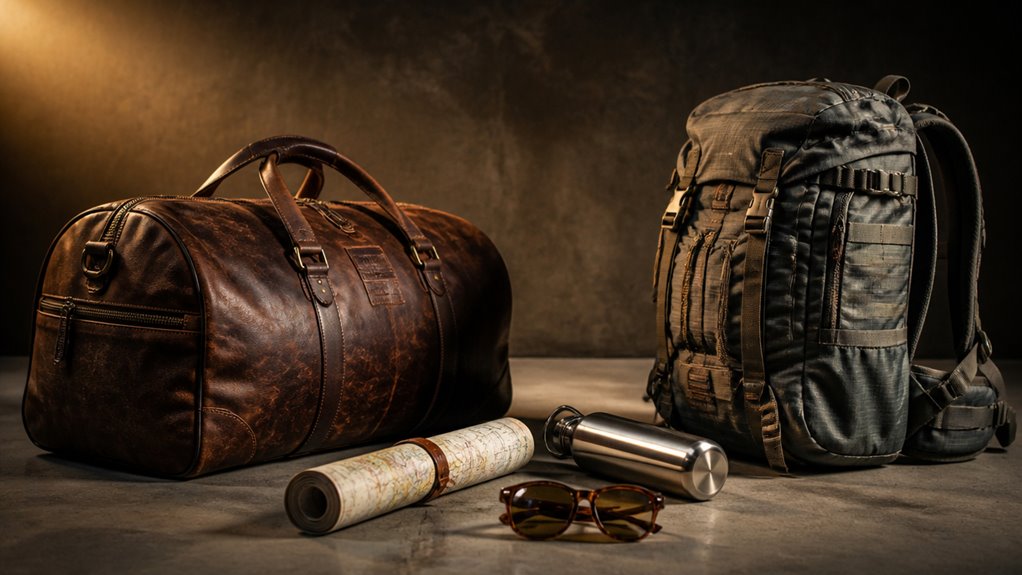
If you need a bag for bulky gear or quick trips, a duffel is your best bet with its spacious, flexible design.
But if you’re after organized, comfortable, hands-free travel, especially over long distances, a backpack’s compartments and padded straps will serve you well.
Backpacks fit most airline carry-on limits, while duffels often don’t.
Picking the right bag depends on your trip style and gear. Keep exploring; there’s more to find about which suits you best.
Key Takeaways
- Duffel bags offer larger, flexible space ideal for bulky items but often exceed airline carry-on size limits.
- Backpacks provide organized compartments and fit within carry-on size restrictions, enhancing convenience for travel.
- Duffels are more comfortable for short trips with easy grab-and-go access but can cause shoulder strain over long periods.
- Backpacks distribute weight evenly across both shoulders, reducing fatigue and improving posture for long journeys.
- Backpacks enable hands-free mobility, making them better suited for multi-transit travel and active commuting.
Duffel Bag or Backpack: Major Differences Compared
| Feature | Duffel Bag | Backpack |
|---|---|---|
| Capacity | Larger, open storage space | Smaller but better organized |
| Interior Layout | Single large compartment | Multiple compartments and pockets |
| Best For | Gym gear, sports equipment, weekend trips | Travel, commuting, hiking, school |
| Comfort (Short Trips) | Excellent | Good |
| Comfort (Long Trips) | Moderate | Excellent |
| Weight Distribution | One shoulder or hand | Evenly across both shoulders |
| Hands-Free Use | No | Yes |
| Organization | Basic | Superior |
| Access to Items | Wide opening for quick packing | Organized but slightly slower access |
| Airline Carry-On Compatibility | May exceed carry-on limits | Usually fits carry-on requirements |
| Mobility | Better for car-to-hotel transport | Better for walking and public transport |
| Bulky Item Storage | Excellent | Limited |
| Posture Support | Minimal | Excellent with padded straps |
| Durability | Good | Excellent for frequent travel |
| Best Travel Style | Short getaways and sports | Long-distance travel and commuting |
| Main Advantage | Spacious and easy to pack | Comfortable, organized, and hands-free |
| Main Drawback | Can become uncomfortable over long distances | Less flexible for oversized gear |
Duffel Bags Vs Backpacks: Size and Capacity Compared
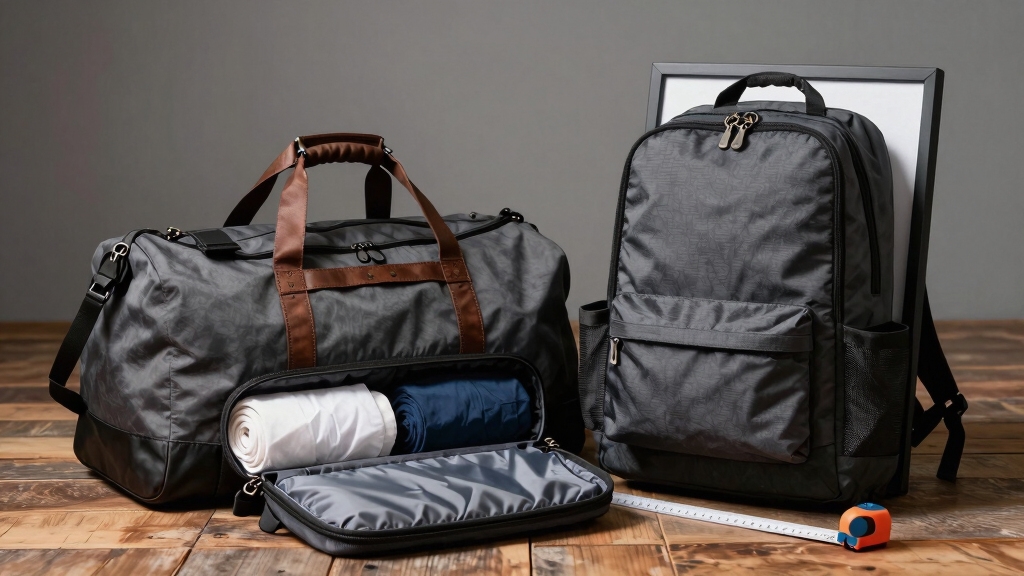
When you compare duffel bags and backpacks with respect to size and capacity, duffels generally offer more room to work with. They average around 3,390 cubic inches versus backpacks’ 2,399 cubic inches.
You’ll notice duffels have a wide, open interior without many dividers, making them perfect for bulky or oddly shaped items. This means you can pack larger gear or clothing without worrying about fitting everything neatly.
Backpacks, on the other hand, use vertical stacking and come with multiple compartments. This helps you organize but limits overall space.
If you prefer flexibility and maximum volume, a duffel suits you best. But if you want compactness and systematic storage, a backpack might work better for your needs.
Additionally, duffel bags made from durable, abrasion-resistant materials offer better protection and longevity when used as checked luggage.
Which Bag Is More Comfortable for Short and Long Trips?
When you’re packing for a short trip, a duffel bag is super convenient. Its easy grab-and-go style just feels comfortable and straightforward, right? You can throw it over your shoulder and be on your way in no time.
But if you’re gearing up for a longer journey, a backpack really shines. Its even weight distribution across your shoulders helps prevent strain, which is a game changer for comfort. Trust me, when you’re lugging around your stuff for hours, that little detail makes a big difference.
Backpacks often feature padded hip belts and adjustable straps that further enhance comfort by distributing weight and reducing fatigue during extended wear.
Short Trip Comfort
You’ll often find that duffel bags offer greater comfort for short trips, thanks to their simple design and easy access.
When you’re packing for a quick weekend or a day trip, the wide opening and spacious compartment let you toss in bulky items without fuss.
Carrying a duffel with one shoulder strap or handles feels natural over short distances, especially if you’re moving from car to hotel.
You won’t have to worry about complicated compartments or straps slowing you down.
While backpacks distribute weight better overall, their multiple compartments and vertical stacking can make access slower during short trips.
Many duffel bags feature multiple handle and strap options that add to their versatility and ease of carrying over short distances.
Long Distance Ergonomics
Although duffel bags feel convenient for short trips, they often fall short on comfort during long-distance carrying. When you’re trekking for hours, a backpack usually outshines a duffel. Here’s why:
- Backpacks distribute weight evenly across both shoulders, reducing strain.
- Duffels rely on a single shoulder strap or handles, which can cause discomfort.
- Padded backpack straps protect your back and help maintain good posture.
- Carrying loads over 8–10 kg for extended periods favors backpacks for ergonomic support.
If you’re planning a long journey, you’ll appreciate how a backpack keeps you comfortable and balanced. While duffels offer easy access and packing, they’re best saved for short hauls where comfort isn’t the priority. Many backpacks also feature adjustable suspension systems that further enhance comfort by customizing fit and weight distribution.
Weight Distribution Impact
Since weight distribution plays a pivotal role in comfort, choosing between a duffel bag and a backpack depends heavily on how long and how far you plan to carry them.
If you’re heading out for a short trip or quick gym visit, a duffel bag works fine because you’ll likely carry it just a short distance. However, it places most of the weight on one shoulder or hand, which can cause discomfort over time.
On the other hand, backpacks distribute weight evenly across both shoulders, making them far more comfortable for long trips or when you’re moving around a lot.
If you expect to carry your bag for hours or over long distances, a backpack will protect your posture and reduce fatigue better than a duffel ever could.
Additionally, gym bags often feature padded straps and lightweight construction, enhancing comfort during frequent commutes and reducing strain on the shoulders through ergonomic design.
How Duffel Bags and Backpacks Differ in Organization and Access?
When you think about organization, backpacks really shine. They come with multiple compartments, which makes it super easy to keep everything sorted and find what you need without digging around.
On the flip side, duffel bags are more about that spacious, open design. It’s great for quick access, but be careful—it can get messy in there pretty quickly! Rolling duffels often require packing cubes to stay tidy and prevent items from hiding in corners.
Compartmentalization Differences
If you value keeping your gear neatly sorted, backpacks typically offer the edge with multiple compartments, pockets, and specialized sleeves designed to organize everything from laptops to chargers.
Duffel bags, on the other hand, usually feature one large open compartment, which is great for bulky items but can lead to disorganization.
Here’s how they differ in compartmentalization:
- Backpacks have dedicated laptop sleeves and smaller pockets for accessories.
- Duffels provide broad, open space, ideal for packing flexibility.
- Backpacks separate essentials for easy retrieval and protection.
- Duffels’ single compartment means you might’ve to dig through your gear.
Choosing based on compartmentalization depends on whether you prefer structured organization or flexible packing.
Backpacks suit on-the-move lifestyles with organized storage needs and hands-free convenience, enhancing practical use.
Accessibility and Convenience
Although both duffel bags and backpacks serve as trusty carriers, they offer distinct experiences in how you access and organize your belongings.
Duffels provide wide, horizontal openings that let you quickly throw in or grab items, perfect when you’re in a rush. Backpacks, however, feature multiple compartments with secure zip access, keeping your essentials like laptops and phones neatly separated and safer from snatchers.
| Feature | Duffel Bag | Backpack |
|---|---|---|
| Access Style | Wide horizontal opening | Top or zippered compartment access |
| Organization | Single large compartment | Multiple pockets and sleeves |
| Security | Less secure, open design | More secure, zip closure |
| Quick Grab | Easy, but can get messy | Slightly slower, but organized |
Choosing depends on how you prioritize speed versus security and order. Many modern bags incorporate multiple compartments and dedicated pockets to improve organization and separate clean and used items.
Organization Efficiency
Mastering organization efficiency means understanding the unique strengths of duffel bags and backpacks.
When you choose a duffel, you get one large open space that lets you pack bulky or oddly shaped items fast, but it can get messy.
Backpacks, on the other hand, offer multiple compartments and pockets that help you keep things sorted and easy to find.
Here’s how they differ:
- Duffels provide broad horizontal access for quick packing and unpacking.
- Backpacks use systematic compartmentalization for separating essentials like laptops and phones.
- Duffels’ open space can lead to disorganization without careful packing.
- Backpacks’ vertical stacking may make bottom items harder to reach but keeps gear secure.
Knowing this helps you pick the right bag for your organization style. Additionally, bags with interior zipper pockets improve access and protection by keeping smaller items secure and organized inside the main compartment.
Which Bag Is Better for Mobility and Hands-Free Travel?
When you prioritize mobility and hands-free travel, backpacks have the advantage. They distribute weight evenly across both shoulders, making long walks or crowded transit easier.
You can keep your hands free for biking, steering, or carrying other items. Duffel bags, while great for short distances or car transfers, require manual carrying or slinging over one shoulder, which can tire you faster.
Backpacks with load stability features like compression buckles help maintain comfort and organization even on longer hauls.
| Feature | Backpack | Duffel Bag |
|---|---|---|
| Hands-Free Mobility | Yes, leaves hands free | No, needs carrying |
| Weight Distribution | Even across shoulders | Uneven, on one shoulder |
| Best For | Long walks, multi-transit travel | Short trips, car-to-hotel use |
For active travel, backpacks simply keep you moving without hassle.
Airline Size Limits: Duffel Bags Vs Backpacks for Carry-On
If you’re planning to travel with only carry-on luggage, you’ll want to pay close attention to airline size limits.
Most airlines cap carry-ons at around 45 linear inches, meaning the total of your bag’s length, width, and height can’t exceed that.
Here’s what to keep in mind when choosing between duffel bags and backpacks:
- Average full-sized duffel bags measure about 47.5 linear inches, often exceeding limits.
- Large backpacks typically stay within 41.5 linear inches, fitting carry-on requirements comfortably.
- Duffels offer flexible packing but risk being too bulky for overhead bins.
- Backpacks balance compactness and volume, making them a safer bet for hassle-free travel.
Choosing the right size can save you from checked baggage fees and airport headaches.
Ideal Use Cases for Duffel Bags and Backpacks
You’ll often find that choosing between a duffel bag and a backpack depends heavily on how and where you plan to use it.
If you’re heading out for a weekend trip, gym session, or need to haul sports gear, a duffel bag’s spacious, open design makes packing quick and easy.
On the other hand, backpacks shine when you need hands-free mobility for daily commutes, hiking, or negotiating busy transit systems.
They’re designed to distribute weight evenly, offering comfort over long distances.
Plus, their multiple compartments help you organize essentials like laptops and phones efficiently.
How to Choose Between a Duffel Bag and a Backpack?
Picking between a duffel bag and a backpack comes down to matching their strengths with your unique needs.
Ask yourself how you’ll use it most:
- Need to carry heavy loads comfortably? A backpack’s ergonomic design distributes weight evenly.
- Packing bulky or oddly shaped gear? A duffel’s open space and wide opening make organizing easier.
- Will you navigate crowded transit or walk long distances? Backpacks free your hands and offer better mobility.
- Are you flying and want to avoid checked baggage? Backpacks usually meet airline carry-on size limits better.
Consider these points to pick the right bag that fits your lifestyle, comfort, and travel style without compromise.
Your perfect travel companion awaits!
Frequently Asked Questions
Are Duffel Bags or Backpacks More Durable Over Time?
You’ll find backpacks generally more durable over time because they’re designed with reinforced straps, padded support, and structured compartments that handle weight evenly.
Duffel bags, while sturdy, often rely on fewer seams and less padding, so they can wear out faster with heavy or prolonged use.
If you’re carrying heavy loads regularly or trekking long distances, a backpack’s durability and ergonomic features will serve you better in the long run.
Which Bag Type Offers Better Weather Resistance?
You’ll find backpacks generally offer better weather resistance because they often use water-resistant materials and sealed zippers designed for outdoor use.
They protect your gear well against rain or snow, especially if you’re hiking or commuting.
Duffel bags, on the other hand, usually have less weatherproofing since they focus on easy access and flexible packing.
Can Duffel Bags Be Converted Into Backpacks?
Yes, some duffel bags can be converted into backpacks, especially those designed with detachable or hidden straps.
This versatility lets you switch between carrying styles depending on your comfort and activity.
However, not all duffels offer this feature, so you’ll want to check the design before buying.
Convertible duffels combine the roomy space of a traditional duffel with the ergonomic benefits of a backpack.
This makes them a smart choice for flexible travel.
How Do Duffel Bags and Backpacks Compare in Price?
Picture yourself scanning price tags: duffel bags often feel like a bargain, with simple designs and fewer compartments keeping costs low.
Backpacks, with their padded straps and multiple pockets, usually carry a higher price tag.
But don’t let that fool you; investing in a quality backpack means better support and durability for long hauls.
You’ll find budget-friendly options in both, but backpacks typically ask for a bit more upfront.
What Materials Are Commonly Used for Duffel Bags and Backpacks?
You’ll find both duffel bags and backpacks commonly made from durable materials like nylon, polyester, and canvas.
Nylon and polyester offer water resistance and lightweight strength, perfect for daily use or travel.
Canvas, often heavier, gives a rugged feel and durability.
Some high-end options include waterproof coatings or reinforced stitching for extra resilience.
When choosing, consider how tough and weatherproof you need your bag to be based on your activities.
Conclusion
Choosing between a duffel bag and a backpack boils down to your travel style and needs.
Duffel bags deliver spacious simplicity, perfect for packing plenty.
Backpacks boast balanced comfort and hands-free convenience.
Whether you’re trekking through towns or tackling tight transit, trust your trip type to tip the scales.
So, pack with purpose and pick the perfect pack to propel your travel plans smoothly and stylishly!