
ABS Plastic vs Polycarbonate Luggage: Best Choice for Travel

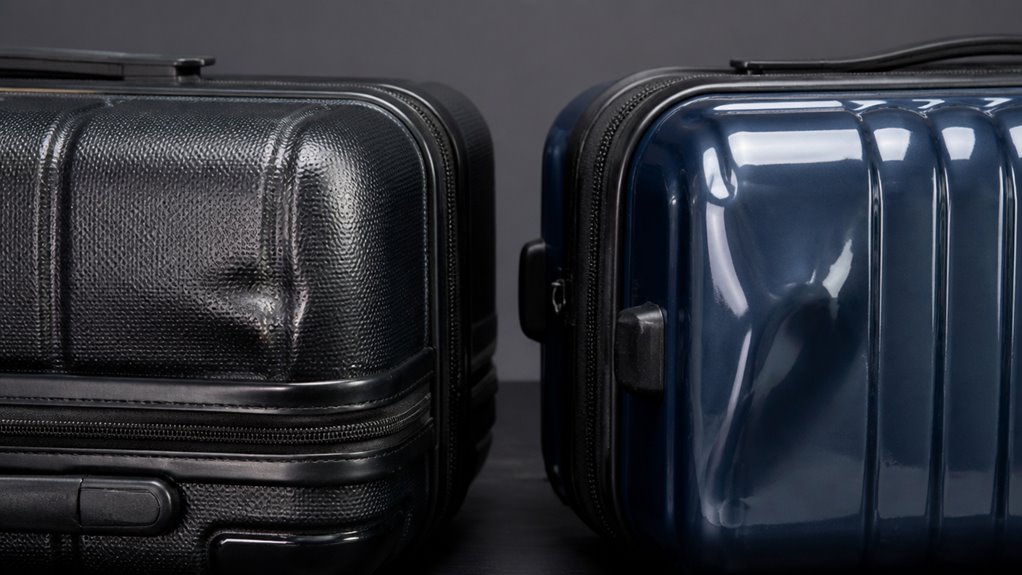
When choosing between ABS and polycarbonate luggage, consider that polycarbonate offers superior impact resistance, flexibility, and durability. It typically lasts 5–10 years with frequent travel.
It’s lighter by 1 to 1.5 pounds but costs roughly twice as much as ABS. ABS is a budget-friendly option for occasional travelers but tends to crack and discolor sooner.
Your choice depends on travel frequency, budget, and durability needs. Exploring further can clarify which fits your demands best.

- 【3 Piece Luggage Set】Rosamo presents a remarkable 3 piece luggage set that encompasses a 28-inch…
- 【High-Quality ABS Material】Crafted from superior-quality and lightweight ABS material, the…
- 【8 Smooth Rolling Silent Spinner Wheels】The Rosamo suitcase sets are equipped with 8 high flat…
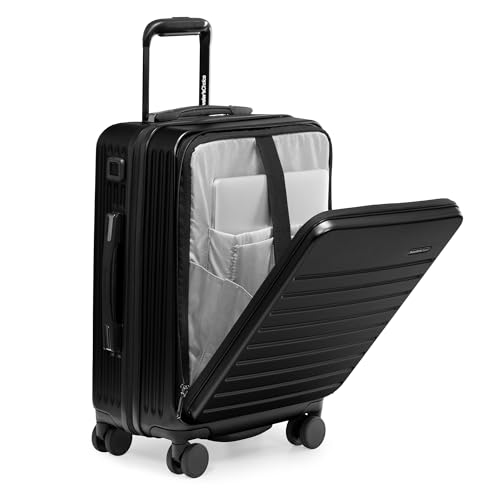
- Durable Polycarbonate Hardshell: Resistant to impacts, providing protection against abrasion, and…
- Padded Laptop Sleeve w/ 2-way Zipper Opening: Crafted for the protection of tablets and laptops up…
- Ergonomic Telescopic Multi-stage Handle System & 360-degree Spinner Wheels: Rubber padding ensures a…

Key Takeaways
- Polycarbonate offers superior impact resistance and flexibility, allowing cases to flex and regain their shape without cracking, unlike rigid ABS.
- ABS luggage is more affordable and lightweight but less durable, prone to cracking, denting, and has a shorter lifespan of 2–4 years.
- Polycarbonate typically lasts 5–10 years, making it ideal for frequent travelers needing durable, long-lasting luggage despite higher cost.
- Polycarbonate resists UV damage and surface wear better, maintaining appearance and structural integrity much longer than ABS.
- ABS suits strict budgets and infrequent travel, while polycarbonate provides better long-term value and strength for regular use.
ABS Plastic Vs Polycarbonate Luggage Comparison: Key Differences at a Glance
| Feature | ABS Plastic Luggage | Polycarbonate Luggage |
|---|---|---|
| Durability | Good for occasional travel, but more prone to cracks | Excellent impact resistance with long-lasting performance |
| Impact Resistance | Rigid and may dent or crack under heavy impact | Flexible shell absorbs impacts and maintains its shape |
| Weight | Slightly heavier than polycarbonate | Lighter with a better strength-to-weight ratio |
| Price | Budget-friendly and ideal for cost-conscious buyers | Higher upfront cost but better long-term value |
| Weather & UV Resistance | More likely to fade or discolor over time | Superior UV and weather resistance for extended use |
| Expected Lifespan | Typically 2–4 years with moderate use | Usually 5–10 years with frequent travel |
| Best For | Occasional travelers, students, and budget buyers | Frequent travelers, business trips, and checked luggage |
| Overall Value | Lower initial investment but shorter lifespan | Higher investment with better durability and reliability |
Polycarbonate vs ABS Luggage: Which Material Is Best?
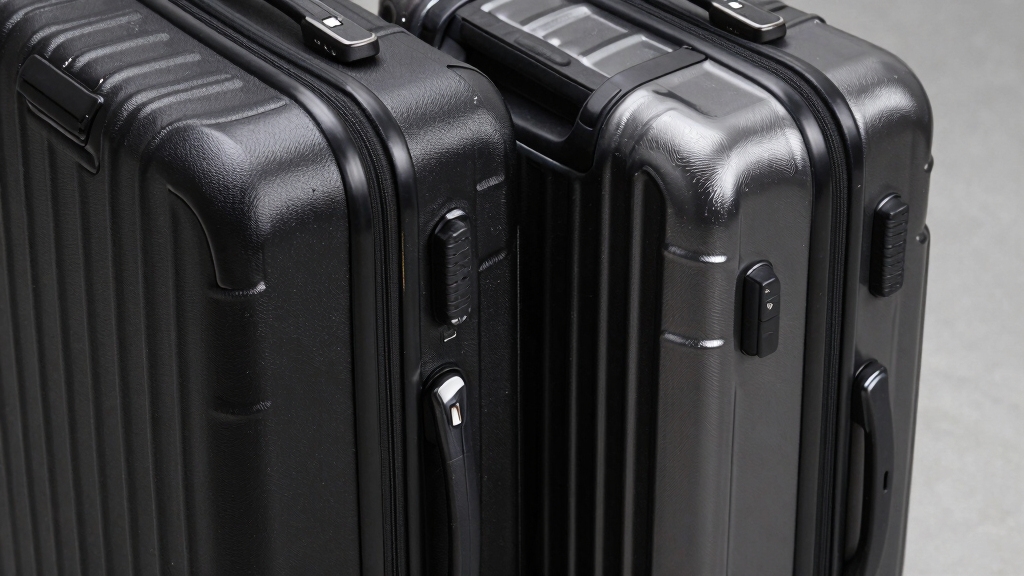
While both ABS and polycarbonate plastics serve as popular materials for hardshell luggage, polycarbonate clearly outperforms ABS in impact resistance, durability, and longevity.
When you choose polycarbonate, you benefit from a material that flexes under stress without permanent damage. ABS tends to crack and dent, making it less reliable.
Polycarbonate’s superior strength-to-weight ratio means you get a robust case without excessive bulk. Although ABS comes at a lower cost, its rigidity limits its lifespan.
Typically, ABS lasts only 2–4 years under moderate use, whereas polycarbonate suits frequent travelers with a lifespan of 5–10 years.
You’ll find polycarbonate offers better long-term value and reliability, making it the preferable choice if durability and sustained performance are your priorities.
Additionally, combining polycarbonate shells with aluminum frames enhances structural support while keeping the luggage lightweight.
Impact Resistance And Durability Of Polycarbonate And ABS Luggage
Because luggage endures frequent impacts and rough handling, its material’s impact resistance and durability are critical factors to consider.
Luggage must withstand frequent impacts, making impact resistance and durability essential qualities to evaluate.
Polycarbonate offers superior impact strength, over twice that of ABS, allowing it to flex under pressure without developing permanent dents.
In contrast, ABS is rigid and inelastic, making it prone to cracking and retaining permanent dents upon impact.
This fundamental difference means polycarbonate luggage typically lasts 5 to 10 years under regular use, while ABS suits have a shorter lifespan of 2 to 4 years.
For frequent travelers, polycarbonate provides unmatched resilience, reducing the risk of damage from rough handling.
ABS suits are better suited for occasional use where durability demands are lower.
Additionally, polycarbonate shells often feature a 3-layer PC matte coating and textured surfaces to hide minor marks and add sturdiness, enhancing their long-term appearance and durability.
Weight And Cost Comparison: Polycarbonate vs ABS Suitcases
Understanding the differences in impact resistance and durability sets the stage for evaluating how weight and cost influence your choice between polycarbonate and ABS luggage.
Polycarbonate suitcases offer a superior strength-to-weight ratio, typically weighing 1 to 1.5 pounds less than comparable ABS models. This weight advantage enhances portability without sacrificing durability.
However, polycarbonate’s advanced manufacturing process results in higher costs, often double that of ABS cases. ABS luggage, while heavier, is less expensive due to simpler production methods.
Though ABS suits tight budgets, polycarbonate provides better long-term value through extended lifespan and performance.
When selecting your suitcase, consider whether the weight savings and durability justify the premium price, especially if you travel frequently and need robust protection.
Additionally, choosing between spinner wheels and inline wheels can affect your luggage’s ease of use and durability, complementing your material choice for optimal travel performance.
Weather Resistance And Surface Quality Of Polycarbonate And ABS
You’ll notice that polycarbonate really stands out when it comes to resisting UV radiation. It maintains its color integrity much better than ABS, which, let’s be honest, tends to yellow and discolor over time. That’s a big deal if you want your materials to look good for longer!
Now, shifting gears to surface durability—polycarbonate definitely offers a more robust finish. It can handle environmental stress without losing that sleek appearance we all appreciate. So, when you’re evaluating how each material performs under prolonged exposure to weather conditions, understanding these differences is pretty essential.
It can really make a difference in your decision-making!
However, ABS shells provide scratch resistance and are lightweight, making them a practical choice for budget-friendly luggage options.
UV Resistance Comparison
When exposed to prolonged sunlight, polycarbonate maintains its structural integrity and appearance markedly better than ABS plastic.
You’ll find that polycarbonate’s molecular structure inherently resists UV radiation, preventing yellowing and degradation over time.
In contrast, ABS’s limited UV resistance causes discoloration and surface weakening, compromising its aesthetic and functional lifespan.
This difference is vitally important if you frequently leave your luggage exposed to sunlight during travel.
Polycarbonate’s superior UV stability not only preserves the suitcase’s gloss or matte finish but also maintains its mechanical properties, ensuring ongoing reliability.
If UV resistance is a priority, polycarbonate clearly outperforms ABS, offering enhanced longevity and sustained surface quality under harsh environmental conditions.
This makes it the preferred choice for travelers seeking durable, UV-resistant luggage.
Additionally, choosing materials with superior abrasion resistance further ensures long-term durability in travel gear exposed to varying conditions.
Surface Durability Differences
Beyond UV resistance, the overall surface durability of polycarbonate and ABS markedly impacts their performance in varying weather conditions.
When you choose luggage, consider these key differences:
- Weather Resistance: Polycarbonate withstands heat and UV radiation much better, preventing discoloration and surface degradation over time. ABS, on the other hand, tends to yellow and weaken.
- Surface Hardness: ABS offers decent surface hardness but is more brittle. This makes it prone to cracks and permanent dents under stress. Polycarbonate flexes on impact, maintaining surface integrity.
- Finish Quality: Polycarbonate maintains a sleek, consistent finish, either gloss or matte, through frequent use. ABS loses aesthetic appeal more quickly due to surface wear and fading.
Additionally, polycarbonate’s high impact resistance contributes to its superior durability compared to ABS, especially in demanding travel conditions.
Understanding these distinctions helps you select luggage that endures diverse climates and maintains structural and visual quality longer.
When To Choose Polycarbonate Or ABS Luggage For Your Travels?
If you travel often and need something that can really take a beating, polycarbonate luggage is the way to go.
Sure, it might cost a bit more upfront, but that durability is hard to beat.
On the other hand, if you’re on a tight budget or only travel occasionally, ABS might be a better fit for you.
It’s lightweight and gets the job done for those less critical trips.
Take a moment to think about how you usually use your luggage.
This will help you figure out which material strikes the right balance between cost, longevity, and performance for your needs.
Spyder luggage, for example, uses high-quality polycarbonate shells that resist scratches and dents, enhancing durability for frequent travelers.
Travel Frequency Considerations
Frequently traveling demands luggage that can withstand repeated handling and impacts. Polycarbonate is the superior choice for such use. Its exceptional impact resistance and flexibility allow it to endure frequent flights without cracking or denting, unlike ABS.
When deciding based on travel frequency, consider:
- Frequent Flyers: Polycarbonate’s durability supports 5–10 years of regular use, protecting belongings effectively.
- Occasional Travelers: ABS may suffice for 2–4 years if you travel infrequently and prefer a lower upfront cost.
- Carry-On Use: ABS can be adequate for short, infrequent trips. However, polycarbonate offers superior resilience even in carry-on sizes.
Choosing polycarbonate aligns with frequent travel demands. ABS suits occasional users prioritizing initial affordability over long-term durability. Additionally, using luggage with reinforced stitching and durable materials can further enhance the lifespan and protection of your belongings during travel.
Budget Versus Durability
Although budget constraints often influence luggage choices, understanding the trade-offs between cost and durability is essential when selecting between polycarbonate and ABS materials.
ABS luggage costs roughly half as much as polycarbonate due to simpler manufacturing, making it appealing if upfront expense is your primary concern.
However, ABS tends to crack and dent under impact, lasting only 2–4 years under moderate use.
Polycarbonate, while more expensive, offers superior impact resistance, flexing under pressure without permanent damage.
It typically endures 5–10 years with regular travel.
Its higher strength-to-weight ratio and UV resistance further justify the investment for frequent flyers.
Ultimately, if long-term durability and protection matter, polycarbonate delivers better value despite its higher initial cost.
Conversely, ABS suits strict budgets and infrequent travel.
For travelers seeking gear that balances style with rugged functionality, materials like leather—known for developing a unique patina with use—offer an alternative approach to durable travel accessories.
Luggage Usage Scenarios
When selecting luggage material, aligning your choice with travel frequency and handling conditions guarantees peak performance.
If you travel often and check bags, polycarbonate’s superior impact resistance and durability make it the best choice. For infrequent trips or strict budgets, ABS suffices, especially for carry-ons not exposed to rough handling.
Consider these scenarios:
- Frequent travelers checking bags: Polycarbonate withstands impacts and resists dents, extending lifespan to 5–10 years.
- Occasional travelers with carry-on luggage: ABS offers cost-effective, lightweight protection for short trips.
- Budget-conscious users: ABS provides a lower upfront cost but sacrifices long-term durability and UV resistance.
Matching material to your travel style ensures you avoid premature damage and maximize value. Many luggage options also feature TSA-approved locks to enhance security and simplify airport screenings.
Benefits Of Polycarbonate Luggage For Frequent Flyers
Because you rely on your luggage to withstand constant handling and pressure, polycarbonate cases deliver unmatched durability and impact resistance for frequent flyers.
Polycarbonate’s ability to flex under impact without cracking means your suitcase endures rough treatment without permanent dents, unlike ABS, which tends to crack and deform.
Its superior strength-to-weight ratio keeps your luggage lightweight yet robust, easing mobility without sacrificing protection.
Additionally, polycarbonate resists UV radiation and heat, maintaining surface integrity and aesthetic appeal over time.
With a typical lifespan of 5–10 years under regular travel, polycarbonate outperforms ABS, which often lasts only 2–4 years.
This longevity, combined with superior material properties, makes polycarbonate the practical choice for frequent flyers who demand reliable, long-lasting luggage.
Making The Right Choice: Polycarbonate vs ABS For Your Needs
Choosing between polycarbonate and ABS luggage comes down to evaluating your travel frequency, budget, and durability needs.
Polycarbonate excels in impact resistance and longevity, ideal for frequent travelers who demand reliability. ABS, while cost-effective, suits those with infrequent trips or strict budgets.
Consider these factors:
- Durability: Polycarbonate flexes under impact, avoiding cracks and dents. ABS is prone to cracking under pressure.
- Cost: ABS is roughly half the price of polycarbonate, making it attractive for occasional use.
- Weight: Polycarbonate offers a superior strength-to-weight ratio, often lighter by 1–1.5 pounds compared to ABS.
If you travel often and prioritize protection, polycarbonate justifies its higher cost. For occasional trips, ABS suffices but sacrifices durability and lifespan.
Frequently Asked Questions
How Do Polycarbonate and ABS Suitcases Perform in Extreme Cold Conditions?
In extreme cold, polycarbonate suitcases outperform ABS due to their flexibility and impact resistance.
You’ll find polycarbonate flexes rather than cracks, maintaining structural integrity when temperatures drop.
ABS, being rigid and inelastic, becomes more brittle and prone to cracking under cold stress.
So, if you travel in freezing climates, you’ll want polycarbonate for reliable durability.
ABS may fail sooner due to its susceptibility to cold-induced brittleness.
Can ABS or Polycarbonate Luggage Be Easily Repaired After Cracks?
Cracks in ABS luggage are like stubborn chasms, nearly impossible for you to fix without professional help. ABS tends to crack and hold permanent dents.
Polycarbonate, however, flexes under impact, so cracks are rarer and often superficial. If polycarbonate does crack, you might repair minor damage with specialized adhesives.
However, full structural fixes remain tough. Overall, neither material is easily repairable after cracking; replacement is usually your best bet.
Are There Environmental Impacts Associated With Manufacturing ABS Vs Polycarbonate?
You’ll find both ABS and polycarbonate manufacturing involve petrochemical processes with notable environmental footprints.
ABS production typically consumes less energy but generates more toxic byproducts, including styrene emissions.
Polycarbonate manufacturing demands higher energy input and relies on bisphenol A, raising concerns about chemical release and recyclability.
Which Material Offers Better Resistance to Chemical Spills During Travel?
Polycarbonate offers better resistance to chemical spills during travel compared to ABS plastic.
It withstands exposure to common solvents and cleaning agents without degrading or discoloring, thanks to its superior chemical stability.
ABS, on the other hand, tends to absorb certain chemicals, which can cause surface damage or weakening.
When you need luggage that maintains integrity against accidental spills, polycarbonate’s enhanced resistance guarantees durability and a longer-lasting appearance.
Do Polycarbonate or ABS Suitcases Have Different Noise Levels When Rolling?
When it comes to rolling noise, polycarbonate suitcases generally keep things under wraps better than ABS.
Thanks to polycarbonate’s superior flexibility and vibration absorption, you won’t hear the rattling often associated with ABS.
ABS tends to be more rigid and transmits sound more readily.
If you want smooth and quieter wheels, polycarbonate’s material properties give it the edge.
It lets you roll quietly without making a song and dance during your travels.
Final Verdict on ABS Plastic Vs Polycarbonate Luggage
Choosing between polycarbonate and ABS luggage is like picking the right armor for your journey.
Polycarbonate offers superior impact resistance and durability, ideal for frequent flyers facing rough handling.
ABS, lighter and more budget-friendly, suits occasional travelers prioritizing cost over longevity.
Assess your travel frequency, budget, and durability needs precisely.
By doing so, you’ll equip yourself with luggage that balances strength, weight, and weather resistance.
This ensures your gear withstands every trip’s demands efficiently.

- [High Quality Suitcase] – Extra strong ABS construction ensures long-lasting usage and durability…
- [3 Piece Luggage set] Set includes 20″ carry on (Meets carry-on size restrictions for those…
- [AESTHETIC APPEAL] – This sleek and modern design enhances the visual appeal of any use scenario…
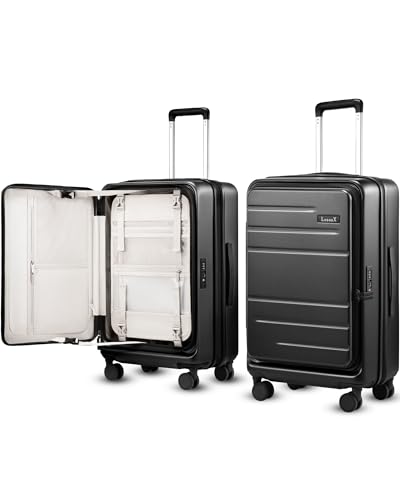
- External Dimensions (including wheels and handles): 26.6″ × 17″ × 10.5″ (Expanded…
- 【Top Opening for Easy Access】Designed with a side-opening deep compartment, this medium suitcase…
- 【Massive & Expandable Capacity】Pack more with the incredibly deep main compartment and…
Last update on 2026-10-21 / Affiliate links / Images from Amazon Product Advertising API