
Best Way to Pack Suit Jacket: Step-by-Step Instructions

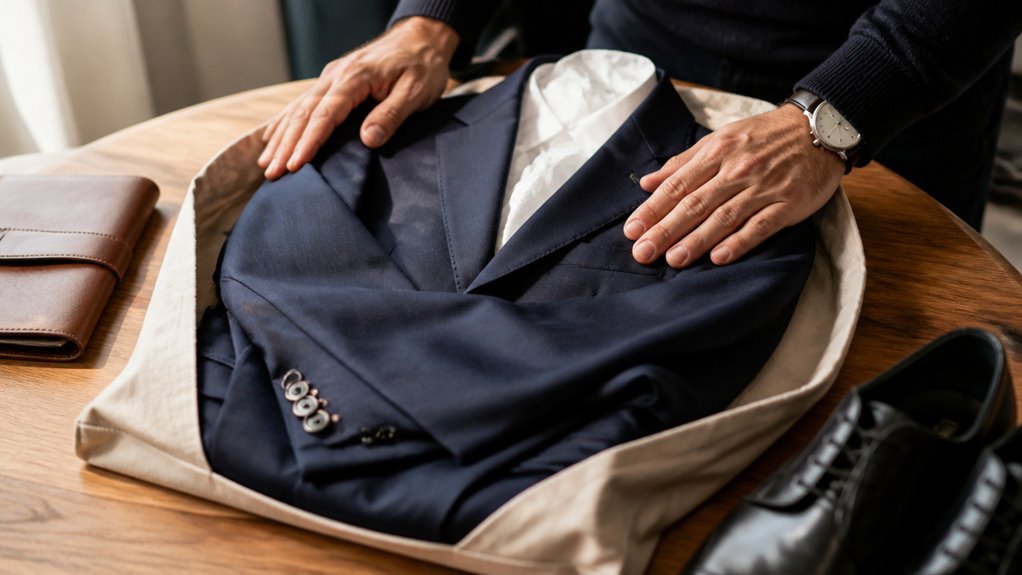
To pack your suit jacket best, button it and turn one shoulder inside out. Then tuck the other shoulder in to preserve shape.
Fold gently along the back without forcing sharp bends, smoothing fabric to avoid wrinkles.
Place the jacket near the top of your luggage, surrounded by softer clothes to prevent crushing.
Use a protective layer or garment bag for extra care.
These simple steps keep your jacket crisp and ready to wear, with more tips to help maintain its perfect look.
Key Takeaways
- Button the jacket and smooth fabric to stabilize shape and reduce wrinkles before folding.
- Use the inside-out shoulder fold to nest shoulders and preserve the jacket’s silhouette.
- Fold the jacket in half along the back only after nesting shoulders to limit fabric stress.
- Place the folded jacket near the top of the suitcase, cushioned by softer clothing to avoid crushing.
- Upon arrival, promptly hang the jacket on a sturdy hanger and smooth fabric to release minor wrinkles.
How To Use The Inside-Out Shoulder Fold For Suit Jackets?
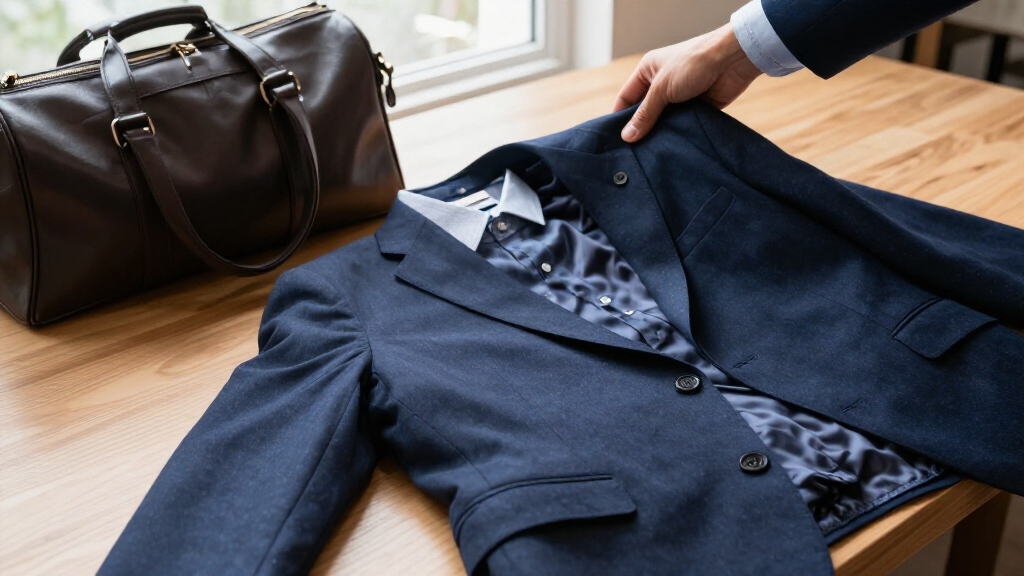
Start by turning one shoulder of your suit jacket inside out. Then tuck the other shoulder into it.
This technique reduces sharp creases by nesting the shoulders together, preserving the jacket’s natural shape. Keep the lapels aligned and avoid forcing the padded shoulders into a hard bend, as this can damage the structure.
Once the shoulders are properly nested, fold the jacket in half along the back. Limit folding to prevent wrinkles and fabric stress.
This method is widely recommended for suitcase packing because it balances space-saving with garment care. By following these steps, you maintain the jacket’s form and minimize damage during travel.
It is also helpful to use a dry-cleaning bag to reduce fabric friction and protect the suit during transit.
This ensures it looks sharp and ready to wear when unpacked.
How To Protect Your Suit Jacket’s Fabric When Packing?
When you’re packing your suit jacket, it’s super important to protect that fabric. One easy way to do this is to use a smooth protective layer, like a dry-cleaning bag. This helps prevent snags and any annoying friction.
Before you fold it up, take a moment to smooth out the fabric with clean hands. This little step can help get rid of any wrinkles that might be lurking. Oh, and don’t forget to button the jacket! It really helps maintain its shape during travel. For longer storage or travel, consider using breathable garment bags to prevent moisture buildup and keep your suit fresh.
Use Protective Layers
Protecting your suit jacket’s fabric begins with using a smooth barrier like a dry-cleaning bag before packing. This slippery layer prevents the jacket from catching on your suitcase lining, reducing friction and fabric wear.
Always smooth the jacket’s surface with clean hands before folding to eliminate trapped wrinkles. Button the jacket to help maintain its shape, then lift the collar and lay it flat on a clean surface.
Using a protective layer also helps keep the fabric clean and minimizes static cling. When you place the jacket inside your luggage, the barrier acts as a shield, preserving the jacket’s texture and finish.
Incorporating this simple step guarantees your suit jacket arrives looking sharp and wrinkle-free. Additionally, storing garments in a cool, dry environment helps preserve fabric quality and prevents damage during travel or storage.
Smooth Fabric Before Folding
Once you’ve placed a protective layer over your suit jacket, take a moment to smooth the fabric with clean hands.
This step removes trapped wrinkles and prevents new creases from forming during folding.
Lay the jacket flat on a clean surface, carefully aligning the lapels and collar to maintain the jacket’s natural shape.
Avoid pulling or stretching the fabric, which can distort its fibers.
Use gentle, even strokes to settle the material, ensuring it lies as flat as possible.
This simple action protects the suit’s surface from abrasion against itself or suitcase lining.
By smoothing the fabric before folding, you preserve the jacket’s crisp appearance and reduce the risk of difficult-to-remove wrinkles after travel.
It’s a small effort with a significant impact on your suit’s condition.
For optimal fabric preservation, consider storing your suit in a cool, well-ventilated area to maintain its shape and prevent damage during travel.
Button Jacket For Shape
Buttoning your suit jacket before folding helps maintain its structure and reduces the risk of distortion during travel. By securing the jacket, you preserve its natural shape, preventing unnecessary stretching or misalignment of the lapels and shoulders.
Before folding, smooth the fabric with clean hands to eliminate wrinkles. Use the inside-out shoulder fold method: tuck one shoulder inside out and nest the other shoulder into it to minimize creases. Keep the lapels aligned and avoid forcing padding into sharp bends.
Limiting folds reduces stress on the fabric, so fold only once after nesting the shoulders. Buttoning also stabilizes the jacket’s form, ensuring it stays compact and less prone to wrinkling. This simple step markedly protects your suit jacket’s fabric and keeps it travel-ready.
For added protection, consider storing your suit jacket in a breathable dust bag to prevent moisture buildup and maintain fabric quality during travel and storage, as recommended for mold and mildew prevention.
Why Buttoning Your Jacket Before Folding Helps Maintain Shape?
Buttoning your jacket before folding it’s a game changer! It really gives the jacket that extra bit of structural support, which is super helpful for maintaining its shape while you’re on the go.
You know how annoying it’s to deal with shifting fabric? Buttoning helps with that, too! It keeps everything in place, so you won’t have to worry about those pesky wrinkles and creases popping up.
And let’s not forget about the lapels. When you button it up, they stay aligned, making sure your jacket looks sharp and ready to impress as soon as you unpack. So, next time you’re traveling, don’t skip this simple step!
Additionally, when packing your jacket in a suitcase, be sure to measure your luggage’s expandable sections properly to avoid overpacking and ensure the jacket remains wrinkle-free.
Enhanced Structural Support
Although it might seem like a small step, fastening your jacket before folding markedly enhances its structural support.
Buttoning secures the front panels together, preventing them from shifting independently during packing. This alignment helps maintain the jacket’s natural silhouette and keeps lapels and shoulders in place.
When folded, a buttoned jacket resists unwanted creasing and reduces stress on fabric joints, especially around the chest and sleeves. By stabilizing the garment’s shape, buttoning supports the padding and avoids distortion of key design elements.
This simple action preserves the jacket’s form, making it easier to unpack and wear without excessive wrinkles or reshaping. For best results, fasten all buttons gently without forcing, then nest the shoulders using the inside-out fold to further protect the jacket’s structure.
Using garment bags with adjustable securing straps can further prevent shifting and maintain the jacket’s crisp appearance during travel.
Reduced Fabric Shifting
Securing your jacket’s buttons before folding locks the fabric layers in place, markedly reducing shifting during travel. This simple step prevents the material from sliding against itself, helping the jacket maintain its intended shape.
When fabric shifts, it can cause awkward creases and distort the jacket’s structure. To maximize the benefits of buttoning before folding, follow these points:
- Button all front buttons to create a stable shell.
- Nest the inside-out shoulders together gently to avoid forcing fabric.
- Smooth the fabric with your hands to minimize trapped wrinkles.
- Limit folds to reduce fabric stress and maintain shape integrity.
Additionally, using internal supports during natural drying can help keep tailored garments like suit jackets in optimal shape after cleaning or minor repairs.
Improved Lapel Alignment
When you fasten your jacket before folding, you help keep the lapels properly aligned. This preserves the jacket’s crisp silhouette.
Buttoning stabilizes the front panels, preventing the lapels from shifting or curling during packing. This alignment maintains the jacket’s intended shape, reducing unsightly creases and wrinkles.
Before folding, smooth the fabric and nest the inside-out shoulder to protect padding and structure. The secured lapels resist distortion, ensuring your jacket looks sharp upon unpacking.
Skipping this step risks misaligned lapels that create bulges or uneven folds, compromising the jacket’s appearance.
Buttoning is a simple but effective technique that complements folding methods, safeguarding your jacket’s form throughout travel. Always fasten the jacket to maintain professional polish and extend garment longevity.
Additionally, maintaining a consistent warm environment while packing helps preserve fabric flexibility and shape during travel, an important factor in long-term care.
Best Positions To Pack A Folded Suit Jacket In Your Luggage
Near the top of your suitcase is the ideal spot to place a folded suit jacket. This prevents heavy items from crushing the fabric and creating unwanted creases.
To pack your jacket properly, follow these key steps:
- Lay your jacket flat on a clean, sturdy surface before folding to maintain even creases.
- Avoid placing shoes or dense accessories directly next to the jacket to prevent pressure marks.
- Surround the jacket with softer items like trousers or shirts to create a stable, cushioned layer.
- Keep the jacket isolated from heavy or rigid objects by positioning it where it won’t be compressed.
When And How To Use A Garment Bag For Traveling Suit Jackets?
Although packing a suit jacket in a suitcase is common, using a garment bag provides superior protection by allowing the jacket to hang and minimizing folds.
You should use a garment bag when traveling for business or formal events where maintaining a crisp, wrinkle-free appearance is vital.
Simply place the jacket on a sturdy suit hanger, button it, and cover it with the garment bag to shield it from dust and crushing.
Avoid stuffing other items inside the garment bag to preserve the jacket’s shape.
When possible, carry the garment bag upright or lay it flat during transport to prevent shifting.
This method greatly reduces wrinkles and fabric stress, keeping your suit jacket looking sharp and professional upon arrival.
For added convenience during travel, consider using a garment bag with smooth rolling wheels and durable handles to ease transport through airports and busy streets.
How To Fold Your Suit Jacket Compactly When Space Is Tight?
If you’re short on luggage space, folding your suit jacket compactly can help you pack efficiently without sacrificing too much on appearance. Use the inside-out shoulder fold to nest one shoulder inside the other, preserving the jacket’s shape and minimizing creases. Button the jacket and smooth fabric before folding. Limit folds to reduce wrinkles and fabric stress.
Follow these steps:
- Turn one shoulder inside out and tuck the other shoulder in.
- Align lapels without forcing padding into sharp bends.
- Fold the jacket in half only after nesting shoulders.
- Place the jacket near the top of your suitcase, avoiding heavy items on top.
This method balances space-saving with wrinkle prevention, ideal for tight packing situations.
Preparing Your Suit Jacket For Travel
Before you start folding your suit jacket, make sure to empty all pockets to prevent unwanted creases and distortions.
Always empty your jacket pockets before folding to avoid creases and maintain its shape.
Next, clean and press your jacket to guarantee it looks sharp upon arrival.
Lay it flat on a clean surface, lift the collar, and smooth the fabric with your hands to remove any trapped wrinkles.
Button the jacket to help maintain its shape during packing.
Use a protective layer like a dry-cleaning bag to reduce friction and protect the fabric.
When folding, use the inside-out shoulder method to preserve the jacket’s natural form and avoid sharp creases.
Pack it near the top of your suitcase or in a dedicated compartment, away from heavy or rigid items, to prevent crushing and maintain structure throughout your journey.
How To Keep Your Suit Jacket Wrinkle-Free After Arrival?
Once you arrive, promptly remove your suit jacket from your luggage and hang it on a sturdy hanger to help release minor wrinkles and restore its shape.
To keep your jacket wrinkle-free, follow these steps:
- Smooth the fabric gently with your hands to relax creases.
- Use a garment steamer or hang it in a steamy bathroom to ease stubborn wrinkles.
- Avoid placing heavy items on or near the jacket to prevent new folds.
- Let the jacket breathe at room temperature before wearing or storing it.
These simple actions preserve your jacket’s tailored silhouette and ensure you look sharp. Prioritizing proper handling immediately after travel prevents wrinkles from setting, maintaining your suit’s professional appearance throughout your trip.
Frequently Asked Questions
Can I Pack Multiple Suit Jackets Together in One Suitcase?
You can pack multiple suit jackets in one suitcase, but take care to protect each properly.
Use the inside-out shoulder fold for each jacket and place protective layers like dry-cleaning bags between them to prevent fabric friction.
Avoid heavy items on top, and position jackets near the top of your suitcase.
Leave space to minimize wrinkles, and unpack promptly upon arrival to hang them up and release any creases.
How Long Can a Packed Suit Jacket Stay Wrinkle-Free Without Hanging?
Think of your suit jacket as a delicate flower. Without water, it won’t stay fresh for long.
You can expect it to stay mostly wrinkle-free for about 24 to 48 hours if packed carefully using the inside-out shoulder fold and protected by a smooth layer.
Beyond that, wrinkles start creeping in.
To keep it sharp, unpack and hang it as soon as you arrive.
Letting gravity naturally smooth out minor creases will help maintain its appearance.
Are There Specific Fabrics That Wrinkle Less When Packed?
Yes, you’ll find that wool blends and synthetic fabrics like polyester wrinkle less when packed.
Wool’s natural resilience helps it bounce back, while polyester resists creasing due to its smooth fibers.
Cotton and linen tend to wrinkle more, so you’ll want to pack those carefully or avoid tight folds.
Choosing fabrics with wrinkle-resistant finishes also helps keep your jacket looking sharp during travel.
Can I Use Tissue Paper Inside the Jacket to Prevent Wrinkles?
You might be surprised, but yes, you can use tissue paper inside your suit jacket to help prevent wrinkles.
Just gently stuff the shoulders and body with acid-free tissue paper to maintain shape and reduce creases.
It acts as a cushion, supporting the fabric during travel.
Combine this with careful folding and a protective bag, and you’ll keep your jacket looking sharp, no matter how long your journey is.
How Do I Handle Suit Jackets With Delicate Embellishments When Packing?
You should handle suit jackets with delicate embellishments carefully by placing a soft protective layer, like tissue paper or a clean cloth, around the embellishments to prevent snagging or crushing.
Avoid folding directly over these areas and use a dry-cleaning bag to reduce friction.
Pack the jacket near the top of your suitcase, away from heavy items.
Consider using a garment bag to keep it hanging and minimize stress on the decorations.
Final Thoughts on Packing a Suit Jacket for Travel
You might think packing a suit jacket is tricky, but once you master the inside-out shoulder fold and button it up, you’ll see how easy it is to keep it wrinkle-free.
Funny enough, the same care you give your jacket in packing is what helps it look sharp on arrival.
So, whether you use a garment bag or fold it compactly, you’re set to travel smart and stylish every time.