
Do Headphones Help With Airplane Pressure on Takeoff?

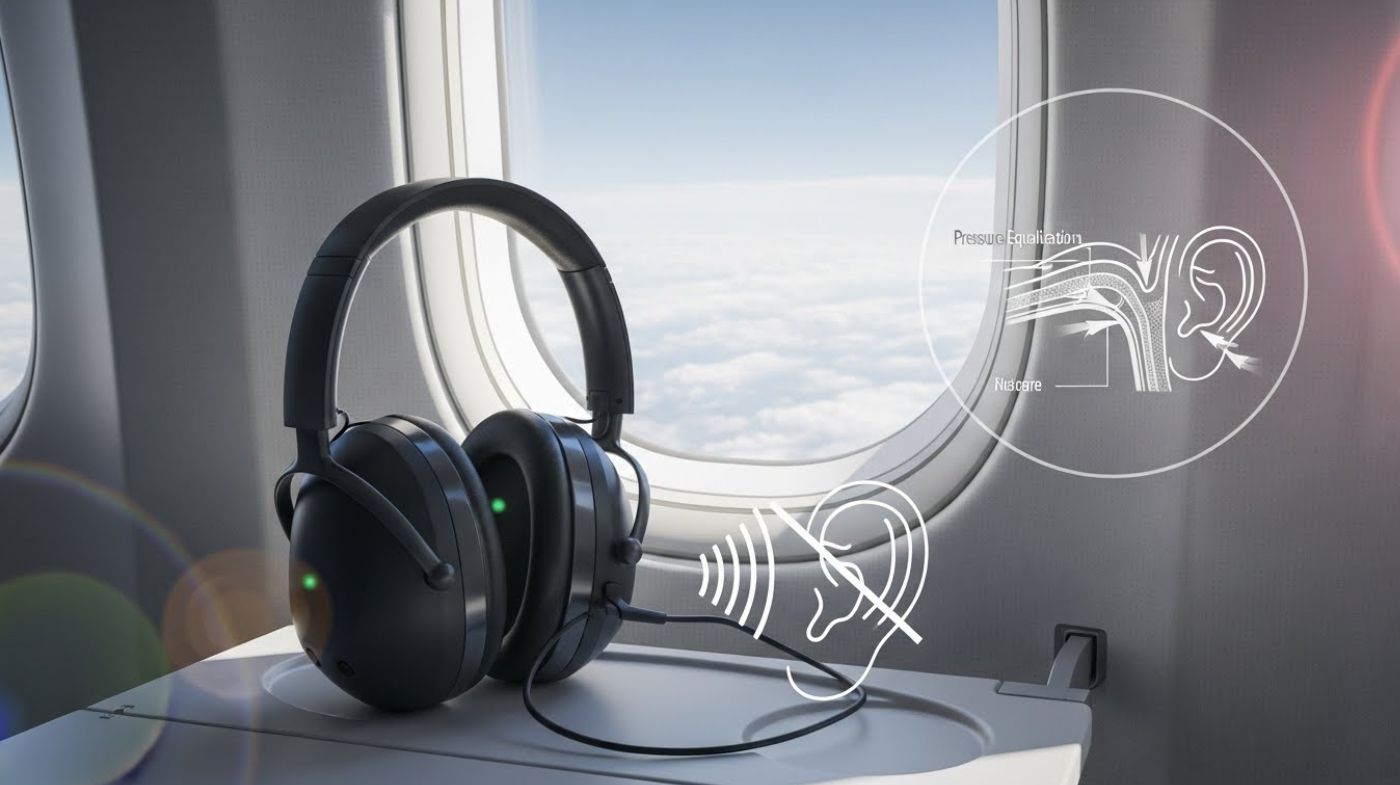
You can rely on headphones, especially ANC models, to reduce airplane engine noise and cabin chatter, improving comfort during flights. However, headphones don’t control or equalize the actual ear pressure changes caused by rapid altitude shifts.
They target sound waves, not barometric pressure inside the middle ear. While over-ear designs help stabilize local acoustics and reduce ear fatigue, specialized pressure-regulating earplugs and techniques remain essential for managing pressure discomfort.
Explore how advanced headphone features and methods complement your in-flight ear pressure relief.
Key Takeaways
- Headphones, including ANC models, reduce ambient airplane noise but do not equalize middle ear pressure or relieve pressure-induced discomfort.
- ANC technology cancels low-frequency engine noise via anti-phase sound waves but cannot affect barometric pressure inside the ear.
- Over-ear headphones create a sealed microenvironment around ears, offering some cushioning but not relieving Eustachian tube pressure imbalances.
- In-ear headphones can trap pressure differentials, sometimes worsening ear discomfort without specialized venting for pressure equalization.
- Effective ear pressure relief during flights requires interventions like nasal sprays or pressure-equalizing earplugs, not headphones alone.
How ANC Technology Influences Ear Comfort on Flights?
While flying, you rely on active noise cancellation (ANC) technology to reduce the persistent low-frequency engine noise that passive methods can’t effectively block.
ANC systems use feedforward microphones on the outer ear cups to detect engine rumble between 30 and 500 Hz.
Digital signal processors (DSP) then generate inverse sound waves 512 times per second, effectively canceling these low-frequency sounds.
Feedback microphones inside the ear cups address mid-to-high frequencies, like cabin chatter.
This targeted approach provides superior hearing protection, especially against prolonged low-frequency exposure that risks hearing loss. However, passengers should be aware that some electronic devices, including headphones with lithium-ion batteries, must be carried in carry-on baggage due to safety regulations.
However, ANC’s tight seal and active sound wave generation can create pressure sensations in your ear canal, affecting comfort during long flights.
Understanding the balance between noise reduction and pressure effects is key to optimizing ear comfort when you use ANC headphones.
To further enhance comfort, many premium headphones feature pressure-optimized ear cups and vented diaphragms designed to mitigate ear pain caused by cabin pressure changes.
Comparing Over-Ear and In-Ear Headphone Designs for Pressure Management
When it comes to headphones, over-ear designs really shine when it comes to managing pressure. They create a nice, gentle seal around your ears, which helps cushion them from those quick changes in cabin pressure you might experience during a flight.
This can make a big difference in your comfort level. Over-ear models with memory foam ear cushions are particularly effective because they create a gentler seal that avoids excessive pressure buildup, improving overall pressure management.
On the other hand, in-ear headphones can sometimes make things a little trickier. If they don’t have the right kind of venting, they can actually make pressure discomfort worse by not allowing the acoustic pressure in your ear canal to equalize properly.
Over-Ear Pressure Benefits
Over-ear headphones manage cabin pressure more effectively than in-ear models by creating a reliable seal around the ear canal. This seal equalizes pressure changes during ascent and descent, reducing the ear-popping sensation and minimizing vacuum effects within the ear cup.
Their ergonomic design often includes padded ear cups and adjustable headbands that provide ergonomic support for prolonged comfort during flights.
Advanced designs incorporate acoustic vents and pressure-optimized ear cups, like those in Bose QuietComfort Ultra, to maintain airflow without compromising the seal. Additionally, pressure-sensitive active noise cancellation (ANC) adapts to altitude shifts, further aiding pressure regulation.
Despite these benefits, it is important to remember that cabin pressurization systems reduce but do not eliminate ear discomfort during takeoff and landing, so headphones can only aid comfort.
Key technical advantages include:
- Vented diaphragms optimize internal pressure balance.
- Passive noise isolation blocks up to 32 dB of cabin noise.
- Ergonomic clamping force minimizes jaw and head discomfort.
- Superior pressure comfort rating (8.2/10) compared to in-ear models.
These features make over-ear headphones more effective and comfortable for managing airplane pressure.
In-Ear Pressure Challenges
Maneuvering pressure changes with in-ear headphones presents unique challenges that differ considerably from over-ear designs. In-ear models create a tight seal that traps pressure differentials, amplifying discomfort during rapid cabin pressure shifts.
Without pressure-equalizing vents, this seal exacerbates ear pain and popping. While noise-cancelling reduces ambient sound, it doesn’t address pressure imbalance. It is also important to avoid applying excessive force when inserting the earbuds to prevent irritation and damage to the ear canal.
Premium in-ear models with acoustic vents improve gradual pressure equalization, mimicking specialized earplugs. Using nasal sprays or decongestants can help improve Eustachian tube function to better manage ear pressure during flights, complementing the use of vented in-ear headphones pressure equalisation techniques.
| Feature | In-Ear Headphones |
|---|---|
| Pressure Seal | Tight, traps pressure |
| Pressure-Equalizing Vents | Present in premium models |
| Noise-Cancelling Impact | Reduces noise, not pressure |
| Comfort | Risk of irritation on long flights |
Selecting vented in-ears helps you manage pressure better than standard sealed earbuds and maintaining proper airflow ventilation around the ear is beneficial to reduce discomfort.
The Role of Noise Reduction in Enhancing Flight Experience
Frequently, noise reduction technology plays a crucial role in enhancing your flight experience by mitigating the disruptive ambient sounds that contribute to discomfort and stress.
Active noise cancellation (ANC) systems generate anti-noise waves opposing engine and cabin noise, effectively lowering perceived pressure-related irritation.
By creating a controlled acoustic environment, these headphones reduce ear fatigue and improve comfort during prolonged exposure to aircraft noise levels of 85–100 dB. They also help manage the constant cabin noise, which is a significant factor in overall flight discomfort.
Additionally, using ANC headphones complements other in-flight comfort measures such as pressure changes management.
Key aspects include:
- Feedforward and feedback microphones dynamically target external engine rumble and internal cabin chatter.
- Digital Signal Processors (DSP) perform noise analysis up to 512 times per second for precise cancellation.
- Over-ear designs stabilize the ear’s microenvironment, enhancing pressure comfort ratings.
- Adaptive features, like altitude-sensitive ANC and acoustic vents, optimize noise reduction without compromising airflow.
This technology indirectly reduces stress, contributing substantially to an improved flying experience.
Why ANC Headphones Don’t Directly Control Ear Pressure?
You might think that active noise cancellation (ANC) is all about regulating ear pressure, but that’s not really the case. What it actually does is reduce the ambient sound around you. How?
Well, it uses something called anti-noise signals to cancel out the noise, but it doesn’t have any effect on the air balance in your middle ear. Electric devices like headphones are subject to regulations during flights, and passengers should be aware of lithium-ion battery restrictions when traveling.
ANC technology focuses on targeting low-frequency noise by using a process called destructive interference. It’s pretty clever, but here’s the catch: it doesn’t have any mechanisms to control how your Eustachian tube works or to change the actual atmospheric pressure.
Moreover, ANC earphones primarily reduce background noise levels but cannot prevent changes in ear canal pressure caused by altitude or cabin pressure variations.
Noise Reduction vs Pressure
Noise-canceling headphones cut down on ambient sound by generating anti-phase waves but don’t influence the air pressure inside your ear canal. Their technology targets sound waves, not the pressure differential between the middle ear and cabin environment.
Rapid cabin pressure changes during takeoff and landing cause ear and sinus discomfort due to pressure imbalances. Rapid cabin pressure changes occur faster than the ear can naturally adjust without intervention.
This means that while ANC headphones reduce noise distractions, they neither open your Eustachian tubes nor equalize middle ear pressure. Consequently, ear discomfort caused by pressure imbalances during altitude changes persists despite noise reduction.
ANC headphones block external noise but trap unequalized middle ear pressure. Pressure changes affect the eardrum mechanically, independent of auditory stimuli.
Seals and electronics in headphones don’t regulate airflow or pressure. Pressure-regulating earplugs, not ANC, mitigate eardrum stress by modulating pressure flow.
Thus, noise reduction and pressure equalization remain distinct physiological processes.
ANC Technology Limitations
Although ANC headphones excel at reducing ambient noise through sophisticated sound wave manipulation, they don’t directly address the underlying cause of ear discomfort during altitude changes: pressure imbalances in the middle ear.
ANC systems use feedforward and feedback microphones to detect external and cabin sounds, but these sensors can’t perceive barometric pressure shifts affecting the Eustachian tubes.
Consequently, pressure variations inside the ear canal, especially during ascent or descent, disrupt ANC feedback loops, causing distortion without relieving ear blockages.
Unlike devices designed for physical adjustments, ANC headphones have no way to mechanically assist in equalizing pressure.
Acoustic vents and pressure-sensitive adjustments in some models optimize sound cancellation but fail to equalize middle ear pressure. Moreover, the low-frequency noise common in aircraft cabins can contribute to hearing damage if exposure is prolonged or repeated without protection.
Additionally, passive isolation from ear cushions traps unequalized pressure, exacerbating discomfort.
Ultimately, ANC technology focuses solely on sound wave interference and lacks any mechanism to regulate or balance the critical pressure differentials responsible for ear pain at cruising altitudes.
This limitation is similar to how luggage wheel maintenance requires specific interventions beyond surface cleaning to restore smooth operation.
Understanding the Eardrum Suck Effect With Noise-Cancelling Headphones
When cabin pressure fluctuates during flights, your eardrums experience a sensation commonly called the “eardrum suck effect,” caused by pressure differentials across the tympanic membrane.
Noise-cancelling headphones (ANC) don’t directly equalize this pressure, but their acoustic barrier can stabilize the microenvironment around your ears.
This reduces perceived discomfort linked to pressure shifts. Including features that help maintain a consistent pressure microenvironment can enhance comfort during these changes.
ANC technology lowers ambient noise, which interconnects with your sensory perception of pressure changes, mitigating the sensation indirectly.
However, sometimes security measures on websites related to ANC information may mistakenly block users due to security protection.
Over-ear designs form a gentle seal, creating a stable pressure microenvironment. Advanced ANC models adjust cancellation dynamically based on ambient pressure.
Acoustic vents manage airflow while maintaining noise isolation. ANC’s primary role remains noise reduction, not physiological pressure regulation.
Understanding these nuances clarifies ANC’s limited but supportive role in managing the eardrum suck effect.
Specialized Earplugs Versus Headphones for Pressure Equalization
While headphones primarily focus on reducing ambient noise, specialized earplugs actively regulate pressure changes in the ear canal to prevent discomfort during flights.
Specialized earplugs regulate ear pressure changes, preventing discomfort during flights unlike noise-reducing headphones.
Earplugs like EarPlanes create a gradual pressure equalization by sealing the ear canal and smoothing air pressure shifts. This effectively mitigates ear barotrauma and reduces pain or popping during altitude shifts.
In contrast, headphones mainly provide acoustic noise attenuation and maintain a stable external pressure seal but don’t influence the middle ear pressure or prevent eardrum stress.
Although over-the-ear headphones reduce cabin noise up to 105 dB, they lack the direct mechanical function to equalize pressure.
For altitude-related ear discomfort, you’ll find specialized earplugs more effective, as audiologists recommend them to manage pressure differentials and reduce the risk of temporary deafness post-flight.
Features of High-End ANC Headphones That Aid Pressure Stability
Because maintaining pressure stability is essential for comfort during flights, high-end active noise cancellation (ANC) headphones incorporate specialized features that address this challenge directly.
Many headphones also utilize durable, hardened materials to withstand the rigors of frequent travel and pressure changes.
These headphones combine adaptive ANC algorithms with ergonomic designs to minimize ear discomfort caused by cabin pressure changes.
You’ll find that intelligent pressure-sensitive ANC systems adjust cancellation parameters relative to altitude, while mechanical and acoustic engineering prevents the vacuum seal effect and excessive clamping force.
Many of these models also offer long battery life to ensure consistent performance throughout extended flights.
Key features include:
- Pressure-sensitive ANC that dynamically adapts to altitude variations (e.g., Sony models)
- Acoustic vents and ear cup volume control to maintain airflow and prevent pressure buildup
- Balanced clamping force under 1.5 psi to reduce eardrum strain per ASTM standards
- Memory foam and protein leather ear cushions for ergonomic isolation without tight seals
These innovations collectively stabilize pressure, enhancing your in-flight auditory comfort.
Complementary Techniques to Relieve Ear Pressure During Flights
Dealing with ear pressure during flights requires employing targeted techniques that facilitate Eustachian tube function and maintain middle ear equilibrium.
You can use yawning and swallowing to actively open the Eustachian tubes. Chewing gum or sipping water enhances swallowing efficacy, while intentional yawning mimics natural pressure equalization.
The Valsalva maneuver, pinching your nose and gently blowing, also opens the tubes. Avoid forceful blowing to prevent eardrum injury. Many travelers use pressure-regulating earplugs to reduce discomfort caused by rapid pressure changes.
Additionally, nasal decongestants administered 30 minutes before ascent or descent reduce mucosal swelling near the tubes, aiding pressure regulation. Consult a physician if you have underlying conditions. It is important to note that blocked eustachian tubes due to colds or sinus infections increase the risk of airplane ear.
Pressure-regulating earplugs slow air pressure changes, minimizing abrupt eardrum stress.
Maintaining hydration and wakefulness during critical phases supports mucus fluidity and swallowing frequency, optimizing ear pressure balance.
Implementing these complementary methods guarantees effective, safe pressure relief.
Recommendations for Frequent Flyers on Managing Ear Pressure and Noise
Managing ear pressure effectively during flights often coincides with addressing another challenge: mitigating cabin noise.
Effectively managing ear pressure during flights often involves tackling cabin noise simultaneously.
To optimize your in-flight comfort, leverage advanced noise-canceling headphones with a hybrid ANC system that combines internal and external microphones for precise ambient noise reduction.
Cabin noise typically ranges from low 70s dBA to low 90s dBA, so using appropriate hearing protection is important to reduce potential hearing risk cabin noise levels.
It is also recommended to keep electronic devices in airplane mode during flight to comply with airline regulations and avoid interference.
Remember, high-quality over-ear headphones provide superior passive isolation but may cause discomfort over time, so balance usage with breaks.
Additionally, consider volume control; ANC headphones enable you to listen at lower volumes, reducing ear strain.
Finally, consistently make certain a proper seal to maximize noise attenuation and pressure management.
- Use hybrid ANC headphones (e.g., Sony WH-1000XM5) for effective noise and pressure control.
- Alternate headphone use to prevent discomfort during long flights.
- Maintain ideal seal quality for maximal passive and active noise reduction.
- Adjust media volume to just above cabin noise, avoiding excess audio levels.
Frequently Asked Questions
Can Headphones Cause Permanent Ear Damage During Flights?
You won’t suffer permanent ear damage from using headphones during flights under normal conditions.
Temporary discomfort or muffled hearing may occur, especially with noise-canceling models, but these effects are psychosomatic or minor.
Permanent injury arises only from extreme, uncommon pressure events, not headphone use.
Still, avoid excessive volume and prolonged use to minimize risks.
Are Wireless Headphones Better Than Wired for Flight Comfort?
Wireless headphones generally offer better flight comfort since they eliminate cable tangles and weigh less, reducing fatigue during long flights.
Their Bluetooth connectivity enhances convenience in tight cabins, and many models incorporate active noise cancellation, stabilizing pressure microenvironments around your ears.
However, wired headphones provide reliable passive isolation without battery concerns.
Ultimately, your choice depends on balancing convenience, comfort, and reliability based on your specific flight needs.
Do Headphone Batteries Affect Pressure Equalization on Planes?
When it comes to battery power, it’s a red herring in pressure equalization on planes.
You won’t need to rely on your headphone batteries to balance ear pressure; that’s managed mechanically through vents and acoustic channels built into the design.
Batteries power active noise cancellation, which eases discomfort indirectly by reducing stress, but the physical equalization depends purely on headphone construction, not electrical charge or power source.
How Does Headphone Volume Impact Ear Pressure Sensation?
You’ll find that headphone volume itself doesn’t directly impact ear pressure sensation, but it influences your perception of discomfort.
Higher volumes can distract you from pressure pain by up to 25%, yet excessive loudness risks hearing damage, especially with ambient plane noise above 85 decibels.
Can Children Benefit From Using ANC Headphones on Flights?
Of course, nothing says “relaxing flight” like a child’s ears feeling like a science experiment.
But yes, you can help your child with ANC headphones on flights.
These devices actively reduce low-frequency engine noise and create a stable acoustic environment, easing pressure sensation.
Over-ear models with ergonomic designs and memory foam cushions protect tiny ears.
You’ll want to make certain of a proper fit and monitor for any discomfort or nausea.
So, Do Headphones Help With Airplane Pressure Enough to Matter?
So, you’re hoping your fancy ANC headphones will magically fix airplane ear pressure? Spoiler: they won’t.
While they cleverly drown out engine roar and cabin chatter, they can’t equalize the pressure your eardrums battle.
If you want real relief, don’t just trust tech—combine specialized earplugs, swallowing techniques, and maybe a prayer to the aviation gods.
In-flight comfort demands more than noise cancellation; it requires smart multitasking of science and stubbornness.