
Tumi vs Briggs and Riley: Which Is Better?

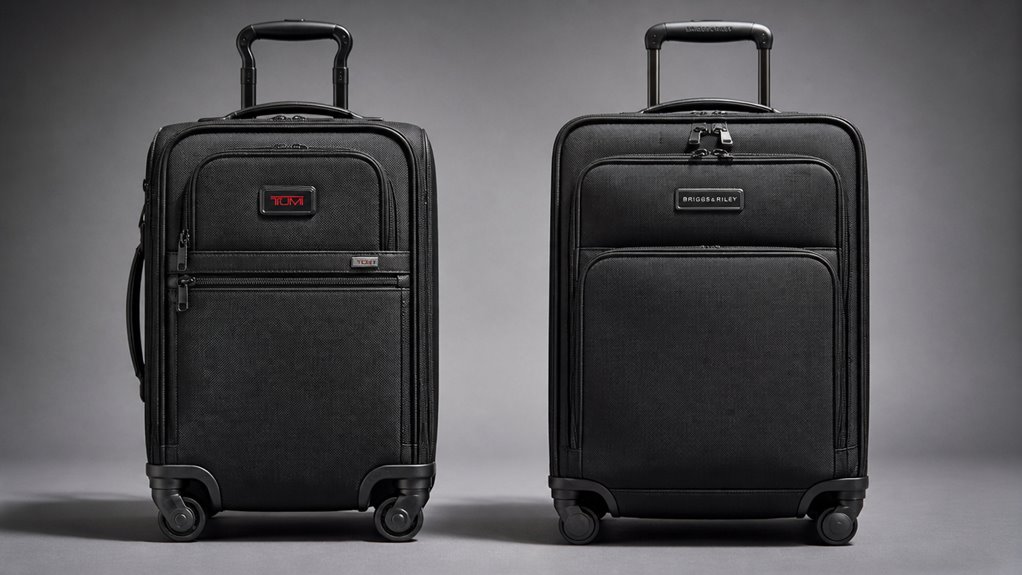
If you value sleek design and integrated tech like USB ports and Tumi Tracer tracking, Tumi suits you with its premium finishes and modern look.
However, it comes at a higher price with a limited service period. Briggs & Riley focuses on rugged durability, offering long-term repair coverage and packing-friendly features like CX compression at a more accessible cost.
Your choice depends on whether you prioritize style and innovation or long-term practicality and value. Explore these differences to find what fits your travel needs best.
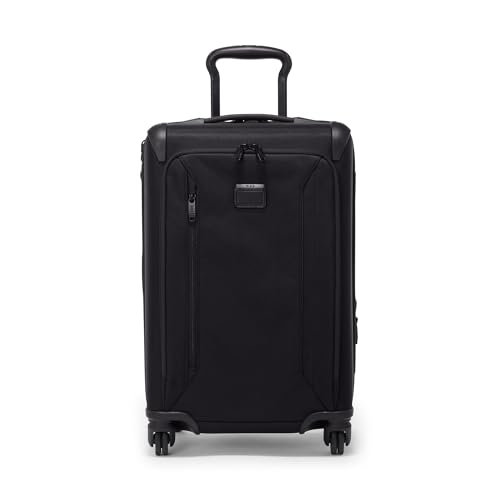
- Lightweight & Durable Suitcase: The Aerotour Expandable 4-Wheeled luggage collection features…
- Suitcase for Expandable Packing: Our rolling bag expands for additional packing space, ensuring you…
- Rolling Bag for Secure Travel: Equipped with TUMI Tracer, our packing case with wheels offers peace…
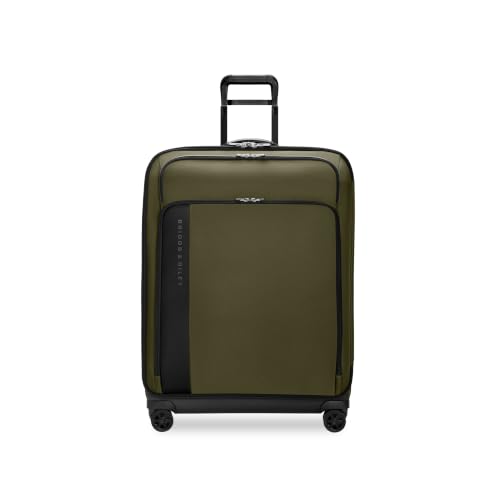
- Briggs & Riley ZDX Large Expandable Spinner
Key Takeaways
- Tumi targets luxury travelers with sleek design and tech features, while Briggs & Riley focuses on durability and practical functionality.
- Tumi carry-ons start around $695, reflecting premium design; Briggs & Riley offers more affordable pricing starting near $419.
- Briggs & Riley provides an unconditional protection plan covering airline damage; Tumi offers a limited five-year coverage with more restrictions.
- Tumi uses FXT ballistic nylon for a polished finish; Briggs & Riley emphasizes repairable, durable fabrics and impact-resistant polycarbonate.
- Briggs & Riley enhances packing with CX compression and flat interior handles; Tumi integrates USB ports and tracking but may reduce packing space.
Tumi vs Briggs and Riley Comparison: Support, Design, Durability, and Travel Value
| Comparison Point | Tumi | Briggs and Riley | Best Choice |
|---|---|---|---|
| Brand Focus | Built around luxury design, polish, and tech-forward travel | Focuses on durability, repairability, and practical function | Depends on travel style |
| Best For | Business travelers who want a sleek, premium look | Frequent flyers who value long-term reliability | Briggs and Riley for heavy travel |
| Design Style | Modern, refined, and more fashion-forward | Practical, understated, and function-first | Tumi for premium style |
| Tech Features | Offers features like USB ports and Tumi Tracer tracking | Less tech-focused, more packing-focused | Tumi for smart features |
| Packing System | Telescoping handles may reduce interior space | Outsider Handle System keeps interior flatter | Briggs and Riley for packing space |
| Compression Feature | More focused on design and access features | Offers CX compression-expansion technology | Briggs and Riley for extra capacity |
| Materials | Uses FXT ballistic nylon and premium finishes | Uses durable fabrics and impact-resistant polycarbonate | Both are strong options |
| Coverage | Usually a five-year limited coverage | Offers unconditional ongoing repair coverage | Briggs and Riley for long-term value |
| Price Range | Higher starting price, luxury-positioned | More accessible premium pricing | Briggs and Riley for better value |
| Overall Pick | Best if you want status, style, and innovation | Best if you want durability, coverage, and function | Choose by priority |
Tumi vs Briggs & Riley: Brand Identity and Style Differences
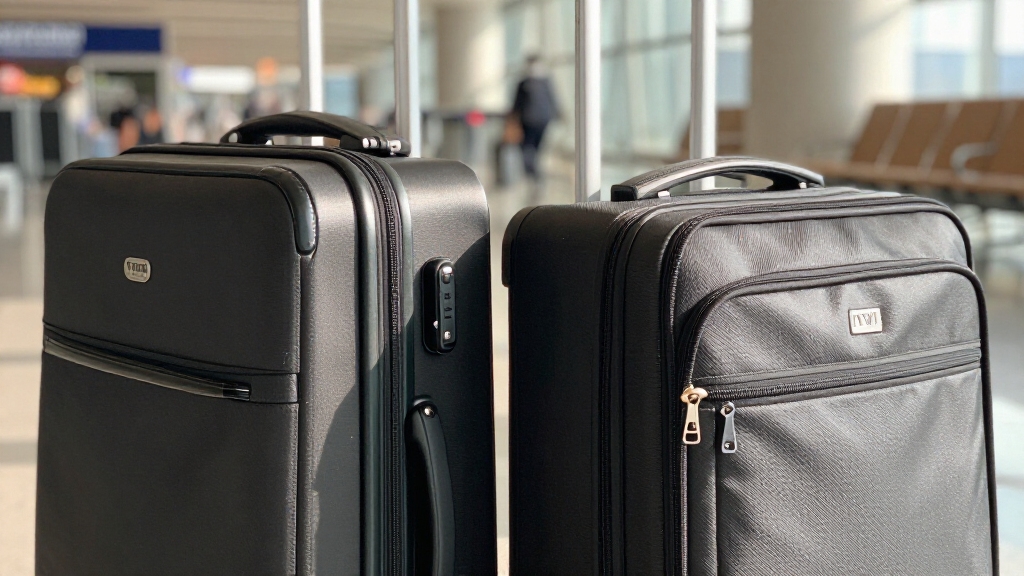
While both Tumi and Briggs & Riley compete in the premium luggage market, their brand identities cater to distinctly different traveler priorities.
You’ll find Tumi appealing if you value luxury, sleek design, and tech-forward features like integrated USB ports and Tumi Tracer tracking. It’s tailored for business travelers who want polished aesthetics and premium finishes.
On the other hand, Briggs & Riley prioritizes durability and functionality. If you’re a frequent flyer who needs practical packing solutions, you’ll appreciate their CX compression-expansion technology and repair-friendly approach.
Briggs & Riley’s Outsider Handle System maximizes internal space, contrasting with Tumi’s slightly space-consuming telescoping handles.
Fundamentally, Tumi emphasizes style and innovation, while Briggs & Riley focuses on practicality and longevity. This helps you choose based on whether you prefer elegance or efficiency in your travel gear.
Additionally, Revo luggage offers a balance of durability and lightweight construction with reinforced aluminum frames that withstand frequent travel demands, providing another practical option for travelers.
Comparing Price Ranges and Value Between Tumi and Briggs & Riley
Understanding the price ranges and value offered by Tumi and Briggs & Riley can help you make a more informed luggage investment.
Tumi targets the luxury segment, with carry-ons starting around $695 and high-end checked bags exceeding $1,100.
Tumi caters to luxury travelers with carry-ons from $695 and premium checked bags over $1,100.
Briggs & Riley positions itself as the more affordable premium option, with carry-ons beginning near $419 and checked luggage often under $1,000.
When deciding which brand suits your needs, consider these points:
Tumi emphasizes sleek design and tech features, reflected in higher prices.
Briggs & Riley focuses on durability and practical value at a lower cost.
You pay a premium with Tumi for style and exclusivity.
Briggs & Riley delivers more straightforward, budget-conscious quality.
Both brands offer strong value but cater to different priorities in price versus features.
It is important to review each brand’s service support and repair services to ensure long-term value.
Tumi vs Briggs & Riley Aftercare and Repair Coverage
Because your luggage investment relies heavily on long-term support, comparing aftercare and repair coverage between Tumi and Briggs & Riley is essential.
Briggs & Riley offers an unconditional repair policy, covering damage from airlines and normal wear without question.
This means you won’t worry about repair costs, even from rough handling.
On the other hand, Tumi provides a five-year limited coverage, which is more restrictive and excludes some damage types.
This makes you more cautious about repairs outside the coverage.
Briggs & Riley’s coverage is often praised for its hassle-free, all-encompassing repair service, enhancing ownership value.
If you prioritize worry-free longevity and airline damage support, Briggs & Riley’s coverage stands out.
Tumi, while premium, requires more attention to coverage details and potential out-of-pocket repairs.
Spyder luggage also offers coverage for manufacturing defects on expandable hardside suitcases and spinner sets, emphasizing the importance of product registration for coverage.
Comparing Materials, Durability, and Build Quality
When you choose luggage, the materials and build quality directly affect how well your bag withstands the rigors of travel. Tumi often uses FXT ballistic nylon, known for its premium finish and sleek look.
Briggs & Riley opts for high-grade nylon and durable fabrics focused on long-lasting function. Briggs & Riley’s hardside Sympatico line features Makrolon polycarbonate, enhancing impact resistance.
Durability is key for both, but Briggs & Riley centers on repairability while Tumi emphasizes premium construction.
Consider these material differences: Tumi’s FXT ballistic nylon for a refined, polished appearance. Briggs & Riley’s durable, repair-friendly nylon and polycarbonate blends focus on longevity vs. luxury finish.
Additionally, choosing luggage depends on whether you prioritize practicality and durability or a polished, premium aesthetic.
Design Features and Travel Practicality: Which Fits Your Needs?
Although both Tumi and Briggs & Riley excel in premium luggage design, their approaches to features and travel practicality cater to different priorities.
If you value sleek aesthetics and tech-savvy details, Tumi’s integrated USB ports, Dual Access openings, and Tumi Tracer tracking offer a polished, modern experience.
However, these features can slightly reduce internal packing space due to integrated telescoping handles.
On the other hand, Briggs & Riley focuses on functional innovation with CX compression-expansion technology and the Outsider Handle System.
This design maximizes your packing capacity by preserving flat interior space.
Though Briggs & Riley bags weigh more, their design enhances packing efficiency and durability.
This makes them ideal if you prioritize practicality and space.
Choose Tumi for style and tech; opt for Briggs & Riley if you want versatile, travel-friendly organization.
Many premium travel bags now include hidden anti-theft pockets to enhance security during commutes and trips.
Frequently Asked Questions
Which Brand Offers Better Customer Service Experience?
You’ll find Briggs & Riley offers a better customer service experience, thanks to their unconditional lifetime warranty and strong airline damage support.
They prioritize hassle-free repairs and ownership value, making your travel gear last longer with less stress.
Tumi’s five-year limited warranty is decent but less all-encompassing, so you might face more restrictions.
If customer service and repair reliability matter most to you, Briggs & Riley clearly leads the way.
Are Tumi and Briggs & Riley Luggage Available in Retail Stores?
Wondering if you can try before you buy? Both Tumi and Briggs & Riley luggage are available in retail stores, but your experience will differ.
Tumi’s sleek, luxury designs are often showcased in high-end department stores and specialty boutiques. This allows you to see and feel their premium finishes.
Briggs & Riley focuses on practicality, so you’ll find their durable, value-packed options in major luggage retailers and airport shops. This is perfect for hands-on testing before travel.
How Do Tumi and Briggs & Riley Handle Lost Luggage Claims?
When you handle lost luggage claims, Briggs & Riley stands out with its unconditional lifetime warranty. It often supports airline damage and loss claims directly, making the process smoother for you.
Tumi offers a five-year limited warranty, which covers defects but provides less extensive support for lost luggage. You’ll find Briggs & Riley more reliable for claim assistance, while Tumi focuses more on warranty coverage within its limited timeframe.
Do Either Brand Offer Eco-Friendly or Sustainable Luggage Options?
You might spot a sleek bag and wonder if it’s eco-friendly. Both brands have started embracing sustainability.
Tumi offers select pieces using recycled materials and eco-conscious designs, focusing on tech-forward innovation.
Briggs & Riley highlights durable, repairable luggage that extends product life, reducing waste indirectly.
While neither brand is fully green, you’ll find Briggs & Riley leans on longevity to support sustainability.
Tumi experiments with recycled fabrics and responsible sourcing.
What Accessories Are Available to Complement Tumi and Briggs & Riley Bags?
You’ll find both brands offer smart accessories to complement your luggage. Tumi provides tech-savvy items like USB power banks, leather dopp kits, and RFID-blocking wallets, emphasizing a sleek, polished look.
Briggs & Riley focuses on practical add-ons such as packing cubes, garment folders, and travel organizers, enhancing packing efficiency. Each brand’s accessories align with their core values: Tumi’s luxury design and Briggs & Riley’s functional durability.
You can pick what fits your travel style best.
Final Verdict on Tumi Vs Briggs and Riley
When choosing between Tumi and Briggs & Riley, remember that while Tumi’s sleek style appeals, Briggs & Riley’s unmatched lifetime warranty and practical design often deliver better long-term value.
You might worry Briggs & Riley lacks the luxury feel, but their durable materials and thoughtful features guarantee your investment stands up to frequent travel.
Ultimately, if lasting reliability and all-inclusive coverage matter more than brand prestige, Briggs & Riley is the smarter pick for savvy travelers like you.

- Premium Travel Luggage: Tumi Ventra Expandable Luggage is built for luxury travel, with unique…
- Interior Features: Compression straps, a straight zip pocket, and two zip pockets keep your…
- Exterior Features: Polycarbonate exterior, zip entry to main compartment, retractable top carry…
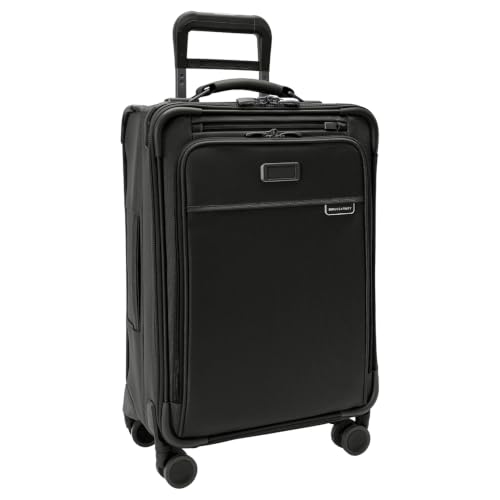
- DOMESTIC CARRY-ON LUGGAGE – Measuring 22″ x 14″ x 9-11.5″, this expandable packing system enlarges…
- 360 SPINNER WHEELS – Move smoothly in any direction with four shock-absorbing spinner wheels that…
- BUILT FOR BUSINESS TRAVEL – With durable materials and smart design, this carry on features a USB…
Last update on 2026-10-15 / Affiliate links / Images from Amazon Product Advertising API