
What Happens if Leather Gets Wet? Damage and Fixes

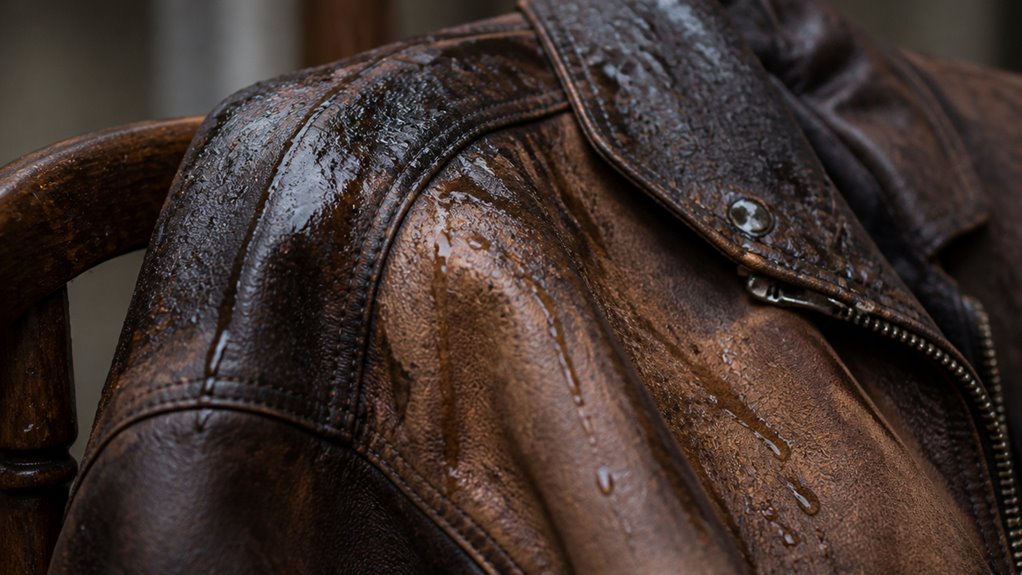
If your leather gets wet, moisture disrupts its finish and washes out natural oils, causing color changes like blotchy spots and uneven sheen.
As it dries, the leather stiffens and fibers tighten, risking cracking and permanent texture damage.
Repeated exposure weakens structural integrity, leading to warping and reduced durability.
Additionally, damp leather can promote mold growth under humid conditions.
Understanding proper care and prevention helps you maintain leather’s appearance and longevity.
Key Takeaways
- Leather absorbs moisture, causing color changes, blotchy sheen, and potential white rings or permanent stains.
- Water exposure removes natural oils, leading to stiffness, dryness, and reduced suppleness in leather fibers.
- Repeated wetting weakens leather structure, causing fiber contraction, cracking, warping, and permanent shape loss.
- Damp leather in humid environments promotes mold and mildew growth, damaging fibers and causing stains and odors.
- Immediate care includes blotting moisture, air drying away from heat, and conditioning to restore softness and prevent damage.
How Water Affects Leather’s Appearance and Color?
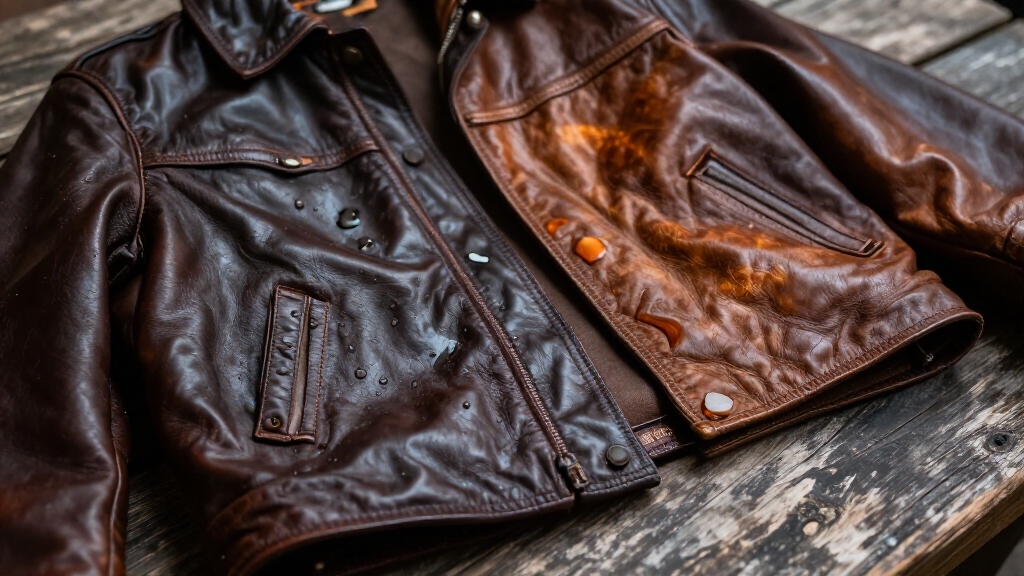
Although leather is naturally permeable and absorbs moisture beneath its surface, this absorption directly alters its appearance and color in noticeable ways.
When water penetrates, it disrupts the finish, causing blotchy or patchy sheen variations. You’ll observe dark spots where moisture concentrates or lighter areas where dyes shift unevenly.
White rings or uneven staining can appear as water interacts with the leather’s dye and finish layers. Some finishes develop temporary marks that fade as the leather dries, but others result in permanent discoloration.
Because dyes move with moisture, the color may darken, lighten, or become inconsistent. Understanding these immediate visual changes helps you identify water exposure early and take proper care to minimize lasting damage to your leather items. Applying a high-quality leather protective spray regularly can help guard against water and environmental damage.
How Water Changes Leather’s Texture and Feel?
When water evaporates from leather, it pulls out essential natural oils that maintain its softness and flexibility. As these oils diminish, the leather loses suppleness and starts to feel dry or stiff.
The fibers contract and tighten, making wet leather often feel papery or rigid once dried. Repeated wetting and drying exacerbate this effect, gradually reducing the material’s flexibility and comfort.
| Condition | Effect on Texture |
|---|---|
| Moist leather | Soft, pliable |
| Drying leather | Oil loss, stiffness |
| Repeated wet/dry | Fiber contraction |
| Prolonged dryness | Papery, less flexible |
Understanding these texture changes helps you care for leather and prevent premature wear.
How Water Causes Structural Damage to Leather?
If you don’t replenish the natural oils lost during wetting and drying, the leather’s fibers can stiffen and eventually crack.
Water strips essential oils, reducing fiber flexibility and causing contraction. This stiffening weakens the structural integrity, leading to warping or permanent shape loss.
Water removes essential oils, stiffening fibers and causing leather to contract, warp, or lose its shape permanently.
Additionally, prolonged or repeated exposure to moisture can etch the leather surface, leaving rough patches or raised edges that remain after drying.
Severe wetness may accelerate deterioration by promoting fiber breakdown and potential rot.
You’ll notice that even after cleaning, some damage, like fine cracks or distortions, can’t be reversed. To minimize structural harm, avoid harsh drying methods and recondition leather promptly to restore suppleness.
Proper maintenance prevents irreversible fiber damage and preserves leather’s durability over time.
Storing leather in a cool, dry environment with controlled humidity helps maintain its suppleness and prevents moisture-related damage.
How Mold and Mildew Develop on Damp Leather?
When leather gets damp in humid conditions, it can become a breeding ground for mold and mildew. You might notice those pesky little spots popping up, which can be white, green, or even black.
It’s not just a cosmetic issue, though. This fungal growth can really mess with the leather, breaking down its fibers and weakening the material over time.
And here’s the kicker: if moisture stays trapped for too long, the damage can become permanent. Not to mention, it can lead to that musty smell we all dread.
Proper drying helps prevent mold and mildew by allowing moisture to escape gradually, preserving the leather’s integrity through continuous air circulation.
Conditions for Mold Growth
Allowing leather to remain damp in a humid environment creates ideal conditions for mold and mildew growth.
Leather’s porous nature absorbs moisture, trapping it within fibers and creating a microenvironment conducive to fungal development.
Mold spores, ubiquitous in the air, settle on moist surfaces and proliferate when humidity exceeds 60%. This is especially true if temperature ranges between 77°F to 86°F (25°C to 30°C).
Poor ventilation and prolonged drying times further exacerbate the risk. Unfinished or minimally treated leather absorbs water faster, increasing susceptibility.
Additionally, organic residues like sweat or dirt provide nutrients, accelerating mold colonization.
To prevent this, ensure leather dries promptly in well-ventilated areas at moderate temperatures.
Avoid sealing moisture inside, as stagnant dampness promotes fungal growth, compromising the leather’s integrity and appearance.
Using proper conditioning techniques after drying helps restore leather suppleness and prevents damage caused by moisture exposure.
Mold’s Impact on Leather
Because leather absorbs and retains moisture within its fibers, mold and mildew can quickly establish themselves on damp surfaces. When moisture lingers, mold spores germinate, producing visible colonies and musty odors.
These fungi degrade leather by staining and breaking down collagen fibers, leading to weakened structure and potential rot. You should act promptly to prevent or remove mold, as prolonged contamination causes irreversible damage.
| Condition | Mold Appearance | Damage Mechanism |
|---|---|---|
| High humidity | White, green, or black spots | Fiber breakdown and staining |
| Prolonged dampness | Musty odor | Collagen degradation |
| Poor ventilation | Surface discoloration | Structural weakening |
Understanding these factors helps you mitigate mold’s impact and preserve leather integrity. Proper maintenance, including regular conditioning, is essential to protect leather’s wear resistance and prevent moisture damage.
How Different Types of Leather React to Water?
Leather’s reaction to water varies markedly depending on its type and finish. This influences how quickly it absorbs moisture and the extent of visible damage.
Unfinished and semi-finished leathers absorb water rapidly, causing more pronounced darkening and uneven staining. They also experience faster oil depletion.
Conversely, full-grain and finished leathers possess protective coatings that slow moisture penetration. This reduces immediate discoloration and surface blotching.
Lighter-colored leathers make water-induced marks more visible. Heavily treated or coated leathers may show temporary water spots that fade upon drying.
However, all leathers risk stiffness and fiber contraction as moisture evaporates. Untreated varieties dry out faster and become papery or cracked without conditioning.
Understanding your leather’s finish helps you anticipate water’s impact. This knowledge enables you to apply proper care to minimize damage. Applying conditioners in circular motions after exposure can restore moisture and soften fibers to help blend any water-induced abrasions.
Signs of Permanent Water Damage on Leather
When water penetrates deeply and repeatedly into leather, it can cause irreversible changes that go beyond surface discoloration.
You’ll notice permanent signs such as uneven staining, dark or light spots, and white rings that don’t fade after drying.
The leather’s finish may develop blotchy patches with altered sheen, while color migration can create lasting unevenness.
Texture changes also signal damage; leather may feel stiff, papery, or brittle due to oil loss and fiber contraction.
You might observe cracking or roughened areas where the surface fibers weaken.
In some cases, permanent etching or raised edges around stains remain despite cleaning.
These indicators confirm structural deterioration, meaning the hide’s natural flexibility and integrity have been compromised beyond repair.
To prevent such damage, it is crucial to regularly condition leather to restore moisture and suppleness.
How Repeated Wetting Harms Leather Over Time?
When leather gets wet over and over again, it starts to lose its natural oils. This can be a real bummer because those oils are what keep the material flexible and soft. Without them, the leather can become stiff, and nobody likes that.
As those oils deplete, the fibers get weaker. This means there’s a higher chance of cracking and, eventually, some serious structural damage. Over time, you might notice that your leather items don’t feel the same anymore.
Not only does the texture change, but the overall durability takes a hit too. So, if you want your leather to last, it’s best to keep it dry whenever you can! Proper leather maintenance like regular conditioning can help preserve its texture and prevent damage from moisture exposure.
Oil Loss And Stiffness
Repeated exposure to water draws out the natural oils embedded in leather fibers, gradually stripping away the material’s essential moisture balance.
As these oils dissipate during drying, the leather loses its suppleness, causing it to feel dry and stiff. This stiffness results from oil depletion combined with fiber contraction when moisture evaporates.
Over time, repeated wetting and drying cycles exacerbate this condition, reducing flexibility and making the leather more rigid or papery.
You’ll notice the texture becoming less pliable, which compromises comfort and usability.
To prevent this, it’s imperative to replenish oils promptly with appropriate conditioners after the leather dries.
Maintaining the leather’s oil content preserves its softness and resilience, mitigating stiffness caused by repeated water exposure.
Using specialized cream cleaners and conditioners is recommended to restore and protect leather after it has been exposed to moisture.
Fiber Weakening And Cracking
As the leather loses oils and stiffens, its structural integrity begins to weaken. This makes it more susceptible to fiber damage.
Repeated wetting and drying cycles accelerate this process by pulling out essential oils. This causes fibers to contract and lose flexibility.
Over time, these weakened fibers develop microscopic fractures that expand into visible cracks, especially along folds and stress points.
This degradation compromises the leather’s strength, leading to warping and permanent shape loss.
If you don’t replenish oils or protect the leather, cracks will deepen and rough patches may form. Additionally, severe or prolonged moisture exposure can etch the surface, leaving lasting damage even after cleaning.
To prevent fiber weakening and cracking, you need to manage moisture carefully and condition the leather regularly to maintain its resilience. Regular maintenance, such as wiping with a damp microfiber cloth, helps preserve the leather’s appearance and durability.
How to Dry and Care for Wet Leather Safely?
Blot excess moisture from wet leather gently using a soft, absorbent cloth to prevent surface damage. Avoid rubbing, which can disturb the finish and embed water deeper into fibers.
Next, let the leather air-dry naturally at room temperature, away from direct heat or sunlight. This can accelerate oil loss and cause stiffening or cracking. Support the leather’s shape with tissue or a form to minimize warping during drying.
Once dry, apply a high-quality leather conditioner to replenish lost oils and restore suppleness. Use sparingly and evenly, focusing on areas prone to stiffness.
Regular conditioning after exposure to moisture helps maintain flexibility and prevents fiber contraction. Avoid using heat sources or harsh chemicals, as these can exacerbate damage and compromise leather integrity.
How to Prevent Water Damage With Protective Treatments?
Protecting leather from water exposure before it gets wet substantially reduces the risk of stains, stiffness, and structural damage. You can apply specialized water-resistant treatments that create a barrier against moisture penetration. These treatments help preserve natural oils, maintain flexibility, and prevent discoloration.
Applying water-resistant treatments before exposure helps prevent stains, stiffness, and damage while preserving leather’s natural qualities.
To effectively prevent water damage, follow these steps:
- Clean the leather surface thoroughly to remove dirt and oils.
- Choose a water-repellent product compatible with your leather type.
- Apply the treatment evenly using a soft cloth or spray, ensuring full coverage.
- Allow the leather to dry naturally before exposure to wet conditions.
Regularly reapplying protective treatments is essential, especially on unfinished or lightly finished leathers. This helps maintain optimal protection against moisture.
Why Proper Leather Care Extends Its Lifespan?
When you care for leather properly, you preserve its natural oils and structural integrity. This directly prevents stiffness, cracking, and discoloration.
By regularly conditioning leather after exposure to moisture, you replenish lost oils that maintain suppleness and flexibility. Proper drying techniques, such as gentle blotting and air-drying at room temperature, minimize fiber contraction and warping.
Supporting the shape during drying further reduces deformation. Avoiding harsh heat prevents accelerated oil depletion and surface damage.
Additionally, applying water-resistant treatments forms a protective barrier that slows moisture penetration and staining. These combined actions reduce the risks of fiber weakening, etching, and mold growth.
Ultimately, this extends the leather’s functional lifespan and aesthetic quality. Consistent maintenance assures your leather remains resilient and visually appealing despite environmental stressors.
Frequently Asked Questions
Can Water Damage Leather Accessories Like Belts or Wallets?
Yes, water can damage leather accessories like belts and wallets. When wet, leather absorbs moisture, causing color shifts, stains, and uneven finishes.
As it dries, natural oils evaporate, making the material stiff and prone to cracking. Repeated exposure weakens fibers, leading to warping or permanent damage.
To protect your accessories, blot excess water gently, air-dry naturally, and apply conditioner afterward to restore suppleness and prevent deterioration.
Is It Safe to Use Leather After It Has Been Soaked in Saltwater?
Using leather soaked in saltwater isn’t exactly ideal.
Saltwater can subtly disrupt the leather’s natural oils and fibers, leading to stiffness, discoloration, or even structural weakening over time.
If you must use it, thoroughly rinse with fresh water, dry gently at room temperature, and apply a conditioner promptly to replenish lost oils.
Without careful treatment, the salt residues may invite long-term damage, reducing leather’s durability and appearance.
How Does Leather Respond to Accidental Spills of Liquids Other Than Water?
When liquids other than water spill on leather, you’ll often see discoloration, staining, or surface damage depending on the liquid’s composition.
Oils, alcohol, and acidic substances can penetrate and alter dyes, finishes, or fibers more aggressively than water.
You should blot spills immediately to minimize absorption, avoid rubbing, and air-dry the leather.
Conditioning afterward helps restore flexibility, but some stains or damage may become permanent if the liquid is harsh or left untreated too long.
What Household Products Can Safely Clean Water Stains on Leather?
Imagine you spill water on your leather couch and notice a stain.
To clean it safely, you can use a mild soap solution: mix a few drops of gentle dish soap with distilled water.
Dampen a soft cloth lightly, blot the stain without rubbing, then air-dry naturally.
Avoid harsh chemicals or excess water, as they can damage the leather’s finish and texture.
Follow up with a leather conditioner to restore oils and suppleness.
Are There Specific Leather Types That Repel Water Naturally Without Treatment?
Yes, certain leather types repel water naturally without treatment.
Full-grain leather, especially when tightly tanned and finished, offers better water resistance due to its dense fiber structure.
Exotic leathers like kangaroo and some oily or waxy hides also resist moisture more effectively.
However, no untreated leather is entirely waterproof; even these types absorb some moisture over time.
You should still apply protective finishes for peak water repellency and durability.
Protect Your Leather From Water Damage
When leather gets wet, imagine it as a delicate canvas absorbing drops that can darken its hue and soften its texture. It can also weaken its fibers.
Over time, repeated exposure invites mold and structural damage, silently eroding its strength.
To protect this natural material, you must promptly dry it and apply protective treatments. This preserves its resilience and appearance.
By caring for leather meticulously, you extend its lifespan. This ensures it remains supple and strong, ready to age gracefully with you.