
What Is a Backpack Made of: Material Science Translates

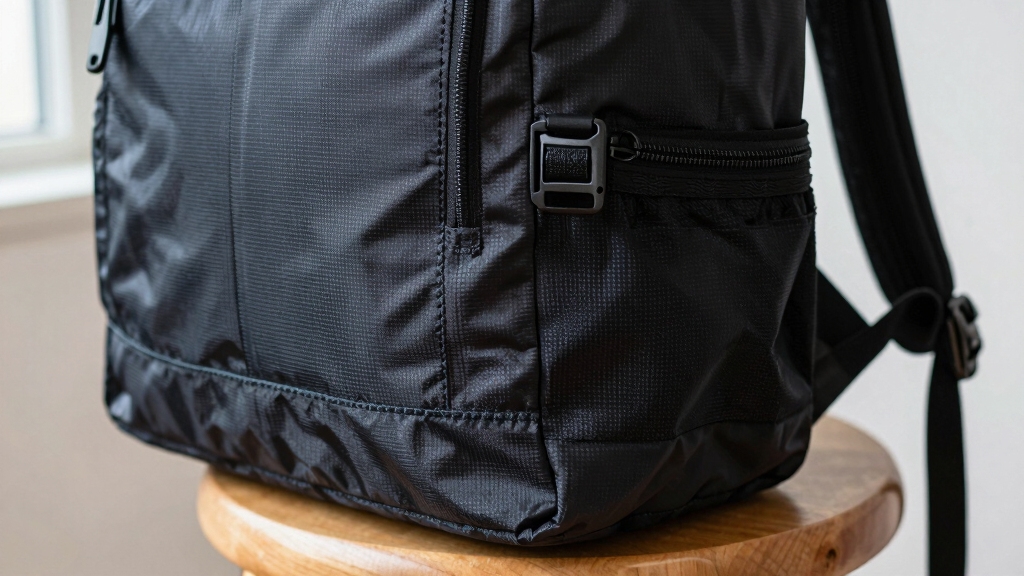
A backpack is typically made from synthetic fabrics like nylon and polyester, chosen for their strength, water resistance, and abrasion durability. High-denier ballistic nylon or Cordura offer extra toughness, while ripstop weaves prevent tears.
Natural materials such as cotton canvas, hemp, and leather add breathability and ruggedness. Advanced options use Dyneema or Kevlar for ultra-lightweight, high-strength protection. Material choice varies by use, balancing weight, durability, and comfort.
Explore deeper to understand how these fabrics shape performance and sustainability.
Key Takeaways
- Backpacks commonly use synthetic fabrics like nylon and polyester for durability, water resistance, and strength at varying denier levels.
- High-performance fabrics such as ripstop nylon, ballistic nylon, and Cordura enhance abrasion resistance in heavy-use areas.
- Natural materials like cotton canvas, hemp, and waxed canvas offer breathability, sustainability, and moderate water resistance.
- Advanced materials like Dyneema provide ultralight, waterproof, and exceptionally strong fabric options for premium backpacks.
- Leather, especially full-grain or top-grain, is used for durability and aesthetic appeal in reinforced or decorative backpack components.
Common Synthetic Fabrics Used in Backpacks
When selecting a backpack, understanding the synthetic fabrics used can help you balance durability, weight, and cost. Choosing materials that complement your travel style is crucial, much like selecting the right luggage wheel type for ease of movement.
Nylon, a synthetic polymer, offers an ideal blend of strength and affordability. Variants like Ripstop, Ballistic, and Cordura enhance abrasion resistance.
Nylon 6,6 is slightly stronger than nylon 6. Polyester, cheaper and less durable than nylon, excels in UV resistance and water repellency. This makes it ideal for sunny or wet environments.
Many manufacturers strategically place more expensive fabrics in high-stress areas while using cheaper materials for pockets and straps to optimize performance and cost strategic material placement.
Cordura, a high-tenacity nylon, is engineered for extreme abrasion resistance. It’s commonly used in heavy-duty backpacks’ high-stress zones.
Dyneema Composite Fabric (DCF) stands out for ultralight, waterproof performance due to its exceptional strength-to-weight ratio but comes at a premium price.
Additional synthetics like neoprene provide flexibility and insulation. They’re suitable for specialized applications such as laptop sleeves or submersible packs.
Natural Materials in Backpack Construction
When you’re on the hunt for a backpack made from natural materials, you can’t go wrong with cotton canvas. It’s not just breathable; it’s durable too! Plus, if you opt for versions with organic and regenerative certifications, you can feel good about your choice.
Now, let’s talk about leather. It’s known for its strength and stylish appeal, especially when it’s vegetable-tanned. That process really helps to minimize its environmental impact, which is a win-win.
Many brands also use recycled leather to further reduce waste and resource consumption. Vegetable tanning yields firm, tear-resistant leather that develops a rich patina, offering superior longevity.
And have you heard about hemp? It’s pretty impressive! Not only is it lightweight and water-resistant, but it also stands out for its sustainable qualities. This makes it a fantastic option for anyone looking to be eco-conscious in their backpack designs.
Cotton and Canvas
Although synthetic materials dominate backpack manufacturing, cotton and canvas remain essential natural options valued for their durability and comfort.
Canvas utilizes tightly woven cotton and polyester fibers, often employing single-fill or double-fill duck cloth constructions, enhancing strength and abrasion resistance.
You’ll find poly-cotton blends wrinkle less while maintaining ruggedness. Core-spun canvas offers superior tensile strength via a polyester core wrapped in cotton.
Cotton fibers swell when wet, naturally improving water resistance, especially in waxed canvas variants designed for outdoor use. Cotton is versatile and can be manufactured to yield varied properties depending on processing.
Canvas withstands UV exposure and heavy loads better than nylon, preserving shape and longevity. Proper care, including gentle hand washing and reshaping while damp, helps maintain shape and durability.
In manufacturing, 10 to 12-ounce canvas widths allow for reinforced stitching and integration of nylon layers in high-wear areas. This natural fabric also promotes breathability and skin comfort, making it an eco-friendly, sustainable fabric choice for backpacks.
Leather’s Durability and Style
Explore how full-grain leather sets the standard for backpack durability and style by retaining the hide’s natural grain patterns. These patterns provide exceptional toughness and breathability.
Full-grain leather is known for its inherent strength and longevity, making it a top choice for durable backpacks. Regular conditioning and cleaning help maintain the leather’s suppleness and prevent drying, which contributes to its durability.
This leather type develops a patina over time, increasing resistance to wear while enhancing aesthetics. Reinforced stitching and quality hardware further guarantee longevity.
Here’s a concise comparison:
| Leather Type | Durability Level | Aging Characteristics |
|---|---|---|
| Full-grain | Highest | Develops rich patina |
| Top-grain | High | Surface treated for stains |
| Corrected-grain | Moderate | Minimal natural aging |
| Vegetable-tanned | Superior aging | Stronger, more natural |
With proper care like conditioning and avoiding extremes, you maintain suppleness and extend lifespan. This makes your leather backpack a lasting, stylish investment, especially when combined with regular maintenance techniques that prevent damage and preserve appearance.
Hemp and Sustainability
Because hemp offers exceptional environmental benefits, it stands out as a sustainable choice for backpack materials. You’ll appreciate that hemp is a carbon-negative crop absorbing 5-10 tons of CO2 per acre. It requires no pesticides and replenishes soil nutrients, unlike cotton.
Its high tensile strength guarantees durability while resisting mold, UV rays, and pests. This makes your backpack reliable over time. Hemp’s natural antimicrobial and breathable properties provide comfort and hygiene during daily use.
Key advantages include:
- Biodegradable and compostable, reducing environmental waste.
- Low water usage compared to cotton and synthetic fibers.
- Quick-drying, lightweight, and easy to maintain.
- Supports fair trade practices and sustainable agriculture.
Choosing hemp means you’re investing in an eco-friendly, long-lasting backpack with minimal environmental impact. Additionally, pairing hemp backpacks with packing cubes can maximize space efficiency and organization for travelers aiming to reduce environmental waste.
Specialty and Advanced Backpack Fabrics
When it comes to choosing a backpack, you’ll be impressed by the specialty fabrics available today. These materials are designed with exceptional strength, durability, and a focus on weight reduction.
Take Dyneema composites, for instance. They’re incredibly lightweight yet remarkably strong. Then there’s Cordura, known for its durability, making it a favorite among outdoor enthusiasts.
And let’s not forget X-Pac laminates, which use advanced weaving and lamination techniques to really optimize performance, especially in extreme conditions. Many modern backpacks also incorporate recycled polyester to reduce environmental impact while maintaining quality.
High-Performance Material Options
When selecting materials for high-performance backpacks, you must consider factors like strength, durability, weight, and resistance to environmental conditions.
Ultra-high-molecular-weight polyethylene (Dyneema) offers exceptional strength, 15 times that of steel by weight, and outstanding tear resistance, plus UV and waterproof protection. Its inherent water resistance reduces the need for additional coatings.
Kevlar excels in cut and puncture resistance but adds weight and cost. Cordura provides abrasion resistance and durability in harsh environments, ideal for heavy-duty use. Ripstop nylon features a tear-resistant grid, balancing lightness and durability, especially in variants like ROBIC.
X-PAC® combines waterproofing with marine-grade durability for extreme conditions.
- Dyneema: highest strength-to-weight ratio, tear-resistant, weatherproof
- Kevlar: maximum protection, puncture and cut resistant
- Cordura: abrasion and mildew resistant, robust for heavy loads
- Ripstop Nylon: lightweight, reinforced against tear propagation
Cutting-Edge Textile Technologies
Although traditional textiles have served well, cutting-edge textile technologies are revolutionizing backpack fabrics by embedding advanced functionalities directly into the material. Conditioning and protecting leather components used in backpacks ensures long-lasting durability and suppleness.
You’ll find smart textiles with conductive fibers woven to act as sensors, eliminating the need for added components. These fabrics monitor and respond actively, showing promise beyond military and medical uses. For example, some premium backpacks utilize X-Pac® fabrics known for their lightweight, weather resistant, and 100% waterproof properties.
Energy-harvesting textiles integrate photovoltaic and motion-based fibers, enabling solar and kinetic power generation for on-the-go electronics. Advanced waterproofing techniques also involve controlled heat application to set protective coatings for enhanced longevity.
Bio-based innovations use materials like coffee grounds and oyster shells to enhance thermal comfort, UV protection, and antibacterial properties while promoting sustainability.
Advanced waterproofing employs Gore-Tex and TPU with durable coatings and reinforced stitching for longevity. Plus, recycled fibers from plastics and fishing nets reduce environmental impact without compromising strength.
Embracing these technologies means backpacks now combine functionality, durability, and eco-consciousness with precision engineering.
Sustainable and Eco-Friendly Material Options
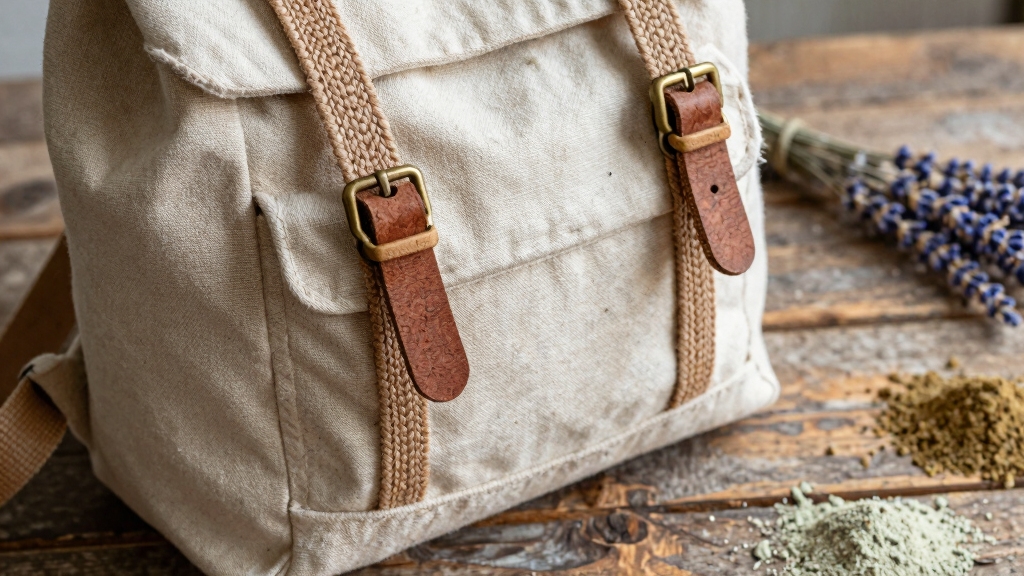
Because sustainable materials markedly impact environmental footprints, choosing eco-friendly options for backpacks matters more than ever.
You benefit from materials like hemp, which offers superior strength and UV resistance while requiring minimal water and no pesticides. Hemp’s breathability also ensures comfort by reducing chafing during extended wear.
Recycled polyester transforms plastic waste into durable fabric, cutting energy use and pollution dramatically. This fabric’s abrasion resistance makes it suitable for rough conditions without compromising longevity.
Organic cotton supports ethical production and soil health, enhancing fabric softness and durability.
Additionally, plant-based fibers such as bamboo and flax provide natural antimicrobial properties alongside carbon-neutral processing.
- Hemp canvas: abrasion-resistant, antimicrobial, and water-efficient.
- Recycled polyester: lightweight, energy-saving, and weather-resistant.
- Organic cotton: pesticide-free, Fair Trade Certified, and durable.
- Other fibers: bamboo, jute, apple leather with natural strength and eco benefits.
Understanding Fabric Denier and Its Impact
Hey there! So, let’s chat about denier for a moment. It’s basically a way to measure how heavy a fiber is. Specifically, it tells you the weight in grams of 9,000 meters of that fiber. Pretty neat, right? This measurement gives you a good idea of how thick the yarn is and how durable it might be.
Denier directly impacts fabric weight, which means choosing the right denier affects not only durability but also how heavy your backpack feels. When selecting gear, it’s also important to consider overall size measurements to ensure your backpack is practical for your travel needs.
Now, if you’re looking at higher denier fabrics, like 1000D nylon, you’ll find they offer really strong abrasion resistance. That sounds great, but there’s a bit of a trade-off since they can add some extra weight to your backpack.
So, it’s all about finding that sweet spot! Balancing the denier helps you optimize both the strength of your backpack and keep its overall weight manageable.
Denier Definition Basics
Understanding fabric denier is essential when evaluating backpack materials, as it quantifies the linear mass density of fibers by measuring the weight in grams of 9,000 meters of thread.
One denier equals one gram per 9,000 meters, based on the weight of a single silk strand. Denier values, noted as numbers followed by “D” (e.g., 1000D), indicate fiber thickness: higher denier means thicker yarns and heavier fabric.
This measurement applies to individual fibers before weaving and remains consistent across materials like nylon or polyester. Different clip materials on backpacks often complement the durability offered by high-denier fabrics.
Key points to take into account:
- Denier measures fiber weight, not waterproofing.
- Higher denier correlates with thicker, denser fabric.
- Backpack fabrics typically range from a few hundred to over 1000D.
- Denier informs product suitability and performance expectations.
- The overall strength of a fabric also depends on weave and treatments in addition to denier.
Durability and Weight Effects
While fabric denier directly influences a backpack’s durability and weight, its effects vary based on material and weave characteristics.
Higher denier yarns, like 1000D or ballistic nylon at 840-1680D, increase abrasion resistance and puncture protection due to thicker fibers and denser construction. Ballistic nylon, originally developed for military use, is known for its thick, durable fabric.
However, these heavier fabrics add weight, which you’ll notice in heavy-duty or ballistic packs.
Conversely, lower denier fabrics, below 210D, offer lighter weight and flexibility, ideal for packable or adventure backpacks, though with reduced abrasion resistance.
Denier correlates with fabric mass per length, affecting overall GSM and weight. Yet, weave type and fiber tenacity also modulate durability; for example, 450D nylon can outperform 600D polyester.
Water Resistance and Coatings for Backpacks
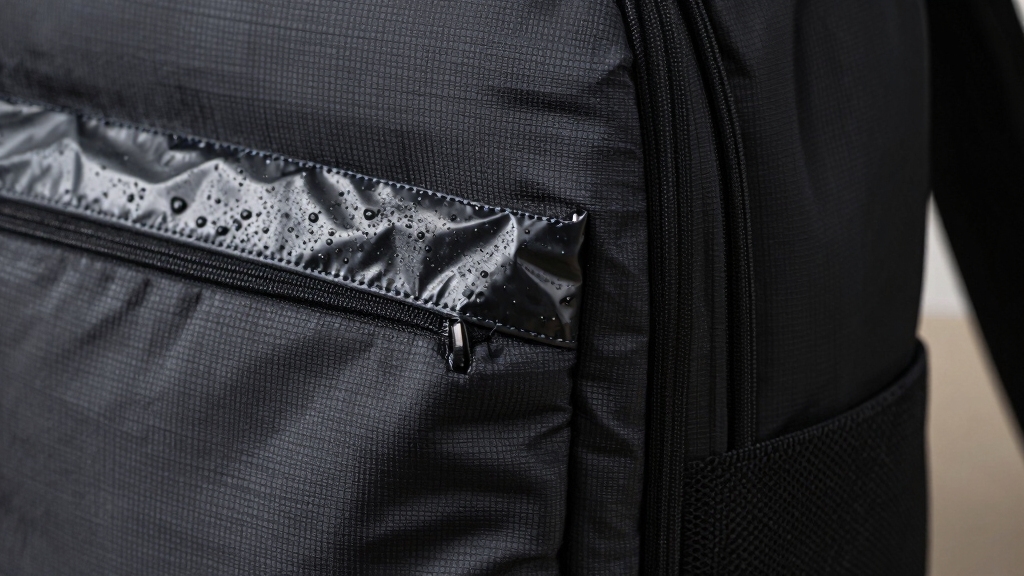
When selecting a backpack for wet conditions, water resistance hinges on advanced coatings and membrane technologies applied to the fabric.
Polyurethane (PU) coatings offer good water resistance at a reasonable weight and cost. Silicone coatings enhance durability and tear resistance.
Durable Water Repellent (DWR) treatments make water bead and roll off surfaces. Membrane technologies like Gore-Tex and Sympatex provide waterproof barriers combined with breathability, vital for comfort. However, it is important to note that DWR treatments can wear off over time and require periodic reapplication to maintain their effectiveness.
Key factors include:
- PU and silicone coatings for balanced water resistance and durability
- DWR treatments to repel surface moisture effectively
- PTFE and breathable membranes to block water yet allow airflow
- Sealed seams and water-resistant zippers to prevent penetration
Choosing fabrics with these coatings and membranes guarantees reliable protection in wet environments.
Durability and Abrasion Resistance Factors
Because backpacks endure constant friction and impact, their durability and abrasion resistance are critical factors in material selection.
You’ll find ballistic nylon and Cordura fabrics excel here, offering high tensile strength and resistance to tears and scuffs due to their dense weaves and military-grade origins.
Denier ratings, typically 800-1680D, quantify fiber thickness; higher values mean greater durability. Ripstop nylon integrates reinforced grid threads to prevent tear propagation, essential for outdoor gear.
Polyester, though lighter and less costly, provides UV resistance and quick drying with a tight weave enhancing strength. Additionally, polyester has less static compared to nylon, which can be beneficial in reducing cling and dust attraction.
Advanced materials like Kevlar and Dyneema deliver extreme abrasion and puncture resistance, ideal for ultra-durable backpacks in harsh environments.
Choosing fabrics with these properties guarantees your backpack withstands rugged use without compromising weight or functionality.
Breathability and Comfort Fabrics
Durability and abrasion resistance ensure your backpack withstands tough conditions, but comfort and breathability determine how it feels during use.
Fabrics like mesh and spacer materials excel by creating airflow channels that reduce sweat buildup, especially on back panels and shoulder straps. Many backpacks also incorporate frameless designs that utilize simple construction for lightweight comfort.
You’ll find nylon and polyester variants that wick moisture and dry quickly, though their breathability depends on weave density and yarn size. Natural fabrics such as cotton and linen offer softness and airflow but may lack quick-dry properties.
Advanced synthetics like Ariaprene add stretch and wicking without sacrificing comfort. Keep in mind, higher breathability often reduces waterproofing, so hybrid designs balance these needs carefully.
- Mesh and spacer fabrics optimize ventilation
- Nylon/polyester variants balance moisture wicking and durability
- Natural fabrics provide temperature regulation but absorb moisture
- Advanced synthetics enhance comfort with moisture management
Material Choices for Different Backpack Applications
Although backpacks come in various forms, selecting the right material hinges on your intended use and performance requirements.
For rugged outdoor use, nylon variants like Cordura or ripstop offer abrasion resistance and tear prevention.
Polyester suits water-exposed conditions due to hydrophobicity and UV resistance.
Tactical or industrial applications benefit from Kevlar or Dyneema composites for tensile strength and cut resistance.
Traditional cotton canvas adds durability and a classic look but weighs more.
Specialty fabrics like neoprene provide insulation and water resistance in submersible packs.
| Application | Recommended Materials | Key Benefits |
|---|---|---|
| Hiking/Camping | Ballistic nylon, ripstop nylon | Abrasion, tear, fungal resistance |
| Water Sports | Polyester, TPU-coated nylon | Hydrophobic, UV, waterproof |
| Tactical/Industrial | Kevlar, Dyneema Composite | High strength, cut resistance |
| Casual/School | Polyester, synthetic leather | Cost-effective, durable |
| Vintage/Outdoor | Cotton canvas, waxed canvas | Rugged, abrasion resistant |
Comparing Weight and Strength Across Fabrics
Choosing the right fabric for your backpack means balancing weight and strength, which largely depends on factors like denier, fiber type, and coatings.
Higher denier fabrics, such as 1680D ballistic nylon, offer superior abrasion resistance but add weight. In general, higher weight fabrics demonstrate greater tear strength, making them more durable under stress.
Nylon outperforms polyester in strength by about 40% at equal denier, making it ideal for heavier loads. Coatings like PU enhance tear strength and water resistance. PVC backing, while stronger, is less common due to safety concerns.
Advanced materials like Dyneema or Vx21 provide exceptional strength-to-weight ratios but come at a premium.
- Higher denier increases durability but also fabric weight
- Nylon is stronger and lighter than polyester at the same denier
- PU coatings improve tear resistance and water repellency
- Specialized fabrics like Dyneema deliver unmatched strength-to-weight performance
Frequently Asked Questions
How Do Backpack Materials Affect Overall Bag Cost?
Backpack materials directly impact your bag’s cost by influencing durability, weight, and manufacturing complexity.
Using premium fabrics like Cordura or 1000D Nylon raises expenses due to higher prices per yard and enhanced abrasion resistance.
Conversely, polyester offers affordability with decent strength.
Hardware quality, such as YKK zippers or padded straps, also adds cost.
Sustainable or eco-friendly materials typically increase prices, while mass production and simpler fabrics lower your final purchase price.
What Are Common Fabric Maintenance Tips for Backpacks?
You might think cleaning your backpack is complicated, but it’s manageable with the right steps.
Always empty pockets, brush off dirt, and vacuum interiors to remove debris.
Spot clean with mild soap and avoid harsh chemicals that damage fabrics.
Hand wash synthetics in warm water with technical soap, rinse thoroughly, and air dry in shade.
Regularly apply appropriate waterproofing sprays and store your bag in a cool, dry place to prolong its life.
Are There Hypoallergenic Materials Used in Backpacks?
Yes, you’ll find hypoallergenic materials in backpacks, like hemp, cork, and bamboo.
Hemp offers antimicrobial properties and resists abrasions without irritating sensitive skin.
Cork is naturally hypoallergenic, antimicrobial, and waterproof, making it a durable, cruelty-free option.
Bamboo provides exceptional softness and antibacterial benefits, ideal if you have allergies.
Choosing backpacks with these materials minimizes allergic reactions by reducing exposure to irritants and microbes, enhancing comfort and skin safety.
How Do Backpack Fabrics Impact Environmental Sustainability?
You impact environmental sustainability by choosing backpack fabrics wisely.
Hemp fabrics use one-third the water of cotton, need fewer chemicals, and biodegrade quickly.
Organic cotton reduces CO2 emissions but consumes significant water.
Recycled polyester lowers energy use and diverts plastic waste but isn’t biodegradable.
Synthetic fabrics emit greenhouse gases and microplastics, harming ecosystems.
Opting for natural or recycled materials minimizes your backpack’s ecological footprint effectively.
What Materials Are Best for Custom or Personalized Backpacks?
Think of your custom backpack as a tailored suit. Materials like 1000D Cordura offer tough durability while Horween leather adds premium craftsmanship and personalized aging.
You can mix waxed canvas for heritage appeal or Ariaprene® for eco-friendly innovation. With design-your-own options, you control fabric types, colors, and hardware.
This ensures your backpack matches your specific functional needs and aesthetic preferences precisely, balancing performance, style, and sustainability.
Choosing the Right Fabric for Long-Term Performance
When you choose a backpack, you’re selecting more than fabric; you’re balancing strength, weight, and comfort like threads weaving into a single, durable design. Just as synthetic and natural materials coincide to optimize performance, understanding denier and abrasion resistance lets you match your pack to its purpose.
In this interplay of fibers, your choice determines how well your backpack withstands wear while keeping you comfortable, proving that material science and practical use are tightly stitched together.