
Can You Bring Flashlight on Plane: Might Trigger Curiosity

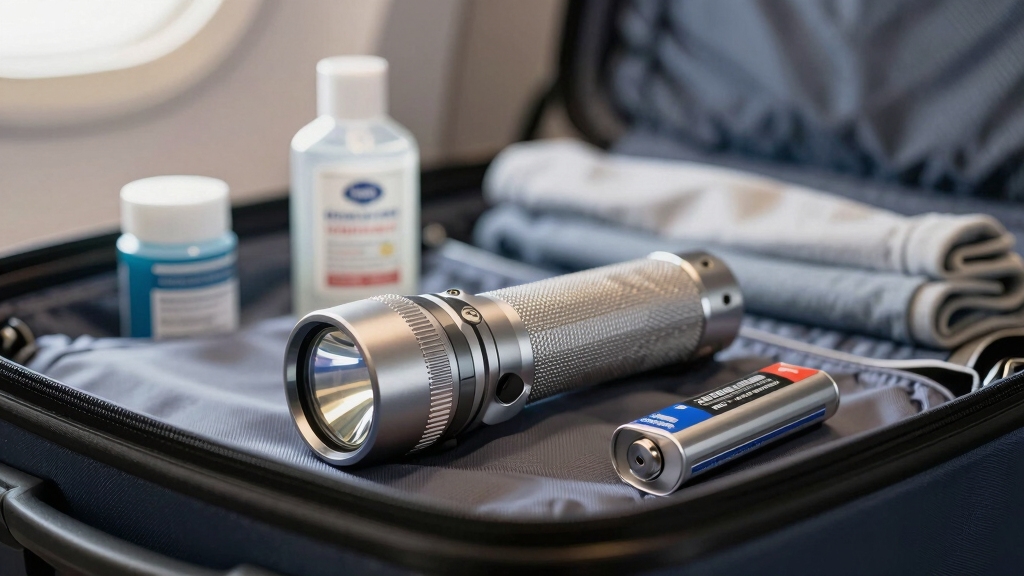
You can bring a flashlight on a plane, but size and features matter. Small flashlights under 7 inches with alkaline batteries usually go in your carry-on, while larger or tactical ones must be checked.
Lithium batteries must stay in your carry-on and can’t exceed certain watt-hour limits. Avoid flashlights with sharp edges or self-defense features to prevent confiscation. Following these rules helps you pass security smoothly.
Explore more to navigate airline variations and safety tips.
Key Takeaways
- Flashlights 7 inches or shorter are generally allowed in carry-on bags; larger ones must be packed in checked luggage.
- Tactical flashlights with sharp bezels or self-defense features are banned in carry-ons and should go in checked baggage.
- Lithium-ion batteries in flashlights must stay in carry-on luggage; batteries over 100 Wh require airline approval or are prohibited.
- Spare lithium batteries must have terminals covered and be carried separately in carry-on bags, never in checked luggage.
- TSA officers have final authority to allow, inspect, or confiscate flashlights based on security risk at checkpoints.
TSA Guidelines for Flashlights in Carry-On and Checked Baggage
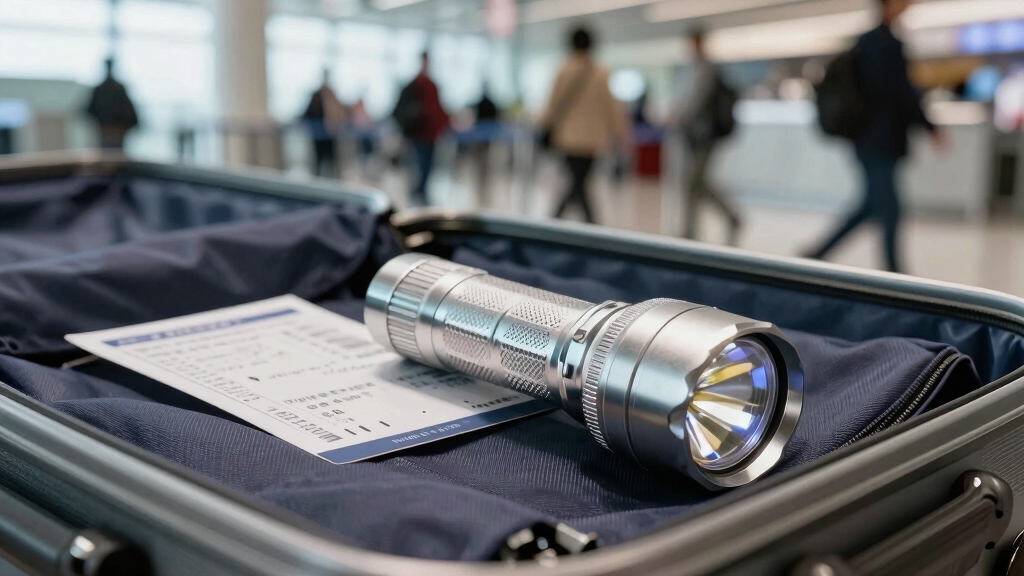
Although flashlights are common travel items, TSA has specific rules you must follow when packing them in carry-on or checked baggage.
Flashlights 7 inches or shorter are usually allowed in carry-on bags; larger ones belong in checked luggage. Airlines may have varying size limits and policies affecting flashlight carriage, so checking specific airline carry-on policies is advisable.
Flashlights 7 inches or shorter can go in carry-on bags; bigger flashlights must be packed in checked luggage.
Avoid flashlights with sharp edges or tactical features in carry-on as they risk confiscation. Weapon-mounted lights are banned from carry-on but may go in checked bags if batteries are removed.
Lithium-ion and lithium-metal batteries must stay in carry-on luggage due to fire hazards; they can’t be checked even inside a flashlight. Remove batteries from flashlights and protect terminals to prevent short circuits.
TSA officers have final say at checkpoints, so pack your flashlight and batteries accessibly for inspection. Many flashlights require lithium metal or lithium ion batteries, which have special rules and must be handled carefully to comply with battery regulations.
Restrictions on Flashlights With Self-Defense Features
When you bring a flashlight that has self-defense features, it’s super important to keep in mind that aggressive designs, like those with striking bezels, are often not allowed.
Plus, tactical flashlights that have reinforced bodies or stun capabilities usually face stricter scrutiny and mightn’t be permitted in your carry-on bags. Using TSA-approved locks can help ensure other security items pass smoothly.
Flashlights exceeding seven inches should be placed in checked baggage to avoid potential confiscation by TSA. flashlight size Just a heads up TSA officers have the final say and can confiscate any flashlight they deem to be a security risk.
Prohibited Self-Defense Features
Because flashlights with self-defense features can pose security risks, the TSA strictly regulates their presence in carry-on luggage. You must be aware that certain flashlight designs are outright prohibited or require checked baggage placement.
Here’s what you need to know:
- Flashlights with strike bezels (sharpened edges) are banned in carry-ons as potential weapons. Devices marketed explicitly for self-defense, like kubotan flashlights, must go in checked bags.
- Flashlights combined with multi-tools containing blades or banned items can’t be carried on.
- Flashlights with weapon-like features such as a sharp strike bezel or crenellated edges are considered a red flag and must go in checked luggage. In some cases, using professional tools to assess flashlight features may be necessary for compliance verification.
Tactical-style flashlights with aggressive features often require special packing or checking. TSA officers have final authority to reject any flashlight deemed a security threat. Always make certain your flashlight complies to avoid confiscation and delays at security checkpoints.
Tactical Flashlight Restrictions
If you plan to bring a tactical flashlight on your flight, you need to follow strict TSA guidelines regarding size, features, and battery handling. Proper maintenance and regular inspection of your flashlight can help ensure it complies with airline safety standards.
Flashlights under seven inches are usually allowed in carry-on bags, but those exceeding this length or featuring self-defense elements like sharp bezels, bludgeon tips, or weapon mounts must go in checked baggage.
Tactical flashlights with strobe functions or aggressive modes face heightened scrutiny and are often prohibited in carry-on. Remove lithium-ion batteries and carry them separately in your cabin baggage, covering contacts to avoid accidental activation.
Be aware that TSA officers may confiscate flashlights they consider unsafe regardless of size. Additionally, check local laws at your destination, as some states impose further restrictions on tactical flashlight features and use.
Although there are no specific federal laws restricting ownership or general use of tactical flashlights, travelers should remain vigilant about TSA regulations and state laws. Regular cleaning and conditioning of flashlight components can also prolong its functional lifespan and performance.
TSA Confiscation Authority
Although flashlights might seem harmless, TSA officers have broad authority to confiscate any device they consider a potential weapon. This is especially true for those with self-defense features like sharp strike bezels or blades.
If your flashlight has these features, expect it to be banned from carry-on luggage and possibly confiscated at security checkpoints. To avoid surprises, keep these points in mind:
- Flashlights with self-defense designs must go in checked baggage, not carry-ons.
- Strike bezels or blades trigger confiscation due to security risks.
- TSA officers have discretion to seize suspicious flashlights, regardless of size. Many items with similar security concerns are marked with Travel Sentry approval to indicate authorized inspection access.
- Lithium batteries powering flashlights must stay in carry-on bags for safety.
- Removing batteries before packing reduces accidental activation and fire hazard risks.
- Passengers should also be aware that lithium batteries cannot be packed in checked luggage but must travel in carry-on bags to comply with safety regulations.
Prepare accordingly to comply with TSA rules and minimize confiscation chances.
Lithium Battery Rules for Flashlights on Planes
When it comes to flying with your flashlight, it’s really important to remember that all lithium batteries need to be packed in your carry-on luggage. Seriously, never put them in your checked bags! This is all about sticking to safety regulations.
Recent incidents involving lithium batteries have led to tighter restrictions by airlines and aviation authorities. Batteries over 160Wh are completely prohibited on planes, so always verify your battery’s capacity before traveling.
Oh, and don’t forget to protect those spare batteries from short circuits! A little tip: you can tape the terminals or just put them back in their original packaging. It’s a simple step that can make a big difference.
Also, make sure you check the watt-hour rating of your batteries before you travel. Batteries between 101-160Wh require airline approval, so contacting your airline ahead of time can help avoid surprises at security.
Carry-On Battery Requirements
When carrying flashlights on a plane, you must follow strict lithium battery rules to guarantee safety and compliance. Lithium batteries must always stay in your carry-on bags, never checked luggage, to allow quick response if issues arise.
Flashlights are essential for in-flight emergencies and can provide critical lighting when needed. Always verify the battery capacity and follow airline-specific regulations to avoid delays or confiscation.
Here’s what you need to know:
Spare lithium-ion batteries must be kept separate from the flashlight when possible. Batteries can’t exceed 100 watt-hours (Wh) without airline approval. Batteries between 101-160 Wh require permission, and anything over 160 Wh is forbidden.
Protect battery terminals by taping contacts or using individual plastic bags. You can carry up to four spare lithium-ion batteries under 100 Wh without special approval. If you remove batteries from devices, pack batteries in your carry-on and devices in checked bags.
Battery Safety Precautions
Lithium batteries frequently pose fire hazards due to thermal runaway, which can trigger smoke, flames, and toxic gases at high altitudes.
To guarantee safety, always carry flashlights with lithium batteries in your carry-on baggage, never in checked luggage. Airlines and security agencies typically require that such batteries be handled according to specific battery regulations.
Inspect batteries carefully; avoid damaged, swollen, or recalled units, as these are prohibited. Protect battery terminals with tape or original packaging to prevent short circuits.
Know the battery’s watt-hour (Wh) rating: batteries up to 100 Wh don’t require airline approval, but those between 101 and 160 Wh do, with quantity limits. Batteries over 160 Wh are banned.
Power off devices during takeoff and landing, and don’t charge batteries onboard. Because fires in confined spaces pose significant risks, careful adherence to these precautions is essential.
Security Screening Tips for Traveling With Flashlights

Although flashlights are generally allowed through TSA security, you’ll need to follow specific guidelines to avoid delays or confiscation. To guarantee smooth screening, keep these tips in mind:
- Remove your flashlight and batteries from your bags and place them in separate bins.
- Tape over battery terminals or activate lockout modes to prevent accidental activation.
- Avoid carrying tactical flashlights with sharp bezels or self-defense features in your carry-on.
- Carry lithium batteries only in your carry-on and pack spare lithium batteries within airline limits. External battery packs should not exceed 100 Wh to comply with TSA guidelines.
- Be prepared for extra screening if your flashlight resembles a weapon or contains built-in lasers.
Choosing Between Carry-On and Checked Baggage for Flashlights
Since flashlight size, type, and battery composition directly influence TSA regulations, you must carefully decide whether to pack your flashlight in carry-on or checked baggage. It is important to verify airline policies as they may have specific rules regarding batteries and devices in carry-on and checked bags.
Small, non-tactical flashlights under 7 inches with alkaline batteries fit well in carry-ons, granting access during flights. It is also recommended to put your flashlight in lockout mode or remove batteries to prevent accidental activation.
Larger or tactical flashlights with sharp features belong in checked bags, with lithium batteries removed and carried separately for safety. Always insulate battery terminals.
| Feature | Carry-On |
|---|---|
| Size | Under 7 inches |
| Type | Non-tactical, no sharp edges |
| Batteries | Lithium batteries only here |
| Accessibility during flight | Yes |
Use checked baggage for bulky or tactical models, removing lithium batteries to minimize fire risk and comply with regulations.
Variations in International and Airline Flashlight Policies
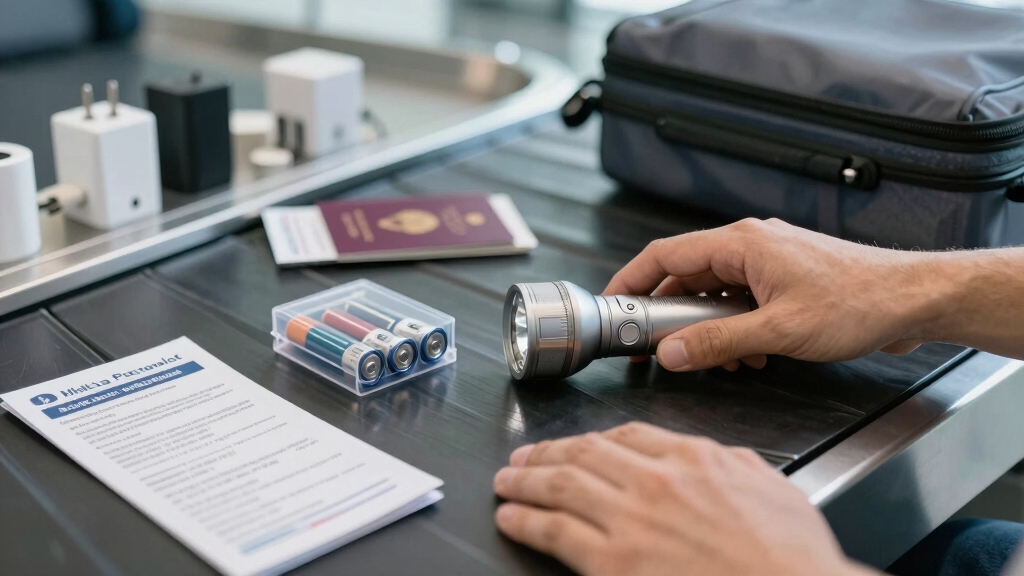
Maneuvering flashlight regulations can get more complex when flying internationally or with different airlines. You’ll need to navigate varying rules on flashlight size, battery types, and tactical features. Here’s what to keep in mind:
TSA allows flashlights in carry-on and checked bags. However, lithium batteries must stay in carry-on. Airlines may limit flashlight length, often under 7 inches, and battery watt-hour.
Sometimes, they require approval for over 100 Wh. Some countries ban tactical flashlights with sharp bezels or weapon attachments in carry-ons. Loose lithium batteries are typically forbidden in checked baggage worldwide. You must carry them onboard.
Different nations and carriers enforce unique policies, so always check specific airline and destination regulations before travel. Staying informed helps you avoid confiscation or delays at security checkpoints.
It’s also important to consider luggage size measurements when packing your flashlight to ensure compliance with airline size limits, especially if stored in carry-on bags.
Safety Considerations When Traveling With Flashlights
When traveling with flashlights, you must prioritize safety by adhering to TSA rules on battery types, flashlight size, and features.
Carry lithium batteries only in your carry-on, never in checked baggage, and make certain their watt-hour rating stays below 100 Wh.
Flashlights under 7 inches can go in either bag, but larger ones belong in checked luggage.
Avoid carrying flashlights with sharp bezels or weapon-mounted lights in your carry-on; these must be checked with batteries removed.
Protect batteries by taping terminals or using lockout modes to prevent accidental activation.
Pack flashlights securely, cushioned to avoid damage or injury, and keep them accessible for TSA inspection.
Secure packing is advised to prevent accidental activation and damage during transit.
Following these precautions minimizes security delays and ensures compliance with aviation safety standards during your travel.
Frequently Asked Questions
Can I Bring a Flashlight With a Laser Pointer on a Plane?
Yes, you can bring a flashlight with a laser pointer on a plane, but it must meet specific rules.
Keep the flashlight under 7 inches and avoid tactical features.
Make certain the laser complies with power limits. Carry lithium batteries in your carry-on, not checked bags.
Remove batteries or disable the device to prevent accidental activation. Always check your airline’s policies first, as some impose stricter rules or may confiscate devices with lasers.
Are Weapon-Mounted Flashlight Attachments Allowed in Checked Baggage?
Think of weapon-mounted flashlight attachments as ticking time bombs in your luggage. They’re allowed only in checked baggage, never in carry-ons.
You must unmount them from firearms and remove lithium batteries, carrying those separately in your carry-on. TSA strictly enforces this to avoid fire hazards, and they can confiscate any suspicious item.
Secure your flashlight to prevent accidental activation and check airline policies to avoid surprises at the checkpoint.
How Should I Pack Multiple Flashlights to Avoid TSA Confiscation?
To avoid TSA confiscation when packing multiple flashlights, place those longer than 7 inches or with self-defense features in checked baggage.
Separate removable batteries and pack them in carry-on, taping terminals to prevent short circuits.
Put flashlights with non-removable batteries in checked bags if allowed.
Remove all flashlights and batteries at security for inspection.
Check airline rules beforehand since policies vary.
Always avoid flashlights resembling weapons or with tactical features in carry-on.
Is It Legal to Use a Flashlight on a Plane During Flight?
Yes, you can use a flashlight on a plane during flight, but you must follow the airline crew’s instructions and safety regulations.
Flashlight use isn’t explicitly banned, but you should avoid shining it in others’ eyes or causing disruptions.
Make sure your flashlight’s batteries are secure to prevent accidental activation.
Always comply with crew directions to maintain safety and order throughout the flight.
Do TSA Agents Require Proof of Flashlight Battery Compliance at Security?
You might expect TSA agents to ask for proof of flashlight battery compliance, but they typically don’t.
Instead, they rely on physical inspection and your cooperation during screening.
Just pack lithium batteries in your carry-on, separate removable ones, and protect terminals to avoid issues.
If your flashlight raises concerns, TSA may question you, but they won’t demand manuals or receipts.
Stay prepared and follow packing rules to breeze through security.
Before You Pack It, Know the Rules (and the Possible Risks)
So, you want to bring a flashlight on your flight? Just remember, it’s not as simple as tossing it in your bag. Between TSA rules, lithium battery limits, and self-defense restrictions, your trusty light might face more scrutiny than your shoes.
But hey, if you enjoy negotiating airport security like a covert agent, go ahead. Just don’t be surprised when your flashlight gets more attention than your carry-on essentials.