
How to Get Stains Out of Polyester Clothes: Wrapping Up

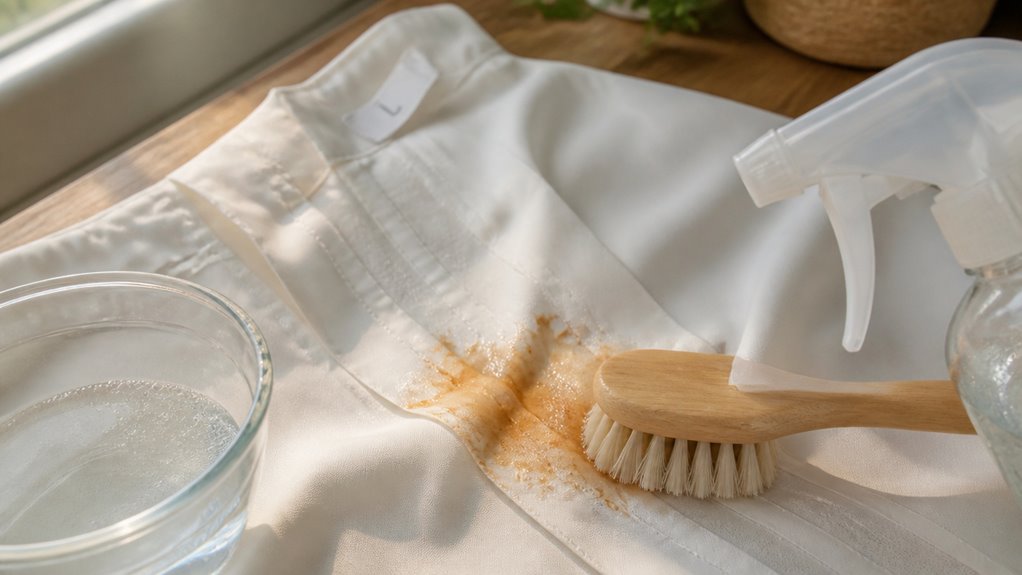
To get stains out of polyester, first identify the stain type and gently remove excess solids or blot liquids without rubbing. Use a suitable detergent, such as enzymatic for protein stains, degreasers for oil, or bleach safely for colorfast stains.
Pre-treat and soak the fabric within care label temperature limits, then wash with heavy-duty detergent. Avoid heat drying until the stain is fully gone to prevent setting.
Proper handling protects fibers and guarantees effective removal; there’s more to learn about fine-tuning each step.
Key Takeaways
- Identify the stain type (grease, protein, pigment) and assess freshness to choose the right treatment and avoid spreading.
- Gently blot liquid stains with a clean white cloth and scrape off solids before rinsing with cold water.
- Use enzymatic removers for protein stains, degreasers or dish soap for grease, and color-safe detergents for delicate polyester.
- Pre-treat stains, soak in warm water with detergent (following care label temperature), then wash and check before drying.
- Air dry polyester garments away from heat and direct sunlight to prevent setting stains and preserve fabric integrity.
How to Identify and Tackle Polyester Stains?

When you come across a stain on polyester, the first step is to size it up carefully to determine its type and severity. You want to identify whether it’s greasy, protein-based, or pigment-rich because each requires a different approach.
Carefully assess polyester stains by type and severity to choose the best cleaning method.
Examine the stain’s color, texture, and location. Oil tends to sit on the surface, while food stains may have dried residue. Assess how fresh or set-in it is, as older stains need longer pre-treatment.
Avoid rubbing or spreading the stain at this stage to prevent fiber damage. By understanding the stain’s nature, you can select the appropriate cleaning product and method, ensuring more effective removal without compromising the fabric’s integrity.
This precise assessment sets the foundation for successful stain treatment on polyester clothes. For best results, consider using mild enzymatic detergent to target organic stains effectively.
Remove Excess Solids and Blot Liquids From Stains
First things first, if you see any excess solids on the stain, grab a spoon or a blunt knife and carefully remove them. This way, you can stop the stain from getting any worse.
Next up, when it comes to liquid stains, you’ll want to gently blot them with a clean white cloth. Just dab at it until you notice that no more liquid is transferring to the cloth. Remember, rubbing can actually spread the stain or make it deeper, so take it easy!
Getting these initial steps right is super important, especially when you’re dealing with polyester fabrics. Trust me, it sets you up for much better stain treatment down the line!
For best results, always test cleaning solutions on a hidden area before applying them to the stain.
Remove Excess Solids
Carefully scrape off any excess solids from the stained area using a spoon or blunt knife to prevent pushing the stain deeper into the fabric. Work gently to avoid embedding particles further into polyester fibers.
Remove as much solid residue as possible before proceeding, as leftover debris can interfere with stain treatment and washing. Avoid harsh scraping or rubbing, which risks damaging the fabric’s surface.
Focus on lifting solids away rather than grinding them in. Once excess solids are removed, you’ll prepare the fabric for subsequent cleaning steps.
This initial action lays the foundation for effective stain removal by minimizing the stain’s volume and preventing further fiber contamination. Taking this step methodically guarantees better results in later treatment phases.
For optimal results, always handle the fabric gently and choose mild detergents suited for delicate materials to avoid damage.
Blot Liquid Stains
After removing any solid matter, focus on liquid stains by gently blotting the affected area with a clean white cloth.
Avoid rubbing, which can push the stain deeper into polyester fibers.
Apply steady, light pressure to absorb as much liquid as possible, working from the stain’s edges toward the center to prevent spreading.
Change to a fresh section of the cloth frequently to maximize absorption.
Continue blotting until no more stain transfers onto the cloth.
This step is vital because residual liquid can set the stain permanently during washing.
Once you’ve removed excess liquid, promptly rinse the stained area with cold water to flush out remaining residue before pre-treating.
Proper blotting guarantees better stain removal and protects your polyester clothes from lasting damage.
For stubborn stains, consider pre-treating with mild detergent before washing to improve results.
Use Clean White Cloth
Frequently, using a clean white cloth is essential when removing excess solids and blotting liquids from stains on polyester. Start by gently scraping off solids with a blunt tool. Then use the cloth to blot, never rub, to lift liquids.
This prevents stain spreading and fiber damage. Use a fresh section of the cloth as absorption occurs to avoid re-depositing stain residues. After blotting, rinse the area with water before pre-treating. For stubborn stains, consider using products designed for delicate fabrics to avoid damage.
| Step | Action |
|---|---|
| 1 | Scrape solids with blunt knife |
| 2 | Blot liquids with white cloth |
| 3 | Change cloth section frequently |
| 4 | Rinse with cold water |
| 5 | Pre-treat before washing |
Protect Your Polyester From Damage While Removing Stains
When removing stains from polyester, you must avoid harsh rubbing or scrubbing, as this can damage the fibers and alter the fabric’s texture.
Instead, gently blot the stain with a clean white cloth to lift excess liquid without stressing the fabric. Use a spoon or blunt knife to carefully scrape off solids, preventing fiber abrasion.
After rinsing, apply stain remover and let it soak to allow penetration without mechanical action. Avoid using hot water beyond the care label’s recommendation to prevent weakening fibers.
If you must treat grease or oil stains, apply degreaser cautiously and rinse thoroughly. Patience is key; repeat treatments gently rather than aggressive scrubbing.
Protecting the fabric’s integrity guarantees your polyester stays smooth and durable throughout the stain removal process. Maintaining a consistent warm environment during cleaning helps preserve fabric flexibility and prevents damage.
Choose the Right Detergent for Polyester Stain Removal
Maintaining your polyester garment’s integrity during stain removal depends not only on gentle handling but also on selecting the right detergent.
Choose colorfast detergents like Cold Power or Persil ProClean, as they effectively lift stains without fading colors.
Opt for colorfast detergents like Cold Power or Persil ProClean to remove stains while preserving vibrant colors.
For delicate colored or white polyester, Lovables offers a gentle yet thorough clean.
When dealing with bleachable stains such as tea or coffee, Sard Wonder is your go-to product.
For grease or oil stains that cling stubbornly to polyester fibers, use Sard Wonder Degreaser Spray or Persil Advanced Clean Oxi+Odor Power to break down oils efficiently.
Always match the detergent to the stain type and fabric color to maximize removal while protecting your garment.
This methodical selection guarantees peak cleaning results without compromising polyester’s durability or appearance.
For long-term care, avoid storage habits that cause fabric creasing, as polyester can develop permanent deformations from tight folding or compression, similar to nylon’s low elasticity and semi-rigid structure.
Pre-Treat Polyester Stains With Suitable Removers and Soaking
First things first, you’ll want to choose a stain remover that’s perfect for the type of polyester stain you’re dealing with. Got a dried stain? No problem! Just soak the garment in warm water with some detergent. This will help loosen up the residue without harming those delicate fibers.
And remember, when you’re applying the stain remover, dab gently! You want it to soak in nicely, but rubbing too hard can just make things worse by spreading the stain. Take your time, and you’ll be on your way to getting that fabric looking fresh again!
For best results, always check the care label to ensure you’re using the right washing method for your polyester garment, as some fabrics may benefit from machine washing guidelines.
Choosing Effective Stain Removers
Select stain removers tailored to the specific type of polyester stain to maximize effectiveness. For greasy stains, apply a degreaser spray like Sard Wonder Degreaser or Persil Advanced Clean Oxi+Odor Power to break down oils clinging to fibers.
For bleachable stains such as tea or wine, use Sard Wonder bleach-based removers cautiously. Food-related stains respond well to enzymatic stain removers, which target protein-based residues. Always remove excess solids or blot liquids before treatment.
Apply the chosen remover directly to the stain, allowing it to penetrate for several minutes without rubbing, preserving fabric integrity. Using colorfast detergents like Persil ProClean or Cold Power during washing complements pre-treatment and enhances stain removal.
Matching the remover to the stain type guarantees efficient, targeted action and prevents damage or ineffective cleaning. It is also important to check the garment’s care label to ensure that the selected stain remover and washing method are safe for the polyester fabric.
Soaking Techniques For Dried Stains
When dealing with dried stains on polyester, soaking the garment in warm water combined with a suitable detergent helps loosen embedded residues effectively.
Begin by brushing off any loose particles. Then pre-treat the stain with an appropriate remover based on the stain type: enzymatic for food and degreaser for oil.
Submerge the fabric fully in the warm detergent solution, ensuring the stained area is saturated. Let it soak for at least 15 to 30 minutes to allow the remover to penetrate fibers deeply.
Avoid rubbing during soaking to prevent fiber damage. After soaking, gently blot the stain to check for lift before washing.
Repeat soaking if the stain remains stubborn, maintaining the water temperature within the polyester care label’s limits to safeguard fabric integrity.
For ongoing care, regular cleaning and conditioning help maintain fabric quality and extend the garment’s lifespan, similar to how regular conditioning benefits leather products.
Gentle Dab And Penetrate
Apply stain remover carefully by dabbing it gently onto the polyester fabric to avoid pushing the stain deeper or damaging fibers.
Start by removing excess solids with a blunt knife or spoon and blot liquids with a clean white cloth. Then, flush the area with water before applying a suitable remover. Choose enzymatic removers for food stains or degreaser sprays for grease.
Let the remover penetrate the fibers for several minutes without rubbing, which can harm the fabric. For dried stains, soak the garment in warm water mixed with detergent to loosen residue.
Repeat dabbing and soaking as needed, ensuring the stain remover fully saturates the fibers. This methodical approach maximizes stain lift while preserving the polyester’s integrity before washing.
Handle Grease and Oil Stains Effectively on Polyester
Tackle grease and oil stains on polyester promptly by first removing any excess residue with a spoon or blunt knife to prevent spreading.
Since oil clings tightly to polyester fibers, you’ll need a targeted approach. Apply a degreaser spray like Sard Wonder Degreaser or a few drops of dish soap directly to the stain.
Oil bonds strongly with polyester, so treat stains directly with degreaser spray or dish soap for effective removal.
Let it sit for a few minutes to break down the grease before rinsing with warm water. Avoid rubbing vigorously to prevent fabric damage.
Key steps to handle grease and oil stains effectively:
- Remove excess residue gently to avoid spreading.
- Use specialized degreasers or dish soap for better breakdown.
- Let treatment penetrate fibers before rinsing or washing.
This method prepares the stain for thorough removal without harming your polyester garment.
Wash Polyester Clothes to Remove Stains Effectively
After treating grease and oil stains carefully, you need to wash your polyester garment to fully remove any remaining residue. First, check the care label for the highest safe water temperature.
Use a quality detergent designed for polyester, like Persil ProClean or Cold Power, applying the recommended heavy-duty dosage for stained fabrics. Place the garment in the washing machine and select the appropriate cycle, guaranteeing thorough agitation.
Avoid overloading to allow effective cleaning. Once the cycle finishes, inspect the stained area closely before drying, as heat can set residual stains. If the stain remains, don’t dry; instead, consider re-treating.
Always air dry or follow label instructions to preserve fabric integrity. This methodical washing guarantees effective stain removal while protecting your polyester clothes.
Repeat Treatments for Persistent or Dried Polyester Stains
When stubborn stains refuse to lift after one wash, you’ll need to repeat the treatment process carefully.
Start by soaking the stained area in warm water mixed with detergent to soften dried residues.
Soak stains in warm, detergent water to gently loosen dried residues before treating further.
Avoid rubbing aggressively to prevent fiber damage; instead, gently dab the stain to aid penetration. Use an enzymatic stain remover for food-based stains and a degreaser spray for oil or grease stains.
Let the remover sit for several minutes before washing again at the highest safe temperature per the care label.
Remember these key points for repeat treatments:
Always remove excess solids or oils before re-treating.
Allow stain removers enough time to penetrate fibers.
Inspect the garment after each wash before drying to avoid setting the stain.
Safely Use Special Products on White and Delicate Polyester
Although white and delicate polyester fabrics require extra care, you can safely use specialized products by following specific guidelines. Always choose color-safe detergents like Lovables, designed for delicate or white polyester.
For bleachable stains such as tea or coffee, apply Sard Wonder sparingly. Ensure you test an inconspicuous area first to avoid damage. Avoid harsh scrubbing; instead, gently dab the stain to protect fibers.
Use Goof Off cautiously on white polyester, remembering its flammability. Rinse treated areas thoroughly with mild soap afterward. Let stain removers penetrate for several minutes before washing at the highest temperature allowed by the care label.
This method preserves fabric integrity while effectively removing stains from your delicate polyester garments.
Check and Air Dry Polyester Garments After Washing
After you wash your polyester garment, take a moment to give it a good look over. You want to check for any stains that might still be hanging around before you dry it. It’s super important because once you throw it in the dryer, heat can set those stains for good.
Inspect Stains Before Drying
Before you dry your polyester garment, carefully inspect the stained area to make certain the stain is fully removed. Heat from drying can set any residual stain permanently, making removal nearly impossible.
Examine the fabric under good lighting and feel the area for any texture changes. If you notice the stain persists, repeat the treatment and wash cycle before drying again.
Keep these points in mind when inspecting stains:
- Look for discoloration or residue that may still cling to fibers.
- Check both sides of the fabric, as stains can seep through.
- Feel the texture to detect hardened or sticky spots indicating incomplete removal.
Taking these steps guarantees you avoid setting stains and helps maintain your polyester garment’s appearance and longevity.
Air Dry for Safety
You should always air dry polyester garments after washing to prevent any remaining stains from setting permanently. Machine drying can heat-set stains, making them nearly impossible to remove later.
After washing, gently reshape the garment and lay it flat or hang it in a well-ventilated area away from direct sunlight to preserve color and fabric integrity.
| Step | Action | Reason |
|---|---|---|
| Inspect | Check for residual stains | Avoid heat-setting stains |
| Drying method | Air dry flat or hang | Protect fabric and color |
| Environment | Use shade, good airflow | Prevent fading and mildew |
Repeat Wash If Needed
Once you’ve air dried your polyester garment, carefully inspect it for any remaining stains.
If you spot any, don’t hesitate to repeat the washing process to tackle persistent marks effectively.
Polyester fibers often hold onto stains stubbornly, so a second wash can make a difference without damaging the fabric.
Follow these guidelines to maximize stain removal:
Use the highest safe water temperature indicated on the care label to improve detergent action.
Pre-treat stains again with a suitable remover and allow it to penetrate before washing.
Avoid drying in a machine until the stain is fully gone to prevent setting the stain.
Frequently Asked Questions
Can Polyester Stains Be Removed Using Home Remedies?
Yes, you can remove polyester stains with home remedies like dish soap, baking soda, and vinegar.
Start by scraping excess residue, then blot the stain gently.
Apply a mixture of dish soap and warm water to break down oils or grease.
For tougher stains, soak the fabric in a warm detergent solution before washing at the highest safe temperature.
Avoid rubbing harshly to protect fibers, and repeat if needed for stubborn marks.
How Long Should I Wait Before Washing Stained Polyester?
You should wait about 5 to 10 minutes after applying a stain remover to your polyester before washing. This allows the product to penetrate fibers and break down the stain effectively.
For dried or tough stains, soaking for 15 to 30 minutes in warm water with detergent before washing can improve results. Always check the care label for the highest safe temperature and avoid rubbing the fabric harshly during pre-treatment.
Are Stain Removers Safe for Colored Polyester Fabrics?
Picture your vibrant polyester shirt—bright as freshly painted canvas.
You can safely use stain removers on colored polyester, but you’ve got to choose colorfast products like Lovables or Cold Power to protect hues.
Avoid harsh bleach unless the label allows it, as it can dull colors.
Always test removers on a hidden spot first.
This methodical care guarantees your polyester stays vivid while stains vanish without damage.
Can Polyester Stains Cause Permanent Fabric Discoloration?
Yes, polyester stains can cause permanent discoloration if you don’t act quickly.
Some stains, especially bleachable ones like wine or coffee, can alter fabric color.
You should pre-treat stains promptly with appropriate removers and avoid harsh rubbing that damages fibers.
Always follow care label instructions and test removers on hidden areas first.
With proper, timely care, you’ll minimize the risk of lasting discoloration on your polyester clothes.
Is It Okay to Use Bleach on Polyester Clothes?
You can use bleach on polyester, but only cautiously.
Opt for oxygen-based bleach like Sard Wonder instead of chlorine bleach, which can damage fibers and cause discoloration.
Always test a small hidden area first.
Use bleach sparingly, following garment care labels and instructions carefully.
For white polyester, Goof Off works but is highly flammable; handle it with care.
After bleaching, rinse thoroughly with mild soap to protect the fabric.
Final Thoughts: Mastering Polyester Stain Removal with Care
When tackling polyester stains, think of yourself as a detective. Carefully identifying and treating each mark with the right tools and patience is key.
By removing excess solids, choosing gentle detergents, and pre-treating effectively, you’ll protect your fabric while restoring its look.
Remember to repeat treatments if needed and air dry your garment to seal the job. With methodical care, your polyester clothes will stay fresh and stain-free, ready to wear again.