
How to Store Leather Bags the Right Way?

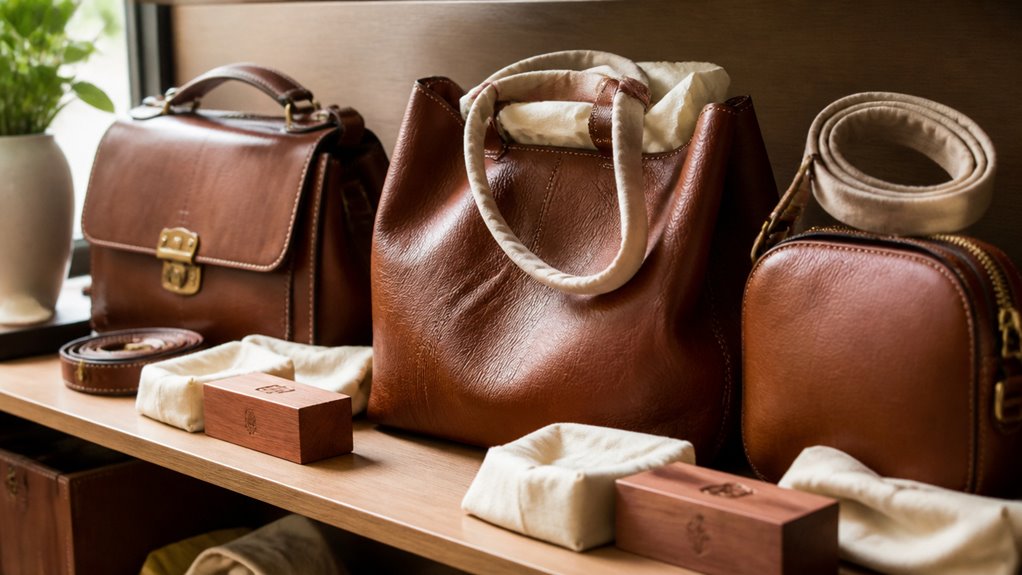
To store your leather bags properly, always empty and clean them first, removing all items and debris.
Stuff the bag with acid-free tissue to maintain its shape. Cover it with a breathable cotton dust bag to allow airflow.
Store bags upright in a cool, dry, well-ventilated place away from direct heat and sunlight.
Protect hardware by keeping sharp items separate. Avoid plastic covers that trap moisture.
Following these steps will help preserve your bag’s condition and longevity. More expert tips await.
Key Takeaways
- Empty the bag completely and remove all items to prevent stains, odors, and damage before storage.
- Clean and condition leather with appropriate products, and air dry in a cool, shaded, well-ventilated area.
- Stuff bags with acid-free tissue paper or cotton inserts to maintain shape, avoiding newspaper or overfilling.
- Store bags upright in breathable cotton dust bags, avoiding plastic covers that trap moisture and cause mildew.
- Keep bags in a cool, dry, well-ventilated space with 45–55% humidity, away from direct sunlight and heat sources.
Empty Your Leather Bag Before Storage
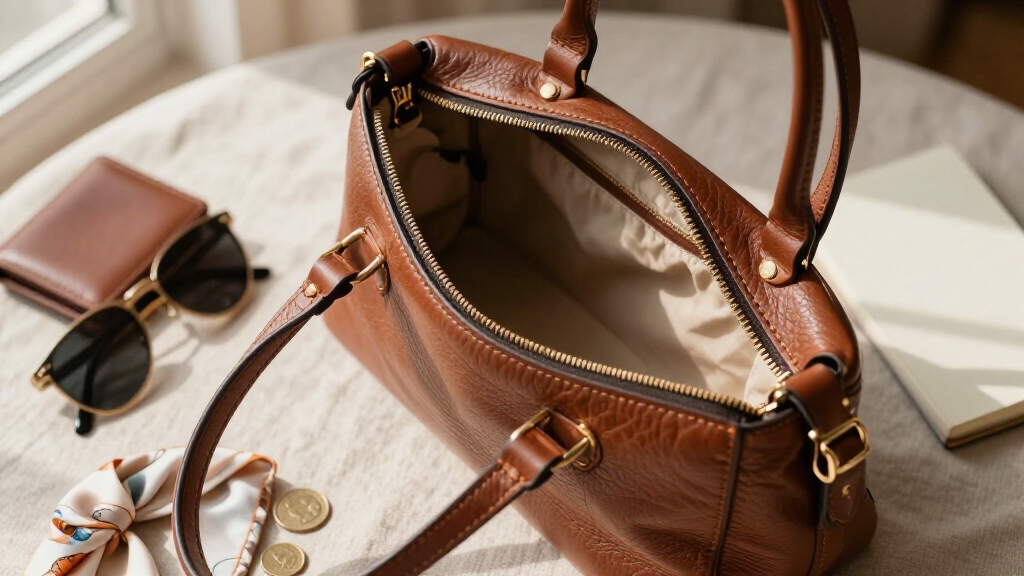
Before you store your leather bag, make sure to empty it completely.
Remove every item, including receipts, pens, cosmetics, and loose accessories, to avoid unwanted stains or damage.
Clean out crumbs and debris thoroughly to prevent odor and grime buildup inside.
If your bag has removable straps, detach them to reduce stress on attachment points.
Store sharp objects like keys or nail files separately in protective pouches to avoid scratching the leather interior.
This careful emptying process not only protects the bag but also prepares it for proper storage.
Skipping this step invites dirt and damage, which can compromise your bag’s appearance and longevity.
Taking these practical actions guarantees your leather bag stays in excellent condition while in storage.
Additionally, maintaining a consistent warm environment during storage helps keep the leather supple and prevents cracking.
Clean and Condition Your Leather Bag Properly
Once your leather bag is completely emptied and free of debris, you can focus on cleaning and conditioning it to maintain its suppleness and appearance.
Begin by emptying your leather bag and removing debris to prepare for cleaning and conditioning.
Start with a gentle leather cleaner designed for your bag’s finish. Never use harsh detergents or water. After cleaning, apply a high-quality leather conditioner sparingly to nourish the leather and prevent drying or cracking.
Follow these steps to care for your bag properly:
- Test any cleaner or conditioner on a small, hidden area first to avoid discoloration.
- Use a soft cloth to apply products evenly, allowing the leather to absorb moisture gradually.
- Let the bag air dry away from direct heat or sunlight before storing.
This routine preserves your bag’s beauty and prolongs its life. For best results, dry your leather bag naturally in a cool, shaded, and well-ventilated area to prevent stiffening and cracking.
Stuff Your Leather Bag to Preserve Its Shape
To keep your leather bag looking its best, stuff it thoroughly to maintain its original shape and prevent sagging or creases.
Use acid-free tissue paper, archival fillers, or clean white cotton inserts to support both the base and sides without overfilling.
Avoid newspaper since ink can transfer onto the lining. Make sure the stuffing is dye-free to prevent color bleeding.
Don’t hang your bag by its straps for long periods; gravity can stretch and distort the leather.
Proper stuffing preserves the silhouette and prevents permanent dents.
Check periodically to refill if the shape starts to collapse.
After stuffing, store the bag upright in a dust bag to shield it from dust and environmental damage, aiding in long-term maintenance.
Choose the Right Storage Bag or Cover for Leather Bags
When it comes to storing your leather bag, you’ll want to make sure it’s in a soft, breathable cover—like a cotton dust bag. This helps prevent any moisture buildup that could harm the leather.
Oh, and definitely steer clear of plastic covers! They tend to trap humidity, which can lead to mildew and all sorts of damage to your beloved bag.
Choosing the right storage option is key. It keeps your bag in great shape and allows it to breathe properly, so it’s ready to shine whenever you need it!
Additionally, regular conditioning every 3 to 6 months helps maintain leather’s suppleness and prevents dents or stiffness during storage.
Use Breathable Materials
Many leather experts recommend storing your bags in breathable materials like soft cotton dust bags or pillowcases to prevent moisture buildup and allow proper air circulation.
Using the right cover preserves your bag’s texture and prevents mildew, which can cause irreversible damage.
When choosing breathable storage, consider these essentials:
- Select dust bags made from 100% cotton or similarly natural, lightweight fabrics to let air flow freely.
- Avoid synthetic or coated materials that trap heat and humidity, accelerating leather deterioration.
- Make sure the cover fits loosely enough to avoid compressing your bag, protecting its shape and hardware.
Ensure the tote is completely dry before storing and place silica gel packets inside to absorb moisture and prevent mold.
Avoid Plastic Covers
While breathable cotton dust bags promote airflow and protect your leather’s texture, plastic covers can have the opposite effect by trapping moisture and heat. This trapped humidity fosters mold growth and can cause your leather to warp or develop stains.
Avoid plastic covers, even those labeled breathable, as they rarely provide adequate ventilation. Instead, opt for soft, porous materials that allow your bag to breathe and maintain its natural oils. Proper storage in a cool, dry, well-ventilated area is essential to prevent mold growth and preserve the leather’s condition.
| Storage Material | Breathability | Risk to Leather |
|---|---|---|
| Plastic Covers | Low | High (moisture buildup) |
| Cotton Dust Bags | High | Low |
| Linen Pillowcases | High | Low |
| Paper Wrapping | Moderate | Moderate (acid risk) |
| Original Box (open) | Moderate | Low |
Choose wisely to keep your leather bags in pristine condition.
Opt For Soft Cotton
Choose soft cotton covers to provide your leather bags with prime protection during storage. Unlike plastic, cotton allows your bags to breathe, preventing moisture buildup that leads to mold and unpleasant odors.
Cotton’s gentle texture also guards against scratches and abrasions, preserving the leather’s surface and hardware.
When selecting a cotton cover, consider these key points:
- Opt for white or dye-free cotton to avoid color transfer onto your leather.
- Make certain the cover fits loosely, allowing airflow and preventing pressure marks.
- Choose a breathable cotton fabric rather than synthetic blends to maintain ideal humidity levels.
Additionally, cotton dust bags offer the benefit of being breathable fabrics, which helps prevent moisture and mold during storage.
Where to Store Leather Bags to Protect Them Best?
When it comes to storing your leather bags, think about giving them a cozy, cool spot. A dry and well-ventilated area is ideal, and you’ll want to keep the humidity around 45–55%. This helps to keep the leather in top shape!
Now, steer clear of plastic containers. They can trap moisture, and that’s not good for your bags over time. Instead, try to position your bags upright on open shelves. Just remember to leave a bit of space between them. This way, you’ll help them maintain their shape and avoid any unsightly dents. Happy storing! Regularly applying leather conditioners can also maintain suppleness and prevent damage while in storage.
Ideal Storage Environment
When storing your leather bags, pick a cool, dry, and well-ventilated spot to maintain their quality. Avoid direct sunlight, which fades and dries leather, and stay away from heat sources like radiators that can warp its texture. Aim for a stable humidity level around 45–55% to prevent mold or cracking.
To create the ideal environment, follow these steps:
- Use a breathable dust bag or cotton pillowcase to protect from dust while allowing air circulation.
- Store bags upright on open shelves with enough space between them to avoid dents and deformation.
- Check your storage space regularly for moisture, odors, or mildew to keep your bags fresh and intact.
Additionally, avoid storing leather bags in plastic bags, as they trap humidity and can promote mildew growth, similar to how it affects suits in long-term storage. This is an important aspect of ideal storage environment maintenance.
Avoid Plastic Containers
Maintaining proper airflow around your leather bags plays a vital role in preserving their condition, which is why plastic containers should be avoided.
Plastic traps moisture, creating a humid environment that encourages mold and mildew growth, damaging leather over time. It also restricts ventilation, leading to unpleasant odors and accelerating deterioration.
Instead, opt for breathable storage options like soft cotton dust bags or pillowcases that allow air circulation while protecting from dust and light. If you use the original box, make certain the lid stays slightly open to promote airflow.
Avoid sealing bags inside plastic, even for short periods, as this stresses the leather fibers. Prioritize a cool, dry, and well-ventilated space, and regularly check stored bags to prevent moisture buildup and maintain their longevity. Regularly wiping bags with a damp microfiber cloth can also help maintain their appearance and condition.
Proper Bag Positioning
Although leather bags can be stored in various places, choosing the right position is crucial to preserving their shape and preventing damage.
You want to avoid hanging your bag by its straps for long periods, as gravity can stretch and deform the leather. Instead, store your bag upright on a shelf, filling it with acid-free tissue paper to maintain its silhouette.
Keep bags spaced apart to prevent dents and scratches, and avoid stacking them.
Follow these key positioning tips:
- Place bags upright on open shelves with enough space to breathe.
- Stuff bags with clean, dye-free paper to support their shape.
- Avoid hanging bags by straps or stacking them, which causes distortion.
This guarantees your leather bags stay pristine and ready for use.
Protect Leather Bag Hardware and Prevent Scratches
Shield your leather bag’s hardware by wrapping buckles, zipper pulls, and other metal elements in lint-free cloth or tissue. This prevents scratches and tarnishing caused by friction or contact with other items.
Keep your bag away from dark, textured, or embellished clothing that can rub off dye or cause abrasion. Store your bag with enough air space on open shelves rather than stacking or crowding it, which can cause permanent dents or hardware damage.
Use protective pouches for keys, pens, and nail files to avoid accidental scratches inside the bag. Regularly inspect the hardware for signs of wear and clean gently with a soft cloth when needed.
These steps help guarantee your bag’s metal details stay pristine and extend its overall lifespan.
Avoid Fading, Heat, and Moisture Damage to Leather Bags
Beyond protecting hardware and preventing scratches, you also need to guard your leather bag against fading, heat, and moisture damage. These factors can permanently alter your bag’s appearance and durability.
Protect your leather bag from fading, heat, and moisture to preserve its look and longevity.
To protect your investment, follow these essential steps:
- Store your bag away from direct sunlight and heat sources like radiators or hair dryers. Excessive heat dries out leather and causes fading.
- Choose a cool, dry, well-ventilated space with stable humidity around 45–55% to maintain leather’s suppleness and prevent mold.
- Avoid plastic bags or airtight containers that trap moisture. Instead, use breathable dust bags or cotton pillowcases to allow airflow and keep dampness at bay.
Prevent Dents and Deformation in Leather Bags
When storing your leather bag, take deliberate steps to prevent dents and deformation that can permanently alter its shape and appearance.
Start by emptying the bag completely, removing all contents and debris.
Then, stuff it with acid-free tissue paper or a purse pillow to support its structure. Avoid newspaper to prevent ink transfer.
Don’t hang your bag by the straps for long periods, as gravity can stretch the leather.
Store it upright on an open shelf with enough space around it to avoid pressure marks.
Wrap any exposed hardware in lint-free cloth to prevent scratches.
Finally, keep your bag in a breathable dust bag or cotton pillowcase, steering clear of plastic covers that trap moisture and could cause shape distortions.
Maintain and Check Your Stored Leather Bags Regularly
After you’ve taken steps to prevent dents and deformation, it’s important to maintain your leather bags by checking them regularly. Regular inspections help you catch early signs of damage and preserve your bag’s beauty.
Follow these key practices:
- Air out your bags by opening the dust bags occasionally to prevent moisture buildup. This allows the leather to breathe.
- Refill the shape with acid-free tissue or purse pillows if the bag starts to collapse. This helps maintain its structure and prevents creases.
- Inspect for mold, mildew, or odors, especially during humid months. Address any issues immediately to avoid permanent damage.
Frequently Asked Questions
Can I Store Leather Bags With Other Types of Bags Together?
You can store leather bags with other types, but keep them separate to avoid damage.
Use individual dust bags or breathable covers for each to prevent color transfer and scratches.
Avoid stacking or crowding; give each bag enough space to maintain shape and airflow.
Wrap hardware in soft cloth to protect from dents.
Keep sharp objects in pouches away from interiors.
Proper separation preserves your leather’s quality and prevents unwanted marks or odors.
How Often Should I Apply Conditioner to Stored Leather Bags?
You should apply conditioner every 3 to 6 months. Use every 6 months if stored in a cool, dry place, and every 3 months if humidity fluctuates.
Regular conditioning keeps the leather supple, prevents cracking, and maintains its natural oils. Don’t overdo it; lightly condition clean leather only.
Check your bag’s feel and appearance. If it looks dry or stiff, it’s time to condition. Consistency preserves your bag’s longevity and beauty.
Is It Safe to Use Silica Gel Packets Inside Leather Bags?
It’s best to avoid using silica gel packets inside leather bags.
While they absorb moisture, they can over-dry the leather, leading to cracking or stiffness over time.
Instead, store your bag in a cool, dry, well-ventilated area with stable humidity around 45–55%.
Let the leather breathe by using breathable dust bags and check periodically to maintain ideal moisture balance without risking damage from silica gel’s intense drying effect.
Can Leather Bags Be Stored in a Vacuum-Sealed Environment?
Storing leather bags in a vacuum-sealed environment is like trapping a wild bird in a jar. It suffocates their natural breathability.
You shouldn’t vacuum-seal your leather bags because it restricts airflow. This can cause moisture buildup, wrinkles, and potential mold.
Instead, opt for breathable dust bags and maintain stable humidity around 45–55%. Keep your leather’s shape with acid-free tissue and avoid airtight conditions to preserve its supple texture and longevity.
What Should I Do if My Leather Bag Develops a Persistent Odor?
If your leather bag develops a persistent odor, start by emptying it completely and airing it out in a cool, dry, well-ventilated space.
Avoid direct sunlight or heat sources. Lightly clean the interior with a gentle leather-safe cleaner.
Use odor absorbers like baking soda or activated charcoal placed inside, avoiding moisture contact.
Check regularly for mold or mildew. If the smell persists, consider professional leather cleaning to restore freshness without damaging the material.
Create a Better Long-Term Storage Routine
Now that you know how to store your leather bags properly, why risk damaging something so valuable? By emptying, cleaning, stuffing, and choosing the right storage conditions, you’ll keep your leather looking pristine and prevent wear.
Don’t forget to protect the hardware and avoid heat or moisture. Regularly checking your bags guarantees they stay in top shape. With these steps, you’re not just storing a bag; you’re preserving an investment.