
Roam vs Away Luggage: Which Is Better?

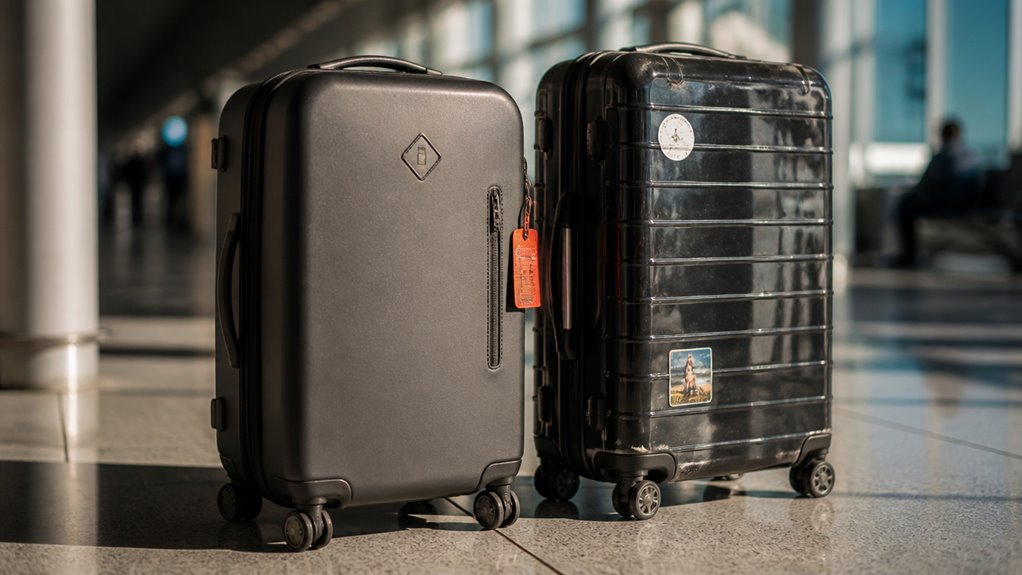
If you want customizable, premium luggage with made-to-order options, Roam offers bespoke colors, monogramming, and durable, scratch-resistant materials at a higher price point.
Away gives you more affordable, streamlined carry-ons with TSA locks, 360° spinner wheels, and broad availability.
Roam suits travelers valuing craftsmanship and personalization. Away appeals to practical, frequent flyers seeking reliability.
Both deliver quality; understanding their unique features helps you decide which fits your travel style best.
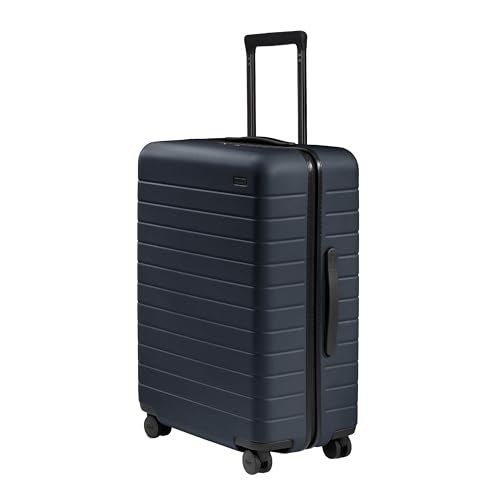
- MADE FOR MILES: Our team of experts builds luggage to last, putting every design through hundreds of…
- MEDIUM CAPACITY: Designed for 1-2 week travel, the Away Medium Checked Suitcase offers generous…
- INTERIOR COMPRESSMORE SYSTEM: Away’s patented dual-buckle compression panel fits more in every…
Key Takeaways
- Roam offers made-to-order, customizable luggage with premium materials at higher prices, while Away provides affordable, widely available carry-ons with limited customization.
- Roam Jaunt XL is slightly wider and lighter (7.1 lbs) than Away’s comparable models, offering more packing flexibility and similar or better weight.
- Roam features water-repellent zippers, ball-bearing wheels, and scratch-resistant shells, whereas Away emphasizes 360° spinner wheels and TSA-approved locks.
- Away targets practical, value-driven travelers seeking streamlined, durable luggage, while Roam appeals to luxury buyers prioritizing personalization and craftsmanship.
- Both brands ensure durable construction, but Roam focuses on bespoke details and premium feel, and Away on functional simplicity and broad accessibility.
Roam vs Away Luggage: Key Differences at a Glance
| Comparison Factor | Roam Luggage | Away Luggage |
|---|---|---|
| Design Approach | Made-to-order and highly customizable | Minimalist and streamlined design |
| Shell Material | 100% US virgin polycarbonate | Durable polycarbonate hardshell |
| Customization | Extensive shell, trim, zipper, wheel, and handle color choices plus monogramming | More limited color selection with emphasis on simplicity |
| Wheels | Ball-bearing wheels designed for smooth rolling | 360-degree spinner wheels for easy airport mobility |
| Packing Features | Compression system and water-repellent zippers | Interior compression system and organized packing |
| Carry-On Weight | Jaunt XL Expandable listed at about 7.1 lb | Standard Carry-On listed at about 7.5 lb |
| Travel Convenience | Strong choice for travelers prioritizing personalization and premium details | Focuses on practicality, accessibility, and easy handling |
| Overall Style | Design-forward and distinctive | Clean, practical, and understated |
Roam and Away Luggage Pricing and Value Compared
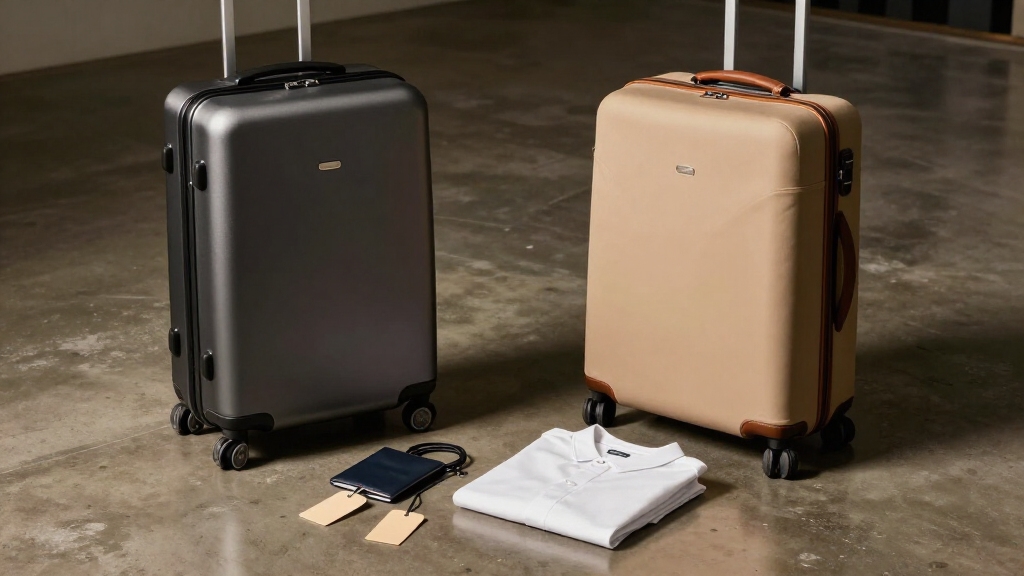
While both Roam and Away cater to the premium luggage market, you’ll find that Roam generally commands a higher price due to its extensive customization options and made-to-order production. Models like the Jaunt XL Expandable are priced around $575.
Roam’s premium pricing reflects its bespoke, made-to-order luggage with extensive customization options.
Away’s carry-ons typically fall between $275 and $355, making them more accessible if you’re budget-conscious. Away offers solid value for travelers who want quality without a steep price.
In contrast, Roam targets those who prioritize personalization and design details, justifying its premium cost. Roam’s price reflects added features like bespoke color choices and monogramming.
Ultimately, if you want a streamlined, affordable option, Away fits well. If customization and exclusivity matter more, Roam’s higher price carries distinct value.
Additionally, Away’s luggage includes features such as 360-degree spinner wheels and durable polycarbonate shells that enhance mobility and protection for frequent travelers.
Size, Weight, and Capacity Differences in Roam and Away Luggage
When comparing size, weight, and capacity, both Roam and Away offer carry-on options that balance portability with packing space, but with notable differences.
Roam’s Jaunt XL Expandable measures 22 x 15.75 x 9 inches and weighs 7.1 pounds, slightly lighter than Away’s comparable Expandable Bigger Carry-On at 22.7 x 14.7 x 9.6 inches, 8.4 pounds.
Away’s standard Carry-On is a bit smaller at 21.7 x 14.4 x 9 inches, weighing 7.5 pounds with 39.8 liters capacity.
You’ll find Away generally emphasizes lightweight design for easy lifting, while Roam achieves a similar or lower weight despite its design-forward approach.
Both provide expandable compartments, but Roam’s slightly wider dimensions may offer more packing flexibility.
Away’s carry-ons prioritize streamlined, minimalist profiles.
Travelers should always verify airline size regulations to ensure their luggage complies with specific carrier requirements for underseat or carry-on storage.
Materials and Build Quality: Roam vs Away
Beyond size and weight, the materials and construction of Roam and Away luggage play a significant role in their durability and feel.
Roam uses 100% US virgin polycarbonate, offering a sturdy yet lightweight shell made to order in the USA.
Away also relies on hardshell polycarbonate, known for retaining structural integrity even after years of use.
When you handle Roam, you’ll notice water-repellent zippers, ball-bearing wheels, and compression features enhancing durability and function.
Away’s build focuses on streamlined strength with 360-degree spinner wheels and a TSA-approved lock, emphasizing reliability and simplicity.
While Roam edges ahead in premium detail and customization, Away’s construction offers consistent, proven durability.
For travelers seeking budget-friendly options, luggage made with ABS shells like Zimtown provides a lightweight and scratch-resistant alternative that balances cost and functionality.
Customization and Features in Roam and Away Luggage
Although both Roam and Away offer premium luggage, their approaches to customization and features differ markedly. Roam excels in personalization, letting you choose colors for the shell, trim, zipper, wheels, and offers free monogramming. Away sticks to a streamlined design but includes practical features like a TSA-approved lock, 360-degree spinner wheels, and an ejectable USB charger in some models.
| Feature | Roam | Away |
|---|---|---|
| Color options | Extensive customization across parts | Limited standard colors |
| Personalization | Free monogramming | No monogramming |
| Locks | Standard lock | TSA-approved lock |
| Wheels | Ball-bearing, customizable color | 360-degree spinner wheels |
| Special features | Compression system, water-repellent zippers | Ejectable USB charger, interior compression |
You’ll find Roam offers more tailored features, while Away prioritizes functional simplicity. For travelers seeking a blend of durability and elegant design, Italian brands like 19V69 ITALIA set high standards with sophisticated materials and innovative organization.
Durability and Buyer Experience With Roam and Away
When it comes to durability, Roam’s luggage really shines with its scratch resistance and smooth rolling features.
On the other hand, Away’s bags hold up well, maintaining their structure even after some scuffs over time.
If you dive into user reviews, you’ll notice that many people rave about Roam’s premium build and robust materials.
But then again, Away gets a lot of love for its consistent long-term performance, and usually at a more budget-friendly price.
For travelers seeking a balance between ruggedness and sleek design, understanding the differences in materials and durability can greatly influence their choice.
Durability Comparison
If you prioritize long-term durability and buyer experience, both Roam and Away offer compelling options with distinct strengths.
Roam’s luggage, made from 100% US virgin polycarbonate and crafted to order in the USA, emphasizes scratch resistance and smooth rolling. It features water-repellent zippers and ball-bearing wheels.
Away, widely recognized for its hardshell polycarbonate build, consistently retains structural integrity over the years, though lighter colors may show scuffs more readily.
Away scores an average 4.2/5 in durability and sturdiness, while Roam often earns praise for premium materials and resistance to wear.
Both brands focus on durable construction, but unlike Roam and Away, some competitors use reinforced aluminum frames to balance lightweight design with impact resistance.
Your choice depends on whether you value Roam’s design-forward, durable customization or Away’s proven, broadly reliable construction and solid buyer feedback.
User Experience Insights
User feedback sheds light on how Roam and Away perform in real-world durability and overall experience.
You’ll find Roam praised for its smooth rolling, scratch resistance, and robust build. Away often wins points for structural integrity despite some scuffing, especially on lighter colors.
Buyers appreciate Roam’s customization and premium feel, though its higher price may be a consideration. Away offers solid value with reliable features and broad accessibility, making it a dependable choice for many travelers.
Both brands emphasize practical design and durability, similar to how Briggs & Riley focuses on repair-friendly construction to support longevity.
| Aspect | Roam | Away |
|---|---|---|
| Durability | High scratch resistance | Strong structural integrity |
| User Experience | Premium, customizable appeal | Broadly favorable, value-driven |
| Price | Higher, premium pricing | More affordable |
| Features | Extensive customization | Practical, functional |
Which Travelers Are Best Suited for Roam or Away?
Choosing between Roam and Away depends largely on your travel style and priorities. If you value customization and premium craftsmanship, Roam suits you well with its made-to-order options and design-forward appeal.
Your travel style and priorities guide whether Roam’s customization or Away’s simplicity fits best.
Conversely, if you prefer a streamlined, minimalist suitcase that’s broadly accessible and budget-friendly, Away fits better.
Roam’s heavier price point aligns with travelers seeking personalization and durability. Away appeals to frequent flyers who want reliable, lightweight luggage with essential features.
Choose Roam if you want scratch-resistant materials and extensive color choices. Opt for Away if you prioritize straightforward functionality, ease of purchase, and a clean aesthetic.
Your choice hinges on whether you lean toward niche luxury or practical, value-driven travel gear. For travelers who value durability and internal organization, brands like Samsonite exemplify the practical benefits of lightweight, well-organized luggage options.
Travel Convenience: How Roam and Away Perform
Frequently, travel convenience boils down to how easily a suitcase moves through busy airports, adapts to packing needs, and offers user-friendly features.
When you choose Away, you get lightweight, smooth-rolling 360-degree spinner wheels and a TSA-approved lock, ensuring hassle-free airport navigation and security.
Its interior compression system helps you pack efficiently.
Roam, on the other hand, offers slightly lighter weight and enhanced durability with ball-bearing wheels and a water-repellent zipper, making your journey smoother and more secure in wet conditions.
Plus, Roam’s customizable features, like compression options and monogramming, add a personal touch.
Both brands excel in user-friendly design, but Roam leans toward richer features and customization, while Away focuses on broad accessibility and streamlined convenience.
Your choice depends on which convenience factors you value most.
Additionally, considering luggage with a weather-resistant build can significantly enhance durability and protect your belongings in varying climates.
What Makes Roam and Away Different in the Luggage Market?
You’ll notice that Roam and Away really stand out in the luggage market. Away leans towards a minimalist vibe, offering premium luggage that’s both accessible and stylish. On the flip side, Roam is all about design-forward customization, making each piece a unique expression of your travel style.
When it comes to pricing, there’s a clear distinction too. Away typically provides more affordable options, making it easier for travelers on a budget. Roam, however, is targeting a more high-end market with its made-to-order appeal, which definitely comes with a higher price tag.
And let’s not forget about the designs. Roam’s extensive customization options and feature-rich designs are a big draw for those looking for something special. In contrast, Away keeps things streamlined and functional, focusing on practicality.
Spyder luggage, by comparison, blends sporty, ski-inspired design with durable construction and practical features like 360-degree spinner wheels to enhance travel convenience and mobility.
Brand Identity Contrast
While both Roam and Away cater to travelers seeking premium luggage, they carve out distinct spaces in the market through their brand identities.
Away focuses on a streamlined, minimalist design that appeals to a broad audience, emphasizing simplicity and clean aesthetics.
Roam, meanwhile, targets those who value customization and a design-forward approach, offering personalized options that make each piece unique.
Away is recognized as a mainstream brand with wide accessibility.
Roam positions itself as a niche, made-to-order luxury alternative.
Away’s branding highlights functional minimalism and reliability.
Roam emphasizes color customization, personalization, and premium details.
You’ll notice these differences shape how each brand connects with travelers and their expectations.
Pricing And Value
Understanding how Roam and Away differ in pricing and value helps clarify what you’re really paying for when choosing between these two brands.
Away offers a more affordable entry point, with carry-ons priced between $275 and $355. This makes it appealing if you want solid quality without a hefty cost.
Roam, priced around $575 for comparable models, targets travelers who value premium materials and customization.
Here’s a quick comparison:
| Feature | Away | Roam |
|---|---|---|
| Price Range | $275 – $355 | Around $575 |
| Market Positioning | Mainstream, accessible premium | Niche, design-forward, premium |
| Value Focus | Broad availability, lower cost | Customization, premium build |
You can expect more personalization with Roam. Away delivers reliable quality at better initial value.
Customization And Features
Although both Roam and Away offer premium luggage options, their approach to customization and features sets them apart markedly.
Roam caters to those who want a personalized suitcase, letting you choose colors for shell, trim, zipper, binding, wheels, and handle, plus free monogramming.
Away, on the other hand, focuses on streamlined functionality with TSA-approved locks, 360-degree spinner wheels, and interior compression systems. Some Away carry-ons include an ejectable USB charger, appealing to tech-savvy travelers.
Roam emphasizes design-forward, made-to-order customization. Away delivers minimalist, broadly accessible premium features.
Roam offers enhanced scratch resistance and smooth rolling wheels. Away provides consistent, practical features suited for everyday travel.
Your choice depends on whether you prioritize personalization or streamlined utility.
Choosing Roam or Away Luggage: Key Priorities and Takeaways
When choosing between Roam and Away luggage, you’ll want to weigh your priorities around customization, price, and travel style. If you value extensive personalization and premium materials, Roam is a strong choice but comes at a higher price point.
Away offers streamlined design, broader availability, and better entry-level pricing, ideal for minimalist travelers.
| Factor | Roam | Away |
|---|---|---|
| Customization | Extensive color and monogram options | Minimalist, fixed designs |
| Price | Higher ($575+) | More affordable ($275-$355) |
| Build & Features | Made-to-order, durable, water-repellent zippers | Lightweight, ejectable USB charger |
| Travel Style | Design-forward, niche premium | Streamlined, mainstream |
Choose based on your budget and desire for customization versus simplicity and value.
Frequently Asked Questions
Do Roam and Away Offer International Warranty Coverage?
Roam offers a limited warranty covering defects in materials and workmanship. However, it’s primarily U.S.-based and doesn’t explicitly guarantee international coverage.
Away provides a global limited warranty, typically covering two years internationally. This means you’re protected anywhere you travel.
If you prioritize international warranty support, Away’s global coverage gives you more peace of mind. Roam’s warranty is stronger on customization and U.S.-based service but is less clear abroad.
Can Roam and Away Luggage Fit in Overhead Airplane Compartments?
Imagine you’re boarding a domestic flight and need your carry-on to slide effortlessly into the overhead bin.
Both Roam’s Jaunt XL Expandable (22 x 15.75 x 9 inches) and Away’s Carry-On (21.7 x 14.4 x 9 inches) are designed to fit standard overhead compartments.
Roam’s slightly larger size still meets most airline limits. Away’s lighter weight makes lifting easier.
Both suit typical airline size rules, but always check your carrier’s specific dimensions.
Are There Eco-Friendly or Sustainable Options in Roam or Away Lines?
You won’t find explicitly eco-friendly or sustainable options prominently marketed in either line.
Away’s luggage uses durable polycarbonate shells that last years, reducing frequent replacements, but they don’t highlight recycled or sustainable materials.
Roam’s made-to-order approach may cut waste by producing only what’s needed, yet it doesn’t emphasize eco materials either.
If sustainability’s your priority, you might want to explore brands specializing in recycled or biodegradable components beyond these two.
How Do Roam and Away Handle Lost Baggage Claims or Customer Service?
When your luggage vanishes like a shadow at dusk, customer service becomes your guiding light.
Away offers a responsive, well-established support team, making lost baggage claims straightforward with clear policies.
Roam’s newer, boutique approach means personalized service, but response times may vary.
Both prioritize your satisfaction, yet Away’s broader infrastructure often delivers quicker resolutions.
Roam leans on attentive, bespoke communication to navigate mishaps with care and detail.
What Accessories Are Compatible With Both Roam and Away Luggage?
You can use universal accessories like packing cubes, luggage tags, and TSA-approved locks with both Roam and Away luggage since they share standard sizes and design features.
However, Roam’s customization options and unique zipper styles might limit compatibility with some brand-specific add-ons.
Away’s ejectable USB charger fits only their models, so tech accessories usually won’t cross brands.
Make Your Final Roam vs Away Luggage Decision
You might wonder if Roam or Away really dominate the luggage market. Here’s the truth: both offer strong value, but your choice hinges on what you prioritize.
Roam impresses with lightweight materials and sleek customization. Away stands out for durability and travel-friendly features.
If you want cutting-edge design with flexibility, Roam’s your pick. For rugged reliability and proven satisfaction, Away wins.
Ultimately, knowing your travel needs will guide you to the best fit.
- MADE FOR MILES: Our team of experts builds luggage to last, putting every design through hundreds of…
- MEDIUM CAPACITY: Designed for 1-2 week travel, the Away Medium Checked Suitcase offers generous…
- INTERIOR COMPRESSMORE SYSTEM: Away’s patented dual-buckle compression panel fits more in every…
Last update on 2026-10-26 / Affiliate links / Images from Amazon Product Advertising API