
Polycarbonate vs Abs Plastic Luggage: Find the Right Choice

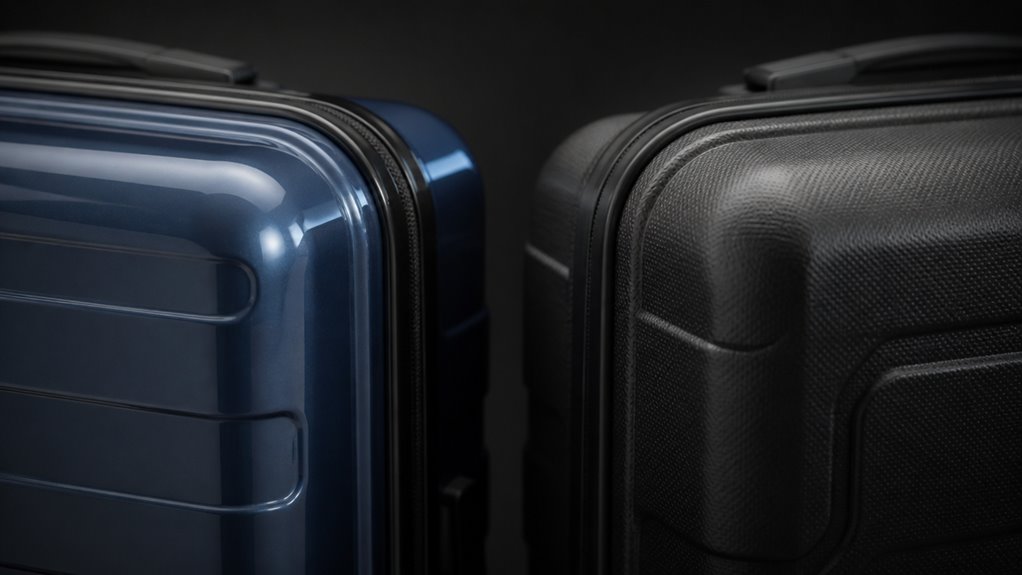
When choosing between polycarbonate and ABS plastic luggage, you’ll find polycarbonate offers superior impact resistance, flexibility, and UV stability. This makes it more durable for frequent checked-bag use.
Polycarbonate’s ability to flex under stress reduces cracks and extends lifespan. In contrast, ABS is more rigid, prone to brittleness, and best for occasional travel or budget-conscious buyers.
Though polycarbonate costs more upfront, its resilience often offsets replacement expenses. Understanding these material traits helps you pick the ideal luggage for your travel needs.
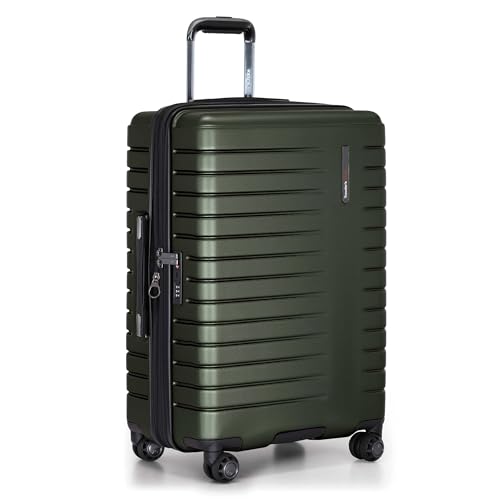
- Durable & Strong: Textured polycarbonate shell delivers maximum durability and protection during…
- Protective Lining: Shield-98 technology resists bacterial growth, keeping your luggage clean, fresh…
- Dual Cyclone Spinner Wheels: Effortlessly navigate airports and uneven surfaces with superior…

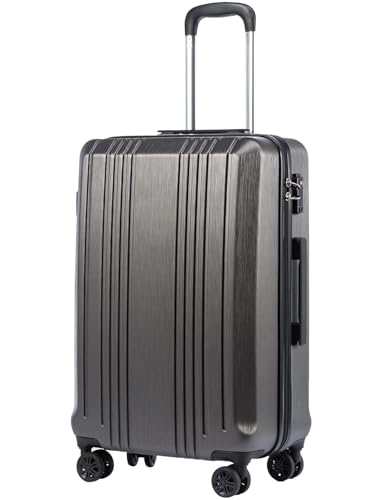
- Perfect Balance of Size and Space: The 24” checked suitcase(25.4*16.1*10.4) offers generous room…
- Durable & Scratch-Resistant Exterior: ABS+PC material, durable and lighter hard shell, features a…
- Smooth gliding anywhere: The unique-shaped multi-directional silent wheels will not make any noise…
Key Takeaways
- Polycarbonate luggage is more flexible, absorbing impacts and reducing cracks, while ABS is rigid and more prone to breakage under stress.
- Polycarbonate offers superior UV resistance, preventing discoloration and brittleness, unlike ABS which degrades and yellows over time.
- Polycarbonate shells can be thinner and lighter without sacrificing strength, whereas ABS is typically heavier due to its rigidity.
- Polycarbonate maintains a cleaner, newer appearance longer by resisting scratches and surface damage better than ABS.
- ABS luggage is suitable for occasional travel but has lower durability and impact resistance compared to polycarbonate for frequent use.
Polycarbonate vs ABS Luggage: Complete Comparison Chart
| Feature | Polycarbonate Luggage | ABS Luggage |
|---|---|---|
| Material Type | Higher-performance thermoplastic | Rigid thermoplastic |
| Flexibility | Highly flexible; flexes under stress | More rigid |
| Impact Resistance | Superior | Lower |
| Crack Resistance | Better resistance to cracking | More prone to cracking or breaking |
| Durability | High; suited to frequent use | Moderate; better for occasional use |
| Weight | Typically slightly lighter or comparable | Typically slightly heavier |
| 20-Inch Weight | About 2.0–2.3 kg | About 2.2–2.5 kg |
| Shell Construction | Can use thinner shells without sacrificing strength | Often requires thicker walls |
| Scratch Resistance | Better surface durability | More susceptible to visible scratches |
| UV Resistance | Superior | More vulnerable to UV degradation |
| Color Retention | Maintains color longer | Can yellow or fade over time |
| Weather Resistance | Better against temperature changes and sunlight | More vulnerable to stress fractures and degradation |
| Extreme Temperatures | Maintains flexibility in heat and cold | Can become brittle in cold or deform in high heat |
| Appearance | Often matte or textured; retains newer look | Typically glossier; marks show more easily |
| Price | Higher; production can cost 2–3× more | Lower and more budget-friendly |
| Long-Term Value | Better for frequent travelers due to durability | Good for occasional travelers seeking lower upfront cost |
| Best Travel Use | Frequent checked-bag travel and extended trips | Short trips and carry-on use |
| Repairability | Minor cracks can be fixed with specialized adhesives | Cracks are harder to repair durably |
| Recycling | More challenging to recycle | More widely accepted in recycling streams |
| Typical Warranty | Often 5–10 years | Usually 1–3 years |
| Best Overall Strength | Durability, impact resistance, and longevity | Affordability and adequate protection for light use |
Polycarbonate vs ABS Luggage: Key Differences Explained
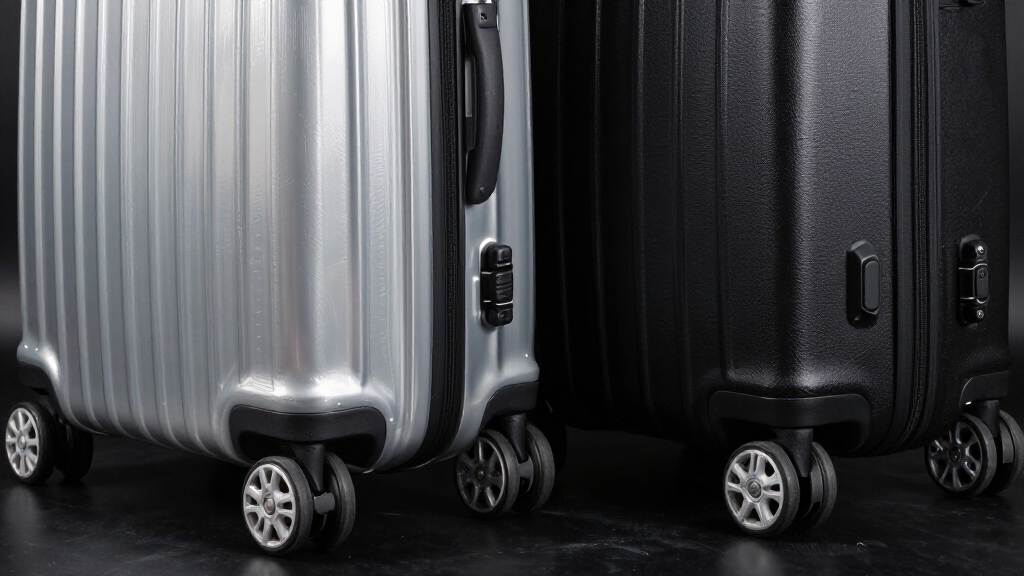
When choosing between polycarbonate and ABS luggage, you’ll want to focus on their fundamental material properties and performance differences.
ABS, or acrylonitrile butadiene styrene, is a rigid thermoplastic commonly used in budget-friendly luggage. It offers a hard-shell exterior but tends to be less flexible.
Polycarbonate, by contrast, is a higher-performance thermoplastic known for its flexibility and ability to flex under stress without permanent deformation. This flexibility allows polycarbonate to absorb forces differently than ABS.
You’ll notice that ABS cases often weigh slightly more or less depending on design, but polycarbonate typically maintains a balance of lightweight construction with superior material quality.
Your choice impacts factors like price and travel performance, with polycarbonate generally positioned as the premium option and ABS catering to cost-sensitive buyers.
Polycarbonate also provides superior impact resistance, making it ideal for frequent travelers who face rough handling and checked-bag use.
Which Material Is More Durable and Impact Resistant?
You know, when it comes to durability and impact resistance, polycarbonate really stands out. It’s got this flexibility that allows it to absorb shocks, so it can take a hit and bounce back without cracking. Pretty impressive, right?
On the other hand, ABS is a bit more rigid. While that might sound strong, it actually makes ABS more prone to cracking or breaking when faced with sudden force. So, if you’re trying to decide between the two for your travel needs, these differences are key to keep in mind. It’s all about choosing the right material for the durability you want!
Spyder luggage often uses high-quality polycarbonate shells that resist scratches and dents, enhancing long-term durability.
Impact Resistance Comparison
Frequently subjected to rough handling, luggage demands materials that combine strength with resilience.
When comparing impact resistance, polycarbonate outperforms ABS due to its superior ability to absorb and dissipate energy.
Polycarbonate flexes under sudden force, which prevents permanent deformation and reduces cracking risk.
In contrast, ABS is more rigid and prone to cracking or breaking when subjected to sharp impacts.
This mechanical difference means polycarbonate maintains structural integrity better during frequent checked-bag use, making it more durable over time.
While ABS may suffice for occasional travel, its lower impact tolerance limits longevity under harsh conditions.
Consequently, if durability against shocks and drops is your priority, polycarbonate offers a measurable advantage in impact resistance.
This ensures your luggage withstands rough handling without compromising its protective function.
Many high-end luggage models combine polycarbonate shells with aluminum frames to enhance strength and shock absorption.
Flexibility and Crack Risk
Polycarbonate’s ability to flex under impact markedly reduces the risk of cracks forming, enhancing its overall durability compared to ABS.
When you handle polycarbonate luggage, you benefit from a material that absorbs and disperses force by bending slightly, then returning to its original shape.
This flexibility minimizes localized stress concentrations that typically cause brittle failure in ABS, which is more rigid and prone to cracking under sudden impacts.
If you frequently check your bags, polycarbonate’s resilience means fewer structural damages over time, directly translating to longer product life.
Conversely, ABS’s rigidity can result in fractures or permanent deformation after repeated impacts, compromising its protective function.
Understanding these mechanical differences helps you select luggage that better withstands rough handling, prioritizing durability and impact resistance.
Additionally, pairing polycarbonate luggage with spinner wheels can further enhance durability and ease of maneuverability during frequent travel.
Comparing Weight: Is Polycarbonate Or ABS Luggage Lighter?
When you’re diving into the world of luggage, comparing polycarbonate and ABS can be pretty interesting, especially when it comes to weight. Typically, you’ll notice that the weight difference is around one to 1.5 pounds, but this can vary based on factors like design and size.
Now, here’s the kicker: even though polycarbonate is known for its impressive impact resistance, it often weighs just a bit less than, or about the same as, ABS. For example, if you take a look at real-world models, you’ll find that a 20-inch polycarbonate suitcase usually weighs in at around 2.0 to 2.3 kg. On the flip side, an ABS suitcase of the same size generally ranges from 2.2 to 2.5 kg. Both Delsey and Samsonite commonly use polycarbonate shells for their hard-sided luggage to balance durability and weight.
Weight Differences Explained
Although the weight difference between polycarbonate and ABS luggage varies by design, you’ll generally find polycarbonate cases to be slightly lighter or comparable in weight.
Polycarbonate’s higher density and flexible molecular structure allow manufacturers to use thinner shells without compromising strength, which can offset its material weight.
ABS, being more rigid, often requires thicker walls to achieve similar durability, increasing overall mass.
However, design factors like shell thickness, internal framing, and hardware can narrow or reverse this difference.
Typically, a 20-inch polycarbonate suitcase weighs around 2.0 to 2.3 kilograms, while an equivalent ABS model ranges from 2.2 to 2.5 kilograms.
The choice of materials and their molecular structure greatly influences the balance of strength and weight in luggage manufacturing.
Real-World Weight Comparison
Frequently, travelers ask whether polycarbonate or ABS luggage offers a lighter carry option. In real-world terms, polycarbonate luggage tends to be marginally lighter than ABS, typically by about 1 to 1.5 pounds for the same size.
For instance, a 20-inch polycarbonate suitcase generally weighs between 2.0 to 2.3 kg, whereas a comparable ABS model falls around 2.2 to 2.5 kg. This difference arises because polycarbonate’s molecular structure allows for thinner, more flexible shells without compromising strength, reducing overall material weight.
However, design and construction nuances can narrow or widen this gap. While ABS is often rigid and slightly heavier, polycarbonate balances weight with durability. This makes it a preferred choice if minimizing carry weight without sacrificing impact resistance is your priority.
Similar to how X-PAC fabric offers a lightweight composite construction to enhance mobility and reduce fatigue, polycarbonate’s structure achieves a balance between strength and reduced weight.
Cost and Value: What You Pay for Polycarbonate Vs ABS
Because polycarbonate demands more complex manufacturing processes, you’ll typically pay a premium compared to ABS luggage.
Polycarbonate production costs can be two to three times higher than ABS, reflecting its superior material properties and impact resistance.
Polycarbonate costs two to three times more than ABS, highlighting its enhanced durability and impact resistance.
While ABS suits budget-conscious buyers with lower upfront costs, polycarbonate offers better long-term value, especially if you travel frequently or check your bags often.
The initial expense of polycarbonate luggage offsets potential replacement or repair costs due to its enhanced durability and flexibility under impact.
In contrast, ABS’s lower cost aligns with occasional use but risks higher damage rates.
When evaluating cost versus value, consider your travel frequency and durability needs.
Investing in polycarbonate may yield a more cost-effective solution over time despite its higher purchase price.
However, ABS luggage like the Zimtown brand provides scratch resistance and lightweight protection ideal for budget-conscious travelers.
Scratch Resistance and Color Retention: Polycarbonate Vs ABS
When it comes to scratch resistance, polycarbonate really shines. Its flexible surface helps it absorb scuffs better than ABS, which tends to be more rigid and vulnerable to marks. So, if you’re looking for something that can handle a bit of roughhousing, polycarbonate might be the way to go.
Now, let’s talk about color retention. Over time, ABS can yellow and degrade due to UV exposure, which is definitely not what you want in your luggage. On the flip side, polycarbonate maintains its color stability and resists discoloration. That means your bag will look better for longer!
Understanding these differences between materials is super important when you’re choosing luggage. After all, you want something that can stand up to frequent handling and environmental wear, right? The 3-layer PC matte coating on polycarbonate shells also helps hide minor marks and adds sturdiness, enhancing its durability and appearance over time.
Surface Durability Comparison
Surface durability plays a crucial role in maintaining a luggage’s appearance after repeated use and handling.
When comparing polycarbonate and ABS, polycarbonate clearly outperforms ABS regarding scratch resistance and color retention.
Polycarbonate’s flexible molecular structure allows it to absorb minor abrasions without permanent surface damage, preserving its finish longer.
In contrast, ABS’s rigid composition makes it more susceptible to visible scratches and surface cracking under regular wear.
Additionally, polycarbonate retains color integrity better over time, resisting fading and discoloration more effectively.
This durability advantage means polycarbonate luggage maintains a cleaner, newer look despite frequent handling.
If you prioritize prolonged aesthetic preservation and minimal surface degradation, polycarbonate offers a superior choice compared to ABS, which tends to show wear signs more quickly under similar conditions.
Highland Tactical’s use of Super ABS shells enhances impact and scratch resistance, but still cannot fully match polycarbonate’s superior surface durability.
UV Resistance Effects
While both polycarbonate and ABS luggage face wear from UV exposure, polycarbonate’s superior UV resistance markedly reduces discoloration and surface degradation over time.
You’ll notice that polycarbonate maintains color integrity longer, resisting yellowing and fading that commonly affects ABS plastic under prolonged sunlight.
This resistance stems from polycarbonate’s molecular structure, which better absorbs and dissipates UV energy, minimizing polymer breakdown.
In contrast, ABS’s acrylonitrile butadiene styrene composition is more susceptible to UV-induced oxidation, causing surface brittleness and color shifts.
Regarding scratch resistance, polycarbonate’s flexibility helps it recover better from minor abrasions and scuffs, preserving appearance.
ABS, being more rigid, tends to exhibit visible scratches and surface micro-cracks sooner.
If retaining your luggage’s aesthetic and structural integrity matters, polycarbonate clearly offers enhanced UV resilience and scratch tolerance compared to ABS.
How Weather and UV Affect Polycarbonate and ABS Luggage?
Because luggage endures varied environmental conditions, understanding how weather and UV exposure affect polycarbonate and ABS is essential for maintaining their performance and appearance.
Polycarbonate exhibits superior UV resistance, retaining color and structural integrity despite prolonged sun exposure. Its molecular structure absorbs and dissipates UV energy more effectively, preventing discoloration and brittleness.
In contrast, ABS is more susceptible to UV-induced yellowing and surface degradation, which compromises aesthetics and can lead to micro-cracking over time.
Weather elements like temperature fluctuations impact both materials. Polycarbonate’s flexibility allows it to withstand thermal expansion and contraction without cracking, whereas ABS’s rigidity increases its vulnerability to stress fractures.
Consequently, if you expect frequent exposure to harsh weather or sunlight, polycarbonate offers enhanced durability and longevity compared to ABS’s more limited weather resistance.
Best Travel Scenarios for ABS and Polycarbonate Luggage
Understanding how polycarbonate and ABS respond to environmental stressors helps clarify which material suits different travel demands.
If you travel infrequently or prioritize budget, ABS luggage serves well for short trips and carry-ons, where impact risk and UV exposure remain minimal.
Its rigid structure offers adequate protection for lighter handling conditions.
Conversely, if you face frequent checked-bag scenarios with rougher handling, polycarbonate’s superior impact resistance and flexibility better preserve your suitcase’s integrity.
Its resistance to cracking and UV degradation guarantees long-term durability, justifying higher upfront costs.
You’ll also appreciate polycarbonate for extended trips requiring robust protection against environmental wear.
Ultimately, evaluating your travel frequency, trip length, and handling conditions guides you to the material that balances cost, durability, and performance effectively.
Why Frequent Travelers Prefer Polycarbonate Luggage?
Frequent travelers consistently choose polycarbonate luggage for its superior durability and impact resistance under rigorous conditions.
When you face repeated handling, checked-bag roughness, and unpredictable impacts, polycarbonate’s ability to flex and return to shape minimizes cracking risks.
This flexibility translates into maintaining structural integrity far better than ABS, which tends to snap under sudden forces.
Additionally, polycarbonate’s enhanced UV resistance helps preserve color and surface quality over time, reducing visible wear.
You also benefit from its better scuff concealment, which keeps your luggage looking newer despite frequent use.
Although polycarbonate cases may cost more upfront, their resilience and consistent performance under heavy travel justify the investment.
This is especially true when you prioritize reliability and long-term usability over initial savings.
How Material Choice Affects Luggage Lifespan?
Polycarbonate’s enhanced durability and flexibility directly contribute to a longer luggage lifespan compared to ABS. When subjected to impact, polycarbonate flexes and returns to its original shape, reducing the risk of cracks or fractures that commonly afflict ABS luggage.
Over repeated stress cycles, this resilience prevents structural failure, extending service life. Additionally, polycarbonate’s superior UV resistance minimizes material degradation and discoloration, preserving both strength and appearance over time.
In contrast, ABS’s rigidity leads to brittleness under sudden forces, increasing susceptibility to breaks and surface damage. If you frequently check your bags or encounter rough handling, polycarbonate’s mechanical properties translate into fewer repairs and replacements.
Therefore, your choice of polycarbonate appreciably enhances long-term durability, while ABS suits lighter, less frequent use where lifespan demands are lower.
Choosing the Right Luggage Material for Your Needs
Although both polycarbonate and ABS offer hard-shell protection, your choice should hinge on your travel habits, budget, and durability expectations.
Choosing between polycarbonate and ABS depends on your travel frequency, budget, and how durable you need your luggage to be.
If you travel frequently and check your bags often, polycarbonate’s superior impact resistance and flexibility make it the more reliable option, despite its higher cost.
Conversely, if you’re an infrequent traveler or stick to carry-ons and short trips, ABS provides adequate protection at a lower price point.
Consider also that polycarbonate better resists UV damage and scuffing, maintaining appearance longer. Weight differences are minimal but can influence handling.
Ultimately, select polycarbonate for long-term performance and durability; choose ABS for cost efficiency and light use.
Your decision should balance these variables, ensuring your luggage material aligns precisely with your specific travel demands.
Frequently Asked Questions
How Do Polycarbonate and ABS Luggage Handle Extreme Temperatures?
You’ll find polycarbonate handles extreme temperatures better than ABS.
It maintains flexibility and resists cracking under both heat and cold, thanks to superior thermal stability.
ABS, being more rigid, becomes brittle in cold and may deform or discolor under high heat.
So, if you expect harsh temperature swings during travel, polycarbonate luggage offers greater reliability and durability.
This reduces the risk of damage or performance loss in extreme conditions.
Can Polycarbonate or ABS Luggage Be Repaired if Damaged?
You can repair both polycarbonate and ABS luggage, but success varies.
Polycarbonate’s flexibility allows minor cracks to be fixed with specialized adhesives, restoring impact resistance.
ABS, being more rigid, tends to crack or break, making repairs harder and less durable.
Surface scratches on either material can be buffed or repainted.
However, severe structural damage usually requires professional repair or replacement, especially for ABS due to its brittleness and lower resilience.
Are There Environmental Differences in Recycling Polycarbonate Vs ABS Luggage?
Yes, there are environmental differences in recycling polycarbonate versus ABS luggage.
Polycarbonate is generally more challenging to recycle due to its chemical structure and lower availability of recycling facilities.
ABS is more widely accepted in recycling streams, making it easier to process and repurpose.
When you choose ABS, you’re more likely to support efficient recycling.
Polycarbonate’s durability may extend product life, indirectly reducing environmental impact despite recycling challenges.
How Do Polycarbonate and ABS Luggage Differ in Available Colors and Finishes?
You’ll find polycarbonate luggage offers more sophisticated finishes, often matte or textured, which better hide scuffs and retain color over time.
ABS luggage, by contrast, typically has glossier surfaces that show scratches and marks more easily and may yellow with UV exposure.
Color options for polycarbonate tend to be richer and longer-lasting, while ABS colors might fade faster.
Choosing polycarbonate means better appearance durability and a broader, more resilient color range.
Do Polycarbonate or ABS Suitcases Come With Different Warranty Options?
Polycarbonate suitcases often come with longer, more extensive warranties compared to ABS models, reflecting their higher durability and price point.
You’ll typically find polycarbonate warranties covering 5 to 10 years, sometimes including impact damage.
ABS luggage warranties tend to be shorter, usually 1 to 3 years, and more limited, focusing on manufacturing defects rather than wear and tear.
Choosing polycarbonate can mean better post-purchase support aligned with frequent travel demands.
- Durable & Strong: Textured polycarbonate shell delivers maximum durability and protection during…
- Protective Lining: Shield-98 technology resists bacterial growth, keeping your luggage clean, fresh…
- Dual Cyclone Spinner Wheels: Effortlessly navigate airports and uneven surfaces with superior…
- Perfect Balance of Size and Space: The 24” checked suitcase(25.4*16.1*10.4) offers generous room…
- Durable & Scratch-Resistant Exterior: ABS+PC material, durable and lighter hard shell, features a…
- Smooth gliding anywhere: The unique-shaped multi-directional silent wheels will not make any noise…
Choosing Between Polycarbonate and ABS Luggage for Travel
When choosing between polycarbonate and ABS luggage, your decision hinges on durability, weight, and cost.
You might lean toward ABS for budget-friendly trips, but polycarbonate’s superior impact resistance and scratch retention make it the top choice for frequent travelers.
Yet, the real game-changer lies in how these materials perform under pressure.
This is something you’ll only fully appreciate the moment your luggage faces the unexpected.
Which one will stand the test of your journey?
Last update on 2026-10-22 / Affiliate links / Images from Amazon Product Advertising API