
500D vs 1000D Cordura: Which Is Better?

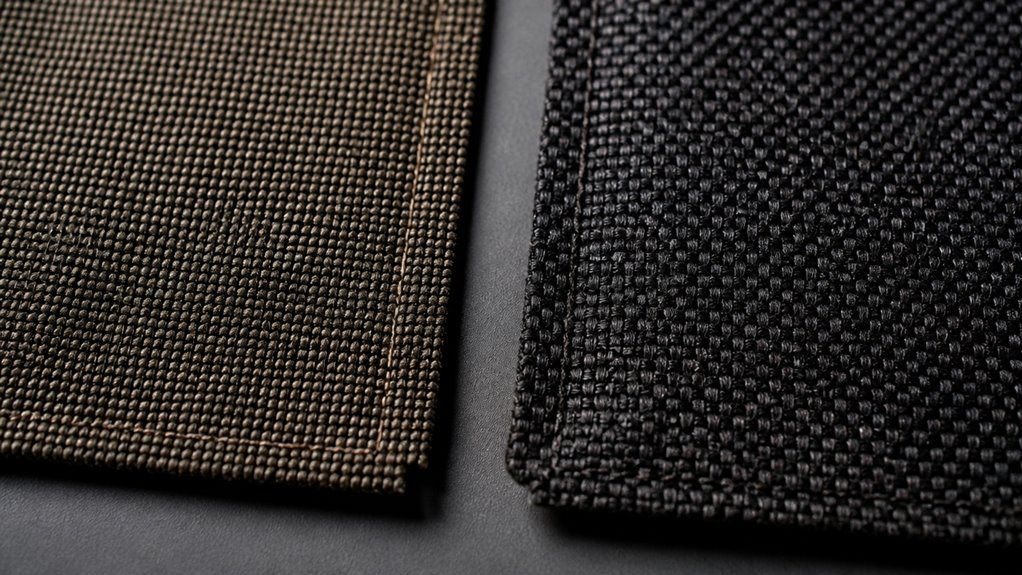
You’ll want 500D Cordura if you prioritize lightweight flexibility and easier packability. It’s lighter and more pliable with excellent abrasion resistance.
Choose 1000D Cordura when you need unmatched durability and strength. It’s around 1.7 times tougher and better for heavy-duty use but can be heavier and stiffer at first.
The price difference reflects this. Balancing weight, durability, and cost helps tailor gear to your needs. Explore deeper factors to optimize your choice.

- ❇️ Xtreme Sight Line
- ❇️ 1000 Denier Cordura Nylon fabric cut to 1 linear yard (36 inches) from a 59/60″ wide roll.
- ❇️ High tenacity, military grade fabric is ideal for outdoor use.
Key Takeaways
- 500D Cordura is lighter, more flexible, and has a glossier surface, ideal for daily carry and lightweight gear.
- 1000D Cordura is thicker, heavier, and about 1.7 times stronger, offering superior abrasion resistance for heavy-duty applications.
- 500D weighs around 7–8 oz per square yard, while 1000D weighs 9–11 oz per square yard, affecting packability and comfort.
- 1000D costs roughly 33% more per yard but provides enhanced durability in high-abuse environments.
- Choose 500D for mobility and value in everyday use; select 1000D for ruggedness and long-term durability in tactical gear.
500D vs 1000D Cordura Comparison: Weight, Durability, and Gear Use
| Comparison Point | 500D Cordura | 1000D Cordura | Best Choice |
|---|---|---|---|
| Fabric Weight | Lighter at around 7–8 oz per square yard | Heavier at around 9–11 oz per square yard | 500D for lightweight carry |
| Durability | Offers excellent abrasion resistance for daily use | Provides stronger abrasion resistance for rugged use | 1000D for maximum toughness |
| Strength Level | Durable enough for most civilian and everyday gear | About 1.7 times stronger than 500D | 1000D for heavy-duty gear |
| Flexibility | More pliable, soft, and packable from the start | Stiffer at first but softens with use | 500D for better flexibility |
| Comfort | Less abrasive against clothing and easier to carry | Can feel rougher and bulkier during long use | 500D for daily comfort |
| Surface Feel | Often has a glossier, smoother finish | Has a more matte, canvas-like texture | Depends on style preference |
| Cost | More cost-effective for everyday gear | Usually costs around 33% more per yard | 500D for budget value |
| Best Use Case | Backpacks, everyday carry, light tactical bags, travel gear | Military gear, rifle cases, tactical packs, high-abuse equipment | Match to use intensity |
| Packability | Easier to fold, compress, and store | More rigid and less compact | 500D for packable gear |
| Overall Value | Best balance of weight, comfort, and durability | Best for rugged protection and long-term abuse | Choose by gear deman |
Key Differences Between 500D and 1000D Cordura Fabrics
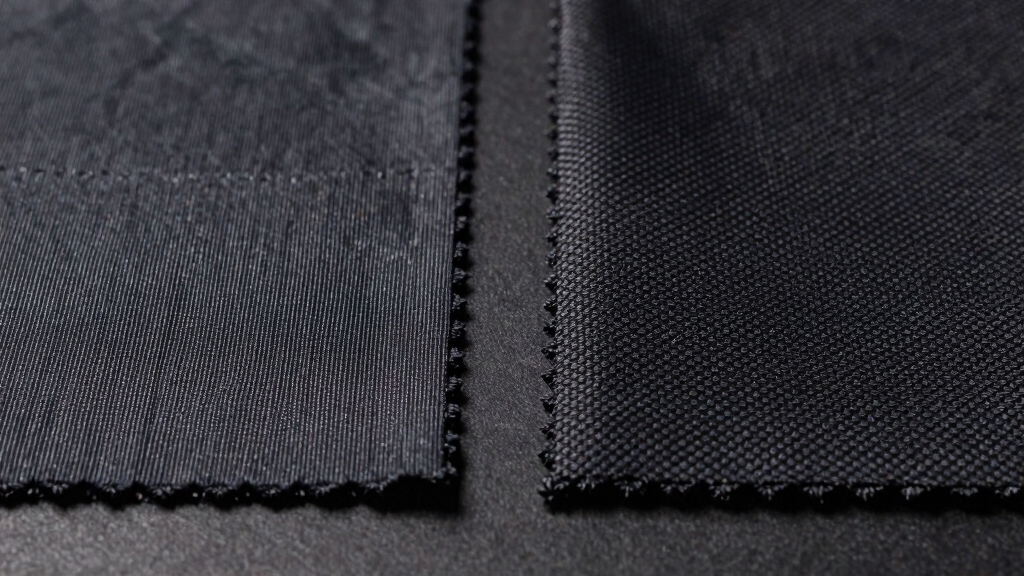
While both 500D and 1000D Cordura fabrics share a common nylon base, they differ markedly in weight, strength, flexibility, cost, and application suitability.
You’ll find 500D to be lighter and more flexible, offering a better weight-to-durability ratio ideal for daily carry or lightweight tactical gear.
In contrast, 1000D uses thicker nylon threads, resulting in a heavier, stiffer fabric that feels rugged and tank-like, suited for heavy-duty applications demanding maximum abrasion resistance.
Cost-wise, 1000D runs about a third more expensive due to increased raw material.
Surface texture also varies: 500D has a glossier finish and is less abrasive to clothing, while 1000D presents a matte, canvas-like feel.
Choosing between them hinges on balancing mobility, durability needs, and budget constraints.
Both fabrics benefit from Cordura’s reputation for high tensile strength and resistance to tears and scuffs, making them reliable choices across various uses.
Weight and Strength Considerations for Gear Choice
Understanding the core distinctions in weight and strength between 500D and 1000D Cordura helps you make informed gear choices tailored to your specific needs.
500D Cordura weighs approximately 7–8 oz per square yard, offering a superior weight-to-durability ratio for lightweight gear.
In contrast, 1000D weighs around 9–11 oz per square yard, resulting in increased overall mass but markedly enhanced strength.
Specifically, 1000D is about 1.7 times stronger and more abrasion-resistant than 500D due to its thicker nylon yarns and denser weave.
When selecting gear, prioritize 500D if minimizing weight is critical without sacrificing durability.
Choose 1000D when maximum strength and ruggedness outweigh the penalty of added weight, especially for heavy-duty or military applications.
This analytical approach guarantees your gear’s weight and strength align precisely with operational demands.
Additionally, materials like military-grade canvas offer enhanced durability and abrasion resistance, making them strong contenders for rugged use.
Flexibility and Durability: Which Cordura Performs Better?
Because flexibility directly impacts user comfort and gear packability, choosing between 500D and 1000D Cordura requires careful evaluation of their structural differences.
You’ll find 500D more pliable and packable due to its thinner threads and larger yarn gaps. In contrast, 1000D feels stiffer initially but gains pliability with use, offering superior durability.
This trade-off influences performance depending on your application.
When personalizing gear made from these materials, it’s important to consider fabric compatibility to ensure patches adhere securely without damage.
| Attribute | 500D Cordura | 1000D Cordura |
|---|---|---|
| Flexibility | High; more pliable | Low initially; stiff |
| Durability | Excellent abrasion resistance | Superior abrasion resistance |
| Weight | Lighter (~7-8 oz/sq yd) | Heavier (~9-11 oz/sq yd) |
| Aging Behavior | Worn-in feel from start | Becomes pliable over time |
Select based on your need for flexibility or maximum durability.
Price and Durability of 500D vs 1000D Cordura
Given the substantial differences in material composition and construction, the price disparity between 500D and 1000D Cordura reflects their durability profiles.
You’ll pay roughly 33% more per yard for 1000D, averaging $12.00 compared to 500D’s $9.50. This is largely due to its thicker nylon threads and heavier fabric mass.
This additional material directly contributes to 1000D’s approximately 1.7 times greater tensile strength and enhanced abrasion resistance.
While 500D remains highly durable and suitable for most civilian applications, it’s less robust under extreme wear conditions.
When durability is critical, especially for high-abuse environments, 1000D justifies its premium price.
However, if you prioritize cost-efficiency and adequate durability for everyday use, 500D offers a superior price-to-performance ratio without compromising longevity in typical scenarios.
Choosing materials with reinforced stitching and sturdy construction enhances the overall durability and longevity of gear.
Best Uses for 500D vs 1000D Cordura
Selecting between 500D and 1000D Cordura hinges on your gear’s intended use and performance demands.
If you prioritize lightweight, flexible materials for everyday carry bags, backpacks, or tactical gear requiring mobility, 500D offers an ideal balance of durability and reduced weight.
Its superior pliability and lower mass make it ideal for extended missions where packability matters.
Conversely, if your application demands maximum abrasion resistance and tear strength, such as military-grade gear, rifle cases, or heavy-duty tactical equipment, 1000D is the better choice.
Its thicker threads and increased fabric density provide robust protection against extreme wear, though at the cost of added weight and stiffness.
Use 1000D where ruggedness outweighs mobility, and 500D when weight and flexibility are critical without compromising durability.
Military-grade fabrics like 1000 denier Cordura® nylon are chosen for their superior abrasion resistance and long-lasting strength in harsh environments.
Frequently Asked Questions
How Do 500D and 1000D Cordura Fabrics Affect Gear Waterproofing?
You’ll find both 500D and 1000D Cordura fabrics inherently water-resistant but not fully waterproof without additional coatings.
The denser weave of 1000D offers slightly better base resistance to water penetration due to its tighter threads.
However, to ensure reliable waterproofing, you’ll need to apply durable water-repellent (DWR) treatments or laminates regardless of denier.
What Are the Environmental Impacts of Producing 500D Vs 1000D Cordura?
Producing 1000D Cordura demands a mountain of raw materials compared to 500D. Its environmental footprint is markedly larger.
You’ll see more energy consumption and resource use due to thicker threads and heavier fabric mass.
While both use nylon, 500D’s lighter weight means less carbon emissions during production and transportation.
If you’re eco-conscious, choosing 500D reduces waste and energy drain without sacrificing durability in most cases.
Can 500D or 1000D Cordura Be Easily Repaired if Damaged?
You can repair both 500D and 1000D Cordura, but 500D is generally easier to patch due to its thinner, more flexible structure.
The heavier, stiffer 1000D demands tougher sewing techniques and reinforced patches to maintain durability.
Both require heavy-duty nylon thread and specialized adhesives or heat sealing for effective repairs.
Your choice depends on the damage extent and intended use.
500D suits quicker fixes, while 1000D needs more robust restoration methods.
How Do These Fabrics Perform Under Extreme Temperatures?
Both fabrics withstand extreme temperatures well due to nylon’s inherent thermal resistance.
You’ll find 1000D slightly more stable under prolonged heat because of its denser weave and thicker threads, reducing deformation risk.
However, both can soften above 200°F and degrade near 500°F.
In freezing conditions, 500D’s flexibility gives you better performance, while 1000D may stiffen noticeably.
Neither fabric melts easily, but avoid direct flame exposure to maintain integrity.
Are There Color Options Differences Between 500D and 1000D Cordura?
You’ll find that 500D Cordura typically offers a broader palette of colors, boasting more vibrant and glossy finishes.
In contrast, 1000D leans toward a matte, muted range due to its denser weave.
This difference stems from 500D’s looser yarn structure, allowing dyes to penetrate more evenly.
If you need precise color matching for tactical or fashion gear, 500D gives you more flexibility.
On the other hand, 1000D prioritizes durability over color variety.
Final Verdict on 500D Vs 1000D Cordura
Choosing between 500D and 1000D Cordura depends on your specific needs.
If you want lighter gear without sacrificing too much strength, 500D offers a balanced option.
But if you need maximum durability, 1000D is like armor, tough and resistant.
Both fabrics serve distinct purposes, so weigh weight, flexibility, and cost carefully.
Ultimately, your gear’s performance hinges on matching the Cordura type to the demands of your activity.

- GRIP – Real fabric outer layer provides better grip for magazines, even when wet with water or…
- TEXTURE AND FINISH – Authentic fabric gives gear a non shine texture. Even matte finish vinyl wraps…
- CUSTOMIZATION – Make your gear unique. Whether for training, doing a timed course, or a day at the…
Last update on 2026-10-13 / Affiliate links / Images from Amazon Product Advertising API